
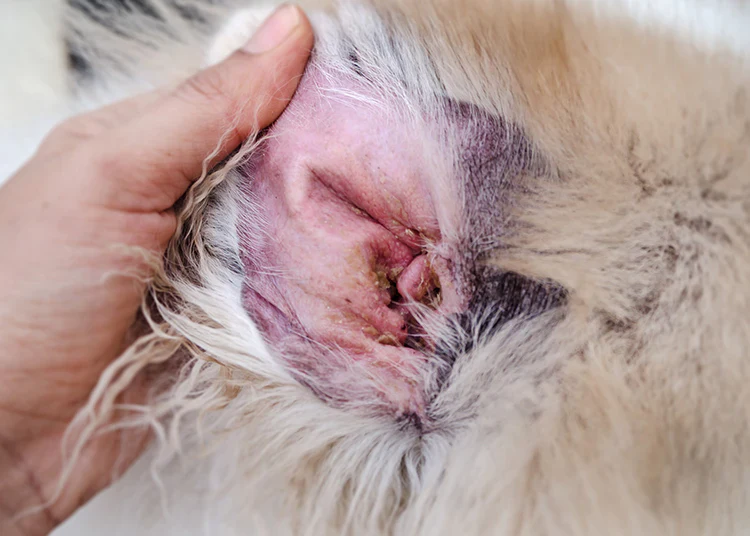
If your dog keeps getting ear infections again and again, it’s easy to feel frustrated or confused.
But here’s the truth: you’re probably not doing anything wrong.
Chronic ear infections almost always point to an underlying issue—not bad care.
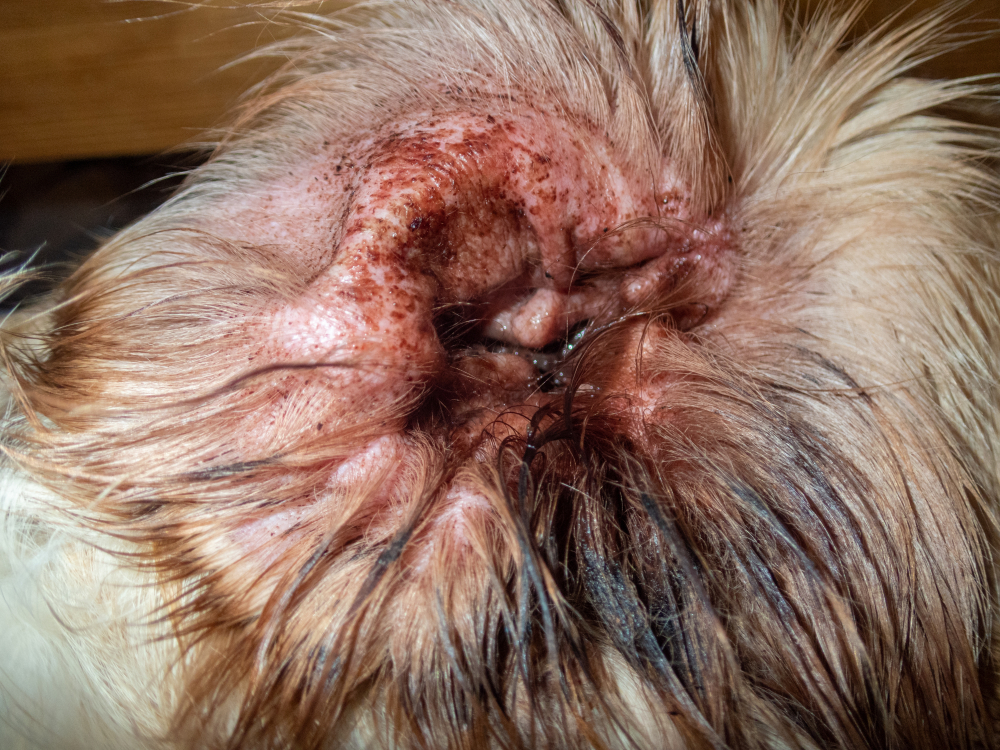
Below are the five most common causes, each with a realistic image to help you identify what might be going on.
1️⃣ Allergies (Food or Environmental)
Dogs with allergies often develop chronic ear inflammation.


Why this causes infections:
Allergies trigger inflammation → excess wax → yeast/bacteria overgrowth → infection.
Common signs:
• Red, warm ears
• Yeasty smell
• Paw licking or face rubbing
• Symptoms worse during certain seasons or after certain foods
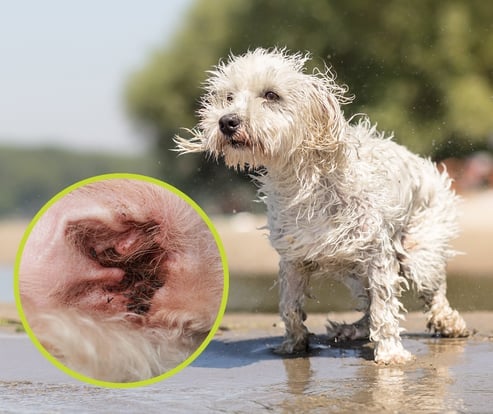
2️⃣ Moisture Build-Up (Swimming, Bathing, Humidity)
Moisture trapped inside the ear creates the perfect environment for yeast.

How it happens:
• Floppy-eared breeds trap moisture easily
• Water remains after swimming or baths
• Humid climates worsen the issue
3️⃣ Over-cleaning or Incorrect Cleaning
Many owners unintentionally worsen infections by cleaning too often or using improper tools.

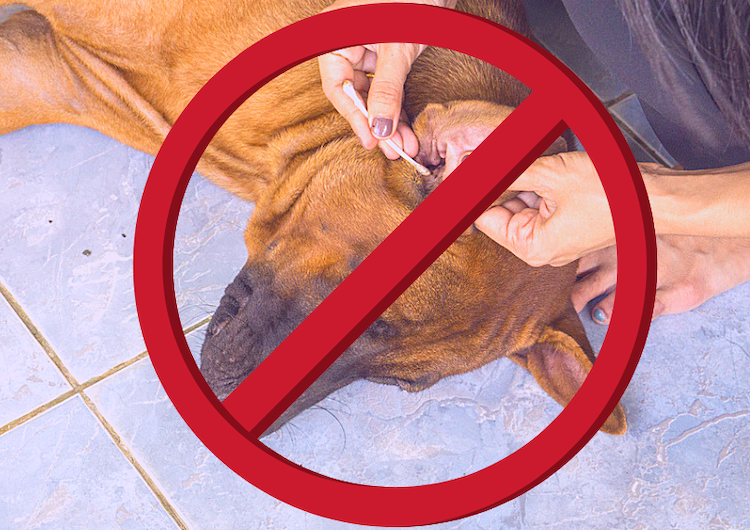
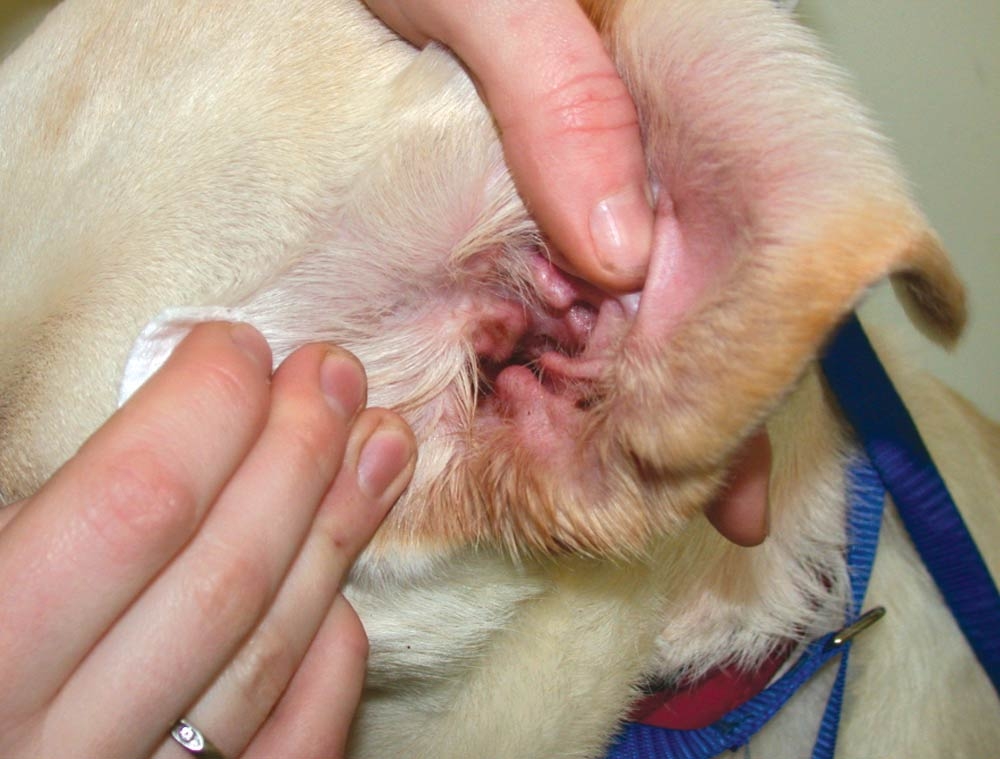
Problems caused by over-cleaning:
• Irritates the ear canal
• Alters natural pH
• Encourages yeast overgrowth
Problems caused by under-cleaning:
• Wax buildup
• Dirt and debris accumulate
4️⃣ Breed Anatomy (Narrow or Hairy Ear Canals)
Some breeds are simply more prone to infections.


Breeds like:
• Cocker Spaniel
• Poodle
• Labrador Retriever
• French Bulldog
• Shih Tzu
…naturally have ear structures that trap heat, moisture, and wax.
5️⃣ Untreated Yeast or Bacterial Overgrowth
Recurring infections often mean the original infection was never fully resolved.
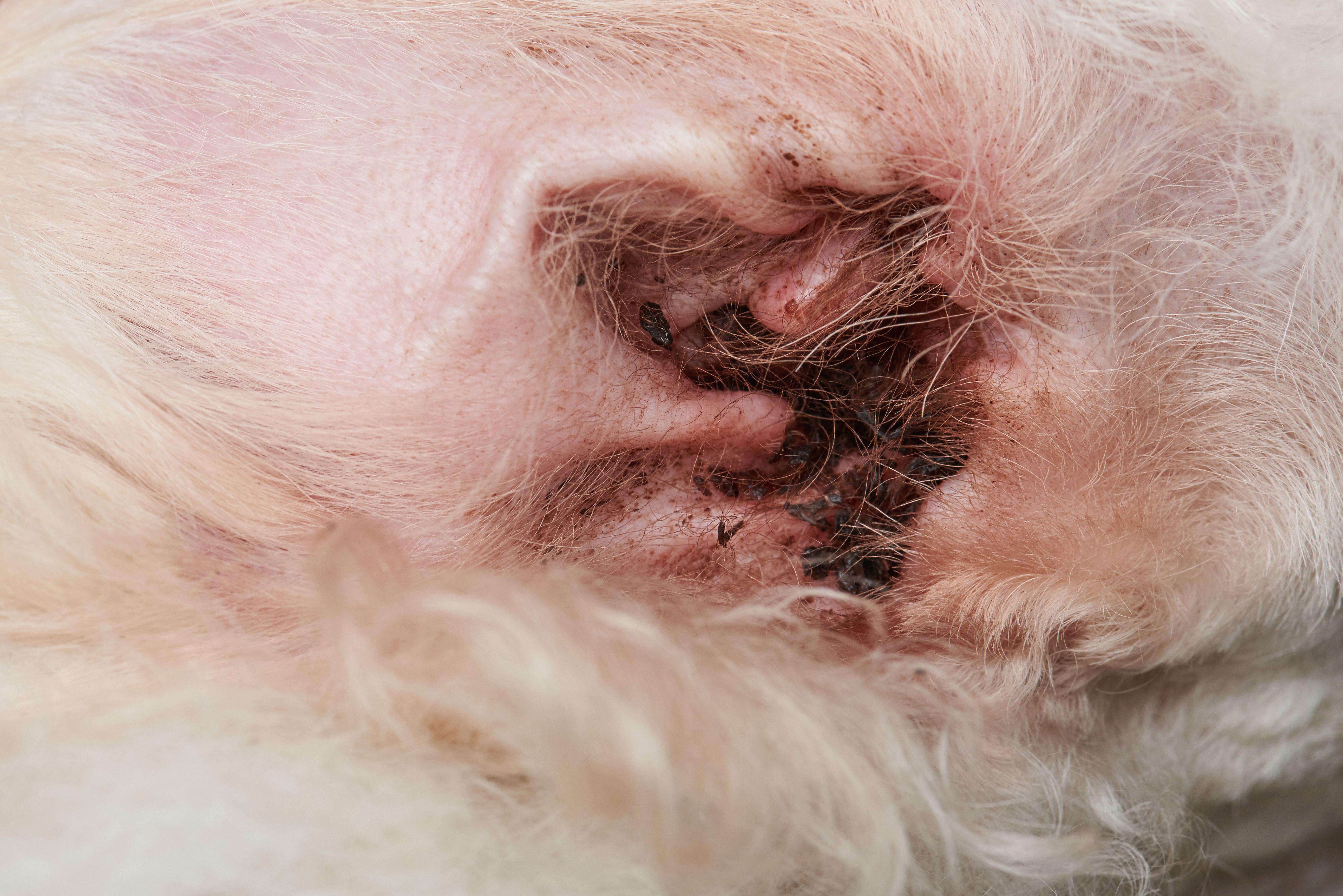


What this looks like:
• Brown, yellow, or black discharge
• Thick buildup inside the ear
• Bad smell
• Dog cries or pulls away when touched
📌 When Should You See a Vet?


Seek vet care if you notice:
✔ Persistent or recurring infections
✔ Strong odor
✔ Bloody discharge
✔ Sudden increased pain
✔ Head tilting or balance issues
💡 Final Thoughts
Chronic ear infections aren’t a sign that you’re doing anything wrong—they’re a sign your dog needs help getting to the root cause.
With proper diagnosis, cleaning routines, and allergy management, your dog can live infection-free.