
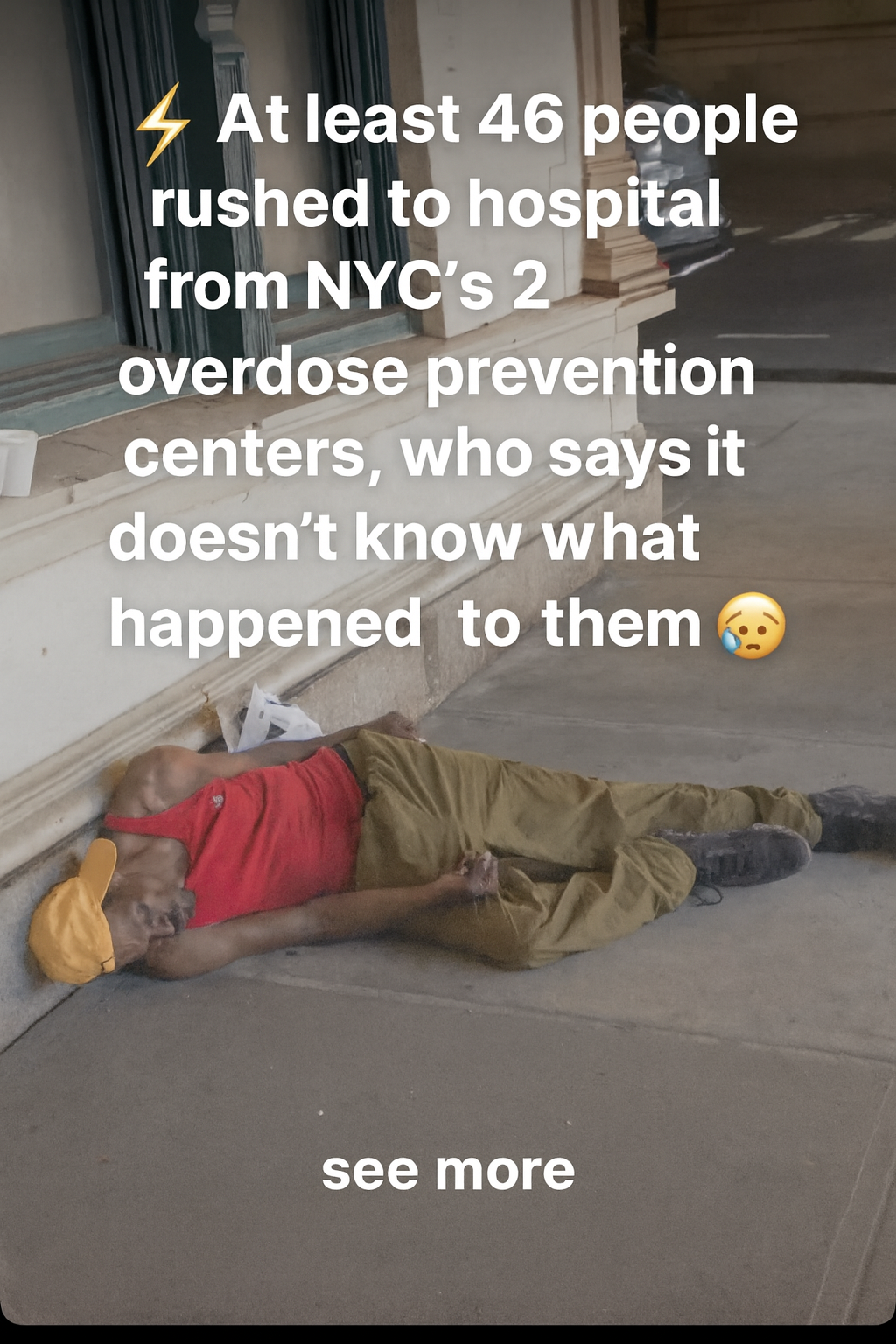
OnPoint, the nonprofit that operates the two so-called safe injection sites in Harlem and Washington Heights, doesn’t even keep track of what happened to these people – or if they died, The Post has learned, an oversight critics are slamming as negligent.
The city Health Department, which oversees the two safe injection sites, defended OnPoint, saying hospitals don’t report the outcomes of EMS calls to the private individuals who call 911.
“We continue to lose too many New Yorkers too soon, which is why access to syringe service programs like OnPoint is so critical. Not only do these programs connect thousands of people to essential medical care who would otherwise be left without it, they also save lives,” a Health Department spokesperson said.
Overdoses at the centers, meanwhile, went up 7%, from 636 to 683, between their first and second years, according to OnPoint’s newly released annual report.
It reveals that 3,156 junkies visited the centers 61,184 times in 2023, the most recent year for which data was made available.
That’s up 26% from year one, when drug users walked through the doors 48,533 times.

There was also an increase in repeat visitors, with 177 clients coming in to do drugs more once a day in 2023, up 108% from 77 in 2022.
“We increased the overall number of visits and frequency of visits to the Overdose Prevention Centers. These are significant successes,” OnPoint bragged in its annual report.
Crack was the drug of choice among OnPoint users, with it being smoked as many as 56,175 times over the two-year period, followed by heroin, which was injected 48,714 times. Cocaine was snorted 30,721 times, and speedballs – a dangerous mix of heroin and cocaine – were injected 19,651 times.
Alarmingly, speedball use at the Washington Heights location more than doubled between year one and two, from 19% to 44%. In Harlem, the rise was more modest – from 5% to 7%.

Critics have long blasted the centers as keeping addicts hooked on drugs rather than getting them clean.
“It’s like, they’ve continued to do something that doesn’t work at greater scale. That’s nice, but there’s no measure of outcomes, which doesn’t surprise me, because the outcomes will not look good,” said Charles Lehman, a public policy expert at the Manhattan Institute.
The report notes that 14% of patients “received services related to buprenorphine” – a treatment for opioid addiction – which includes education, screening, and counseling, but doesn’t break down the number to say how many actually agreed to receive treatment.
“That could just mean they were given a brochure,” slammed Lehman. “They’re not demonstrating they’re getting people into recovery – which is best case scenario of services like this. I don’t think they seem particularly interested.”
Neighbors have complained about the drug use and dealing spilling into the surrounding streets, and junkies having daytime public sex.
In 2024, OnPoint received more than $15.9 million in taxpayer funds, making up the majority of its $17.4 million revenue, according to its tax filing. The amount of public money it’s received has gone up through the years, from $6.5 million in 2022, the first full year the safe injection sites operated.
“Their focus is facilitating drug use, and they don’t think that it is obligatory to try to get people to stop using drugs. They don’t really care about long-term outcomes,” said Lehman.
In August, Manhattan’s top federal prosecutor hinted at plans to possibly shut down the city’s two safe injection centers, which are illegal under federal law, after President Trump targeted them in an executive order.
Mayor-elect Zohran Mamdani has pushed to open more of them – co-sponsoring the “Safer Consumption Services Act” in Albany, which would establish a state program, first in 2023 and again in 2025 – but did a 180 in the October debate, saying he would keep the two current sites but not expand the program further.


That was a reversal of even his promises earlier on the primary campaign trail, and with a slew of harm reduction activists on his community safety transition team, there could be a chance the number of shooting galleries in Gotham could go up.