

When your dog starts limping but doesn’t cry, whine, or seem uncomfortable, it’s easy to assume it’s nothing serious. But limping is never “normal,” even without obvious pain. Dogs are experts at hiding discomfort, and a limp often signals an underlying issue that needs attention.
This article explains why dogs limp without showing pain, what the possible causes are, and when you should see a vet.
Why Dogs Limp Without Showing Pain
Dogs instinctively mask pain to avoid appearing vulnerable. As a result:
-
They may continue walking, eating, and playing
-
Pain may only show during certain movements
-
The limp can be the only visible sign of a problem
Even mild limping means something isn’t right.
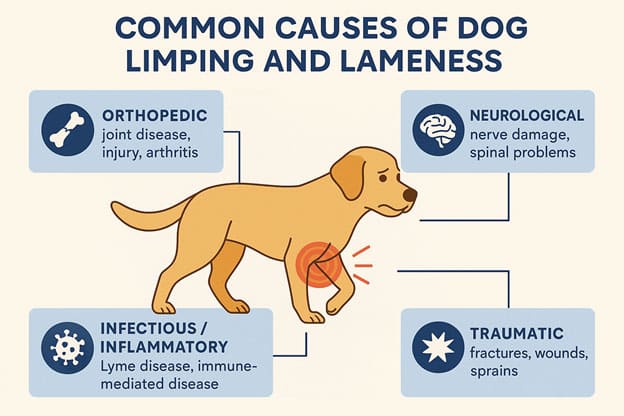
Common Causes of Limping With No Obvious Pain

1. Minor Paw Injuries
-
Small cuts, thorns, or splinters
-
Cracked paw pads
-
Debris stuck between toes
Dogs may limp slightly but not react strongly when touched.
2. Muscle Strain or Overuse
-
Running too hard
-
Jumping or rough play
-
Slipping on smooth floors
Often improves with rest but can worsen if ignored.
3. Early Arthritis or Joint Issues
-
Stiffness after rest
-
Limping that improves with movement
-
Common in middle-aged and senior dogs
Pain may be mild at first and easy to miss.
4. Ligament or Tendon Injury
-
Partial tears (like early ACL/CCL injury)
-
Limping may come and go
-
Dog may still bear weight
Without treatment, these often progress.
5. Nail or Toe Problems
-
Cracked or broken nails
-
Ingrown nails
-
Inflammation between toes
These can be uncomfortable without obvious pain signs.
When Limping Becomes a Red Flag
🚨 Contact your vet if your dog:
-
Limps for more than 24–48 hours
-
Suddenly worsens or refuses to use the leg
-
Has swelling, heat, or redness
-
Licks or chews the area excessively
-
Is a puppy or senior dog
Early treatment prevents long-term damage.
What You Can Do at Home (Short-Term Care)
✅ Restrict activity (no running or jumping)
✅ Check paws, nails, and between toes
✅ Apply a cold compress (10 minutes, 2–3x/day)
✅ Monitor for changes over 24 hours
❌ Do NOT give human pain medications
❌ Do NOT force exercise to “test” the leg
Why Ignoring a Limp Can Be Risky
A mild limp today can turn into:
-
Chronic joint damage
-
Ligament rupture
-
Long-term arthritis
Dogs often push through pain until injuries worsen.
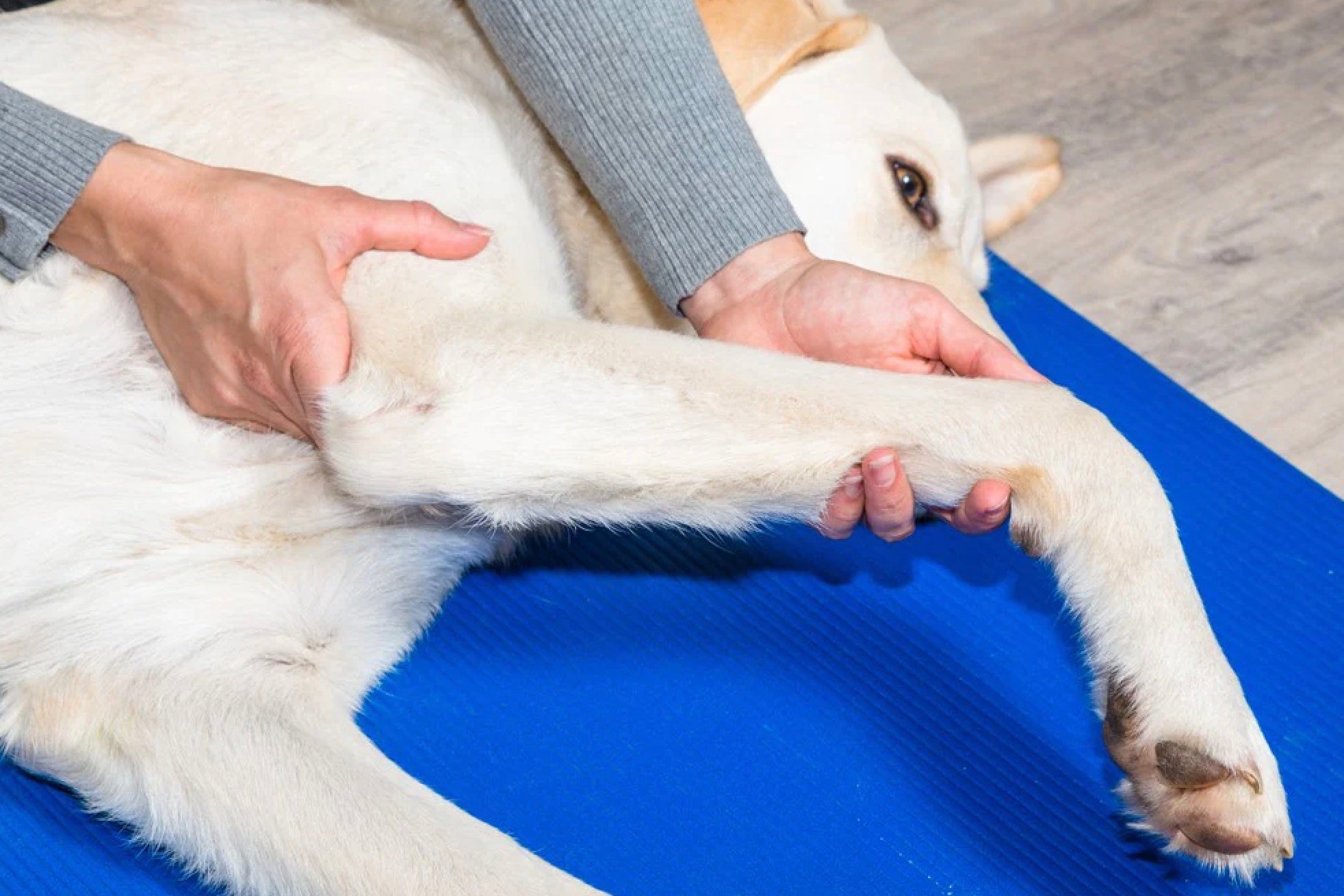
How Vets Diagnose Limping
Your veterinarian may use:
-
Physical and orthopedic exam
-
X-rays or imaging
-
Gait analysis
-
Joint manipulation
Treatment may include rest, medication, physical therapy, or surgery—depending on the cause.
Final Takeaway
If your dog is limping but acting “fine,” don’t ignore it. Limping is your dog’s quiet way of saying something isn’t right—even if they’re not showing pain.
🐾 Early care keeps small problems from becoming big ones.