
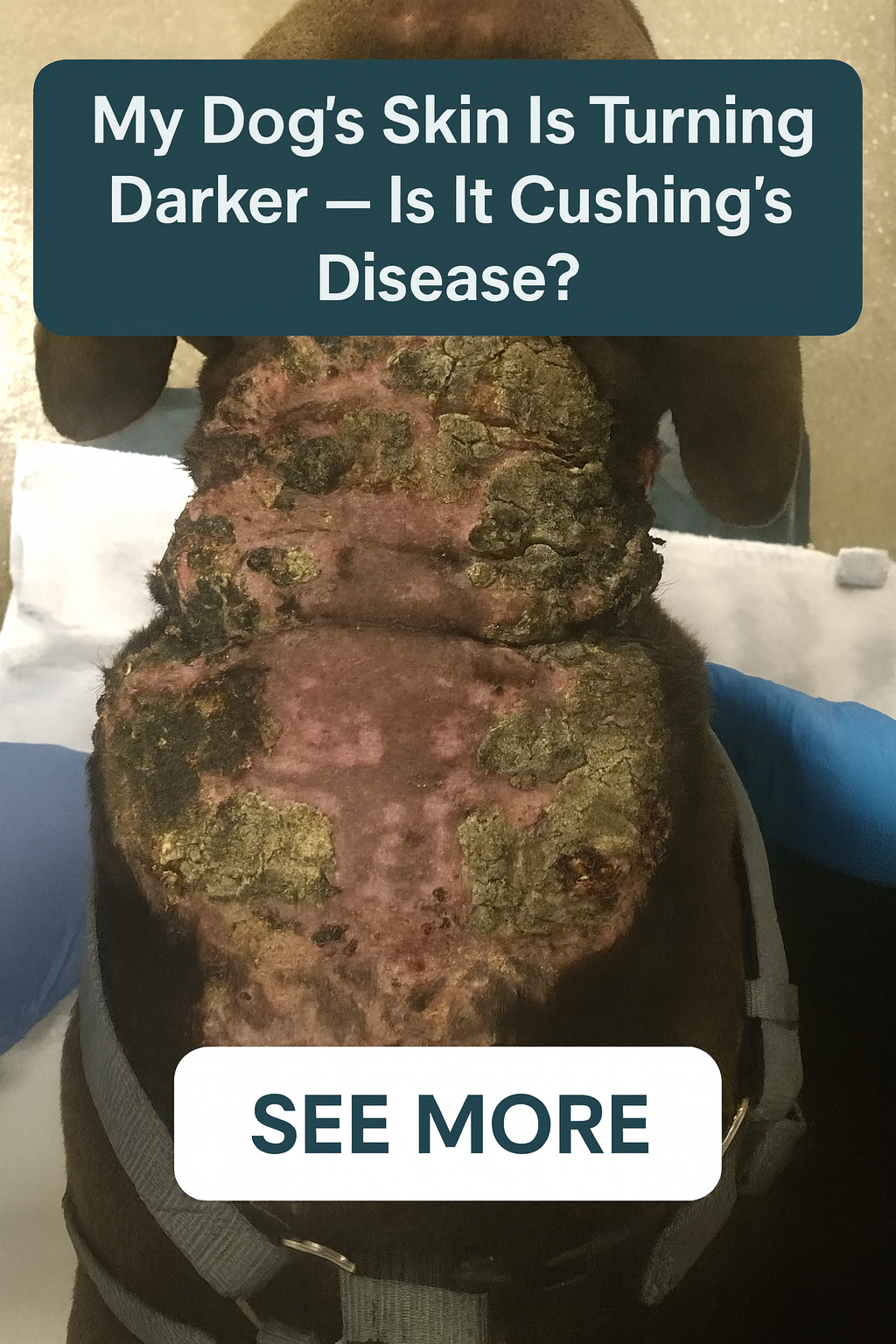
Noticing your dog’s skin becoming darker, thicker, or patchy can be worrying—especially if it seems to be spreading. While skin darkening (called hyperpigmentation) can have several causes, Cushing’s disease is one of the most important conditions to rule out, especially in middle-aged and senior dogs.
This article explains why a dog’s skin may darken, how Cushing’s disease affects the skin, warning signs to watch for, and when to see a vet.
What Does “Skin Turning Darker” Look Like?
Skin changes may include:
-
Dark gray, brown, or black patches
-
Thinning or hair loss in affected areas
-
Skin that feels thick, leathery, or greasy
-
Darkening on the belly, groin, armpits, or neck
These changes often develop gradually, making them easy to miss at first.
What Is Cushing’s Disease in Dogs?
Cushing’s disease (hyperadrenocorticism) occurs when a dog’s body produces too much cortisol, a stress hormone.
Excess cortisol affects:
-
Skin and coat
-
Muscles
-
Immune system
-
Internal organs
Over time, this hormonal imbalance causes visible changes—especially to the skin.
How Cushing’s Disease Affects the Skin

Dogs with Cushing’s often show:
-
Darkened skin (hyperpigmentation)
-
Symmetrical hair loss on both sides of the body
-
Thin, fragile skin that bruises easily
-
Slow hair regrowth after shaving
-
Recurrent skin infections
Skin changes are often one of the earliest visible clues.
Other Common Signs of Cushing’s Disease
Skin darkening alone doesn’t confirm Cushing’s. Look for combinations of these signs:
-
Increased thirst and urination
-
Increased appetite
-
Pot-bellied appearance
-
Panting more than usual
-
Muscle weakness or lethargy
-
Recurrent ear or skin infections
⚠️ The more signs present, the higher the concern.
Other Causes of Darkening Skin (Not Always Cushing’s)
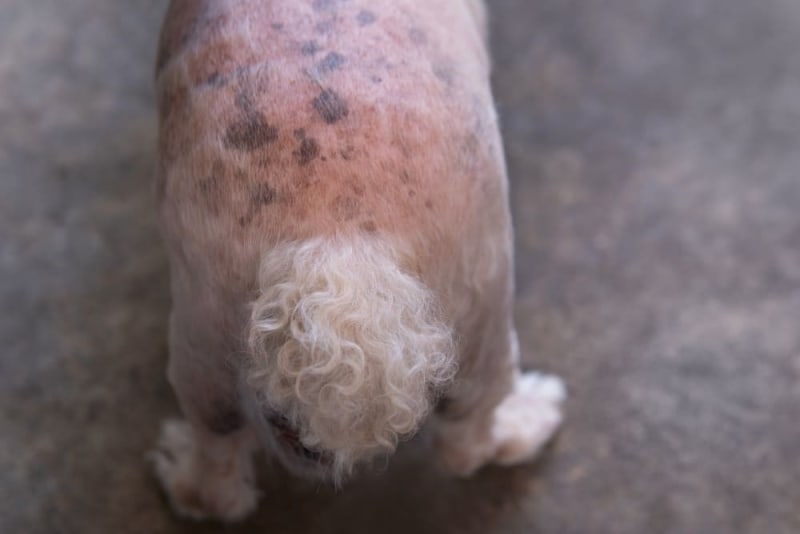
Darkened skin can also be caused by:
-
Allergies (food or environmental)
-
Chronic licking or scratching
-
Yeast or bacterial infections
-
Hypothyroidism
-
Obesity-related skin friction
These conditions are common and treatable, but still require proper diagnosis.
When Should You See a Vet?
🚨 Schedule a vet visit if your dog:
-
Has spreading or worsening skin darkening
-
Shows hair loss plus behavior changes
-
Drinks or urinates more than usual
-
Develops frequent infections
-
Is middle-aged or older
Early testing can make management much easier.
How Vets Diagnose Cushing’s Disease
Diagnosis often involves:
-
Blood tests
-
Urine cortisol testing
-
ACTH stimulation or low-dose dexamethasone test
-
Ultrasound (to check adrenal glands)
Cushing’s is manageable—but early diagnosis matters.
Can Cushing’s Be Treated?
Yes. While it usually can’t be “cured,” it can be well controlled with:
-
Daily medication
-
Regular blood monitoring
-
Skin and infection management
Many dogs live happy, comfortable lives with proper treatment.
Final Takeaway
If your dog’s skin is turning darker, don’t ignore it. While allergies or infections are common causes, Cushing’s disease is a serious possibility that should be ruled out—especially if other symptoms are present.
🐾 Trust what you’re seeing. Skin changes are often the body’s early warning system.