
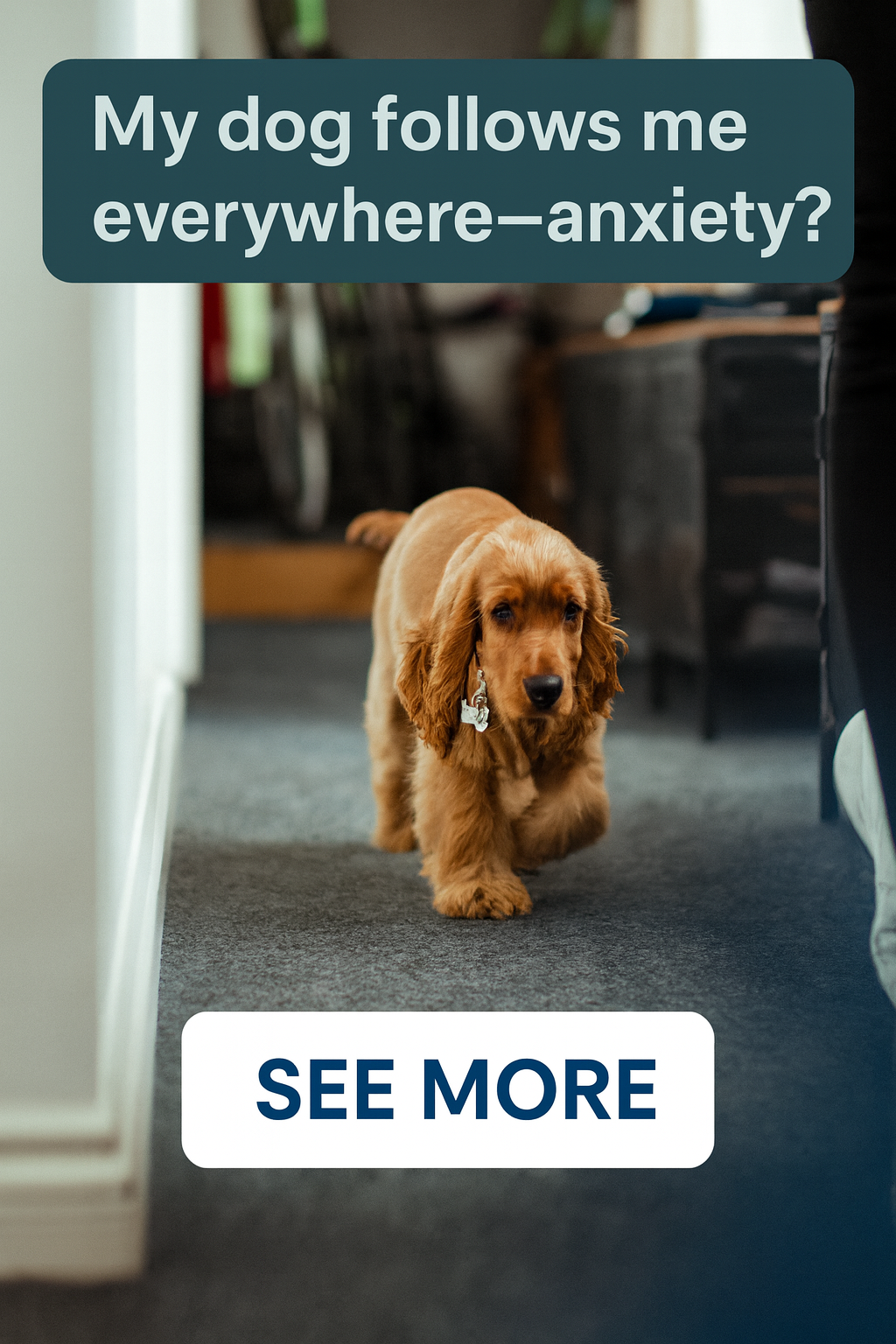
Does your dog trail you from room to room, wait outside the bathroom, or panic when you’re out of sight? While this behavior can be sweet and affectionate, constant following may also signal anxiety or emotional dependence.
This article helps you understand why dogs follow their owners everywhere, when it’s normal, when it’s a problem, and what you can do to help.
What Does “Following Everywhere” Look Like?
You may notice your dog:
-
Shadowing you from room to room
-
Lying at your feet constantly
-
Waiting outside the bathroom or bedroom
-
Becoming restless when you leave
-
Watching you closely at all times
The key question is: is your dog calm—or distressed—when you’re not nearby?
Common Reasons Dogs Follow Their Owners

1. Normal Attachment (“Velcro Dog” Personality)
Some dogs are naturally more people-focused.
-
Certain breeds (Velcro breeds) prefer closeness
-
Often calm, relaxed, and confident
-
No panic when left alone
✔ This is usually not anxiety.
2. Separation Anxiety
⚠️ A serious and common cause.
Signs include:
-
Following you obsessively
-
Distress when you prepare to leave
-
Barking, whining, or destruction when alone
-
Pacing or drooling
These dogs aren’t being clingy—they’re panicking.
3. Insecurity or Fear
Dogs that have experienced:
-
Rehoming
-
Trauma
-
Sudden routine changes
may follow closely for reassurance and safety.
4. Learned Behavior
If your dog gets:
-
Treats
-
Attention
-
Comfort
every time they follow you, the behavior may be unintentionally reinforced.
5. Medical or Cognitive Changes
Especially in older dogs:
-
Vision or hearing loss
-
Cognitive dysfunction (dog dementia)
These dogs may follow you because they feel disoriented or unsafe alone.
When Following Becomes a Red Flag



🚨 Be concerned if your dog:
-
Panics when you leave the room
-
Cannot relax alone
-
Destroys items when left
-
Vocalizes excessively
-
Refuses to eat unless you’re nearby
These are strong signs of anxiety, not affection.
What You Can Do to Help (Starting Today)
Encourage Independence
-
Practice short separations within the home
-
Reward calm behavior away from you
-
Avoid constant reassurance
Create Safe Spaces
-
Comfortable bed or crate
-
White noise or calming music
-
Familiar toys
Stay Calm During Departures
-
No dramatic goodbyes
-
Leave quietly and confidently
Increase Mental Stimulation
-
Puzzle toys
-
Training sessions
-
Enrichment games
When to See a Vet or Behaviorist
Seek professional help if:
-
Anxiety is severe or worsening
-
Your dog shows destructive or self-harming behaviors
-
Training alone doesn’t help
Treatment may include:
-
Behavior modification
-
Anxiety-reducing medication
-
Supplements or diet changes
Final Takeaway
Following you everywhere can mean love—but it can also mean fear of being alone. The difference lies in how your dog behaves when you’re not there.
🐾 A confident dog can relax without you. Helping them learn that is an act of love.