
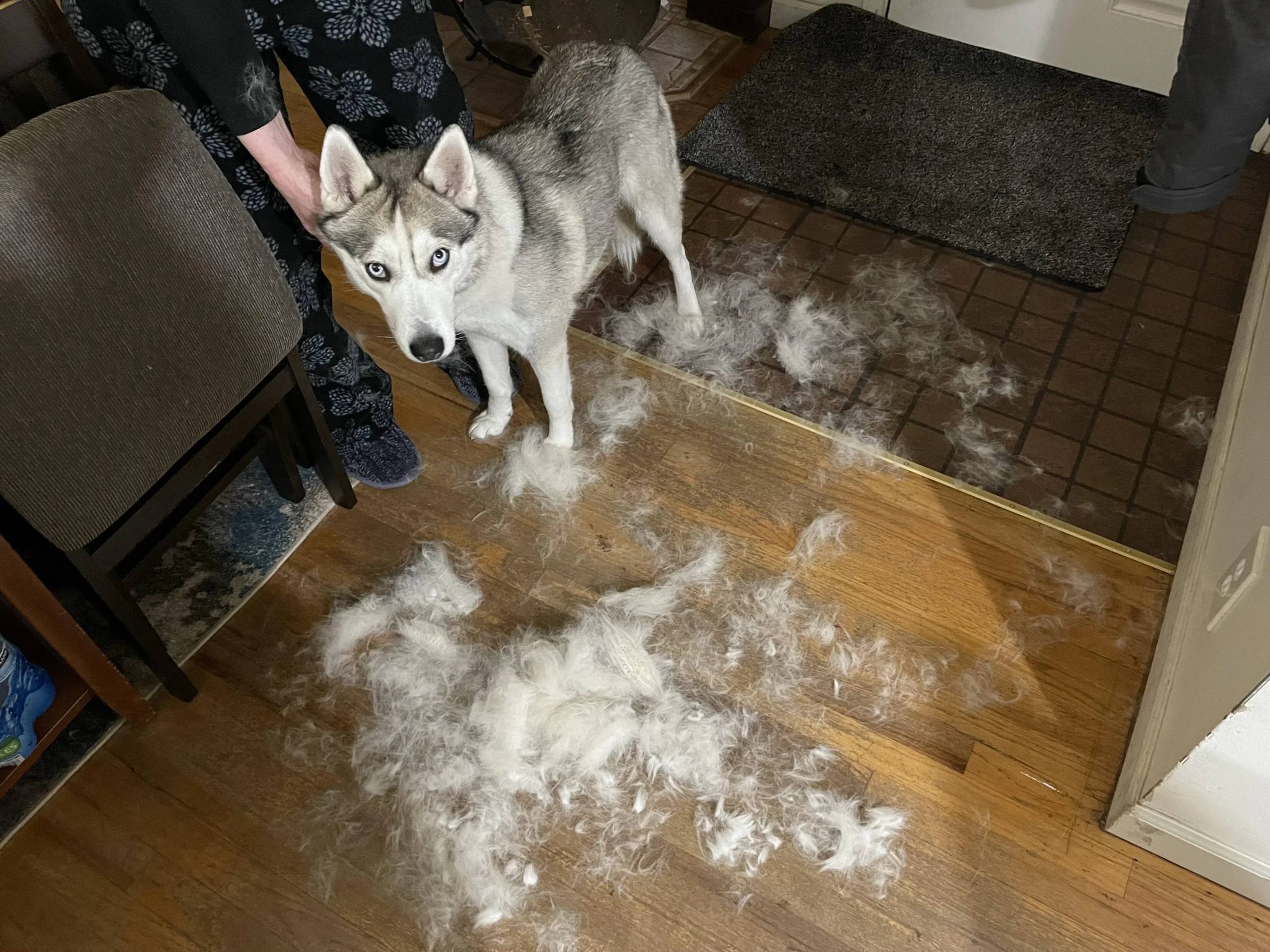
If your Husky seems to be shedding clumps of fur nonstop, you’re probably wondering whether this is normal—or a sign something’s wrong. Huskies are famous for “blowing coat,” but excessive or prolonged shedding can signal underlying issues.
This guide explains what coat blowing really is, what’s normal vs. excessive, common causes, and how to manage it safely.
What Does “Blowing Coat” Mean?
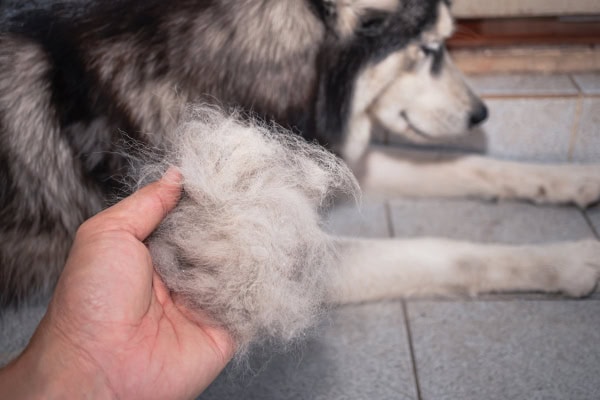
“Blowing coat” refers to the seasonal shedding of a Husky’s dense undercoat. During this time, fur comes out in:
-
Large clumps
-
Tufts you can pull out by hand
-
Thick clouds when brushing
This usually happens 1–2 times per year.
What’s Normal for a Husky?
A normal coat blow:
-
Lasts 2–6 weeks
-
Happens in spring and/or fall
-
Leaves the topcoat mostly intact
-
Skin underneath looks healthy (pink, no sores)
Your home may look like it’s snowing fur—but your dog should otherwise seem healthy and comfortable.
When Coat Blowing Becomes Excessive
Be concerned if shedding:
-
Lasts longer than 6–8 weeks
-
Happens year-round
-
Comes with bald patches
-
Is paired with itching, redness, or sores
-
Produces dull, brittle fur
These signs suggest more than normal seasonal shedding.
Common Causes of Excessive Shedding in Huskies
1. Indoor Living & Light Exposure
Huskies shed based on daylight, not temperature.
-
Artificial lighting year-round
-
Climate-controlled homes
➡️ Can confuse shedding cycles and cause prolonged coat blow.
2. Poor Nutrition
Low-quality diets can cause:
-
Weak hair shafts
-
Excessive undercoat loss
-
Slow coat regrowth
Look for diets rich in:
-
High-quality protein
-
Omega-3 & Omega-6 fatty acids
3. Stress or Anxiety
Stress can trigger hair loss:
-
Moving
-
Boarding
-
New pets
-
Schedule changes
Stress-related shedding often comes on suddenly.
4. Allergies or Skin Conditions
Environmental or food allergies may cause:
-
Excessive shedding
-
Itching or licking
-
Red or inflamed skin
5. Hormonal or Medical Issues
Less common but serious causes include:
-
Hypothyroidism
-
Cushing’s disease
-
Chronic infections
These usually include other symptoms, not just shedding.
How to Manage Heavy Coat Blowing Safely

✅ Brush daily with an undercoat rake
✅ Bathe occasionally with dog-safe shampoo
✅ Use a high-velocity dryer (or groomer)
✅ Maintain a consistent grooming routine
❌ Never shave a Husky — it damages coat insulation
Shaving can lead to uneven regrowth, overheating, and skin damage.
When to See a Vet
Schedule a vet visit if:
-
Shedding is extreme and persistent
-
Bald spots appear
-
Skin looks unhealthy
-
Your Husky seems lethargic or gains weight
Blood work or skin tests may be needed to rule out medical causes.
Can Supplements Help?
Yes—when appropriate.
-
Fish oil (omega-3s)
-
Skin & coat supplements
-
Vet-approved probiotics
Always consult your vet before starting supplements.
Final Takeaway
Huskies are built to shed—but excessive or nonstop coat blowing isn’t always normal. Knowing your dog’s typical cycle helps you spot when something’s off.
🐾 A healthy Husky sheds a lot—but still has healthy skin and energy.