
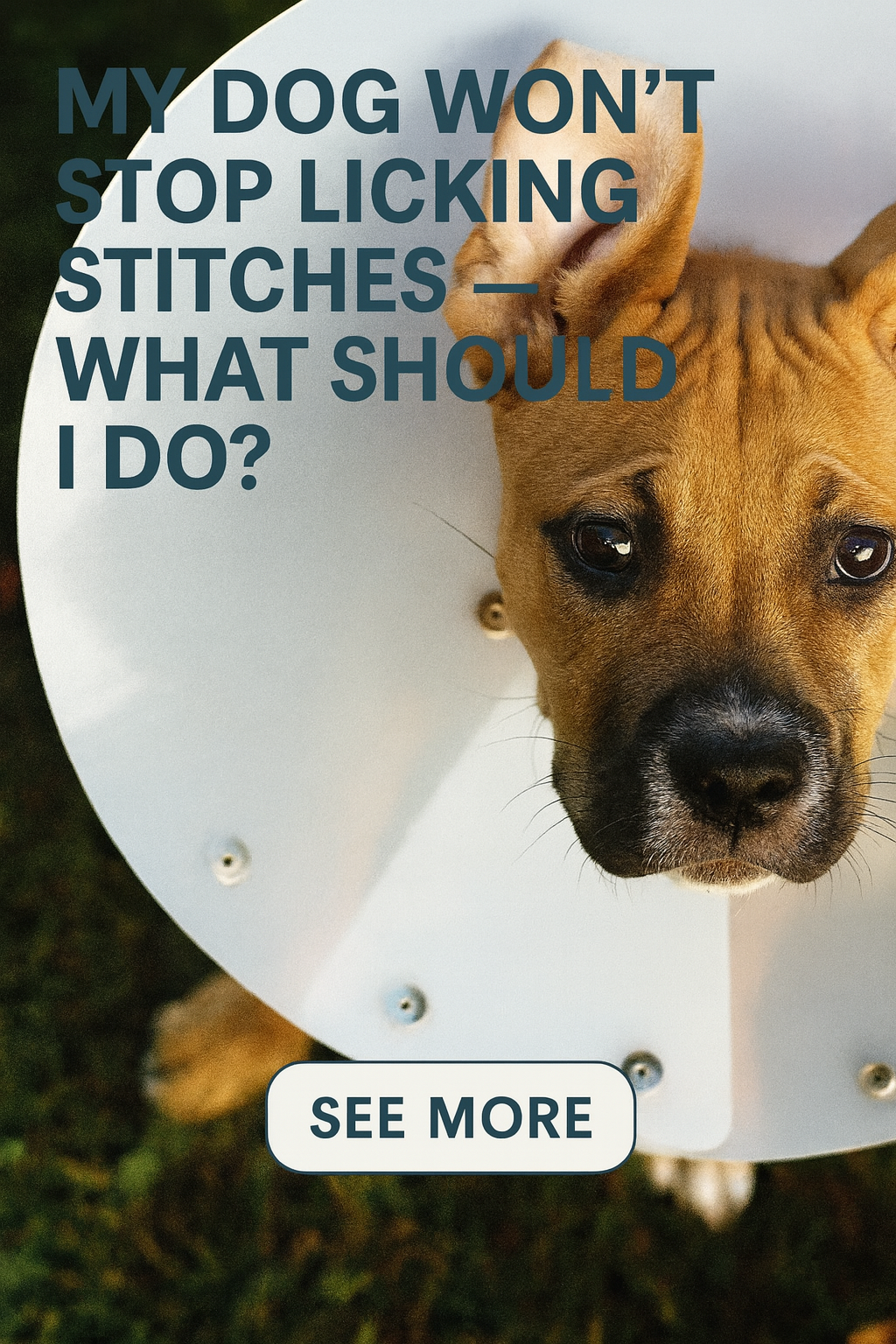
After surgery, it’s common for dogs to notice their stitches—but constant licking is a serious problem. If your dog won’t stop licking, chewing, or biting at the incision, it can delay healing, cause infection, or even reopen the wound, turning a routine recovery into an emergency.
This article explains why dogs lick stitches, why it’s dangerous, how to stop it immediately, and when to call the vet.
Why Dogs Lick Their Stitches
Dogs lick wounds instinctively, but stitches trigger that behavior even more.
Common reasons include:
-
Pain or discomfort at the incision site
-
Itching as healing begins
-
Stress or anxiety after surgery
-
Foreign-body sensation (stitches feel “wrong”)
Licking isn’t misbehavior—it’s your dog reacting to discomfort.
Why Licking Stitches Is Dangerous
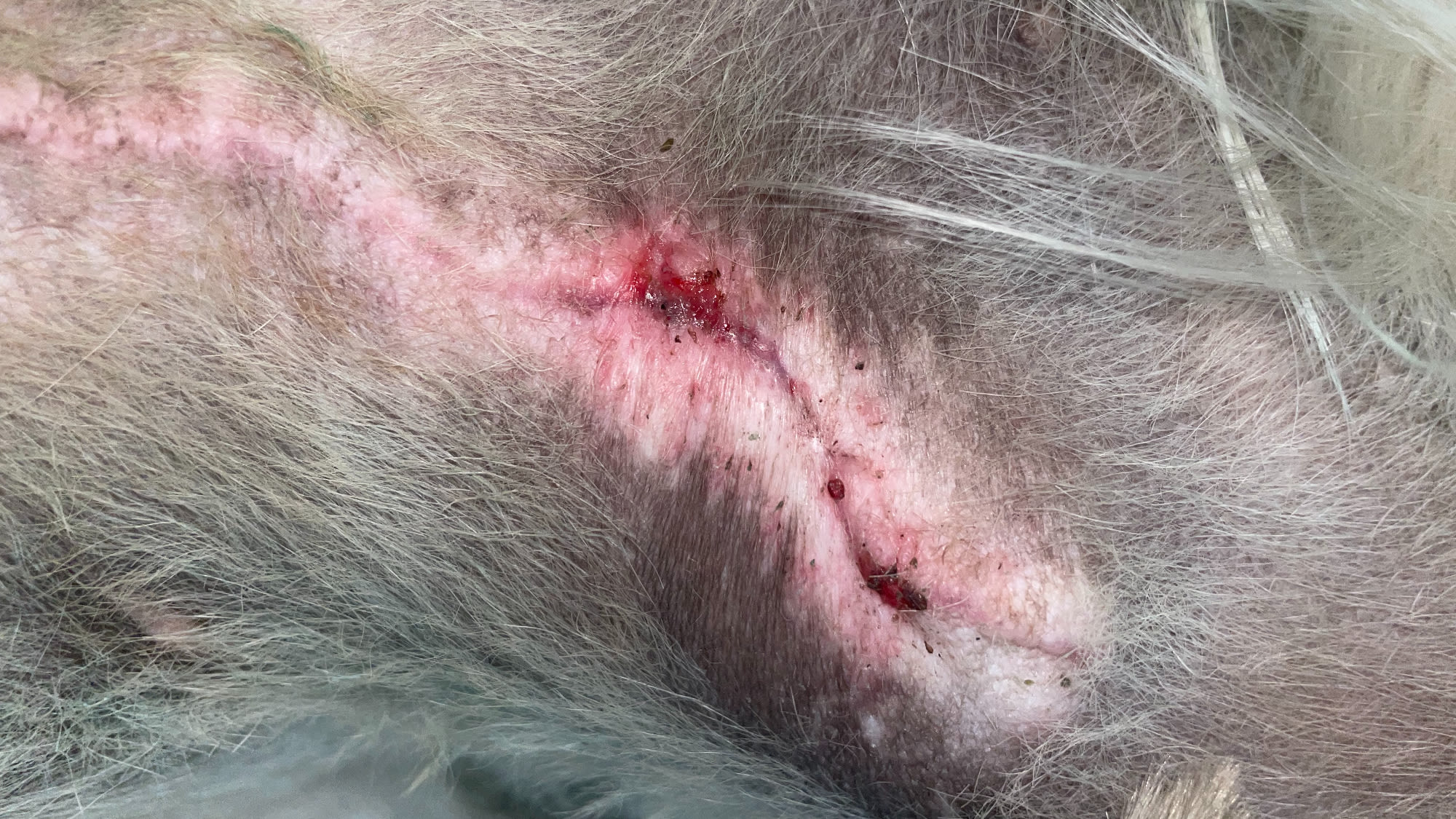
Excessive licking can lead to:
-
Open or torn stitches
-
Bleeding or oozing
-
Bacterial infection
-
Swelling and inflammation
-
Delayed or failed healing
⚠️ A wound that looks fine in the morning can become infected or open within hours.
What’s Normal vs. NOT Normal
Usually Normal
✔ Brief interest in the incision
✔ Licking once or twice, then stopping
✔ Sniffing the area
NOT Normal (Red Flags)
🚨 Constant licking or chewing
🚨 Ignoring commands to stop
🚨 Licking until skin is red or wet
🚨 Bleeding, swelling, or discharge
If your dog is obsessed with the stitches, action is needed right away.
How to Stop Your Dog From Licking Stitches (Immediately)

1. Use a Cone (E-Collar)
The most effective option.
-
Prevents access completely
-
Should stay on 24/7 until cleared by your vet
💡 Many dogs adjust faster than owners expect.
2. Try a Recovery Suit or Surgical Shirt
-
Useful for abdominal or flank incisions
-
More comfortable for some dogs
-
Must fit snugly and stay clean
⚠️ Not suitable for all incision locations.
3. Address Pain and Itching
If your dog is licking despite protection:
-
Pain meds may need adjustment
-
Anti-itch meds may be required
👉 Call your vet—don’t wait.
4. Strict Activity Restriction
Too much movement increases irritation.
-
No running, jumping, or stairs
-
Calm, controlled leash walks only
What NOT to Do
❌ Do NOT apply bitter sprays directly to the incision
❌ Do NOT use human creams or antibiotics
❌ Do NOT leave the wound uncovered “to air out”
❌ Do NOT assume licking will stop on its own
These mistakes often make things worse.
When Licking Becomes an Emergency

🚨 Call your vet or seek urgent care if:
-
Stitches open or skin separates
-
Bleeding, pus, or foul odor appears
-
Swelling or redness rapidly worsens
-
Your dog seems in pain or lethargic
Early treatment can prevent repeat surgery.
How Long Must Stitches Be Protected?
Typically:
-
10–14 days for skin stitches
-
Sometimes longer for deeper incisions
Your dog should never have unsupervised access to the incision during this period.
Final Takeaway
If your dog won’t stop licking stitches, it’s not harmless—and it won’t fix itself. Immediate protection and pain control are essential to prevent infection and serious complications.
🐾 Stopping the licking today can save your dog from pain, setbacks, and another surgery tomorrow.