
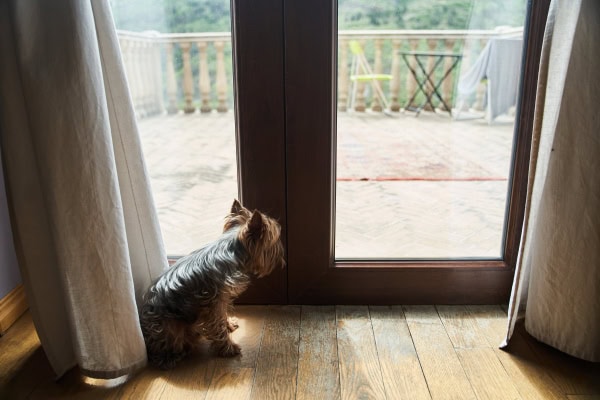
You glance over and see your dog standing completely still, eyes locked on the door, ears up, body tense—as if waiting for something that never happens. There’s no knock. No sound you can hear. No movement.
So… why is your dog doing this?
While it can look eerie, this behavior usually has a logical explanation rooted in your dog’s senses, emotions, or health. Sometimes it’s harmless. Other times, it’s a quiet signal that something isn’t right.
This article explains the most common reasons dogs stare at doors, how to tell normal alertness from a red flag, and what you should do next.
What Does This Behavior Look Like?
You may notice your dog:
-
Standing frozen, staring at the door
-
Sitting upright and intensely focused
-
Ignoring their name when called
-
Repeating this behavior daily or at certain times
-
Staring without barking or growling
The key details are stillness, focus, and repetition.
Common Reasons Dogs Stare at Doors
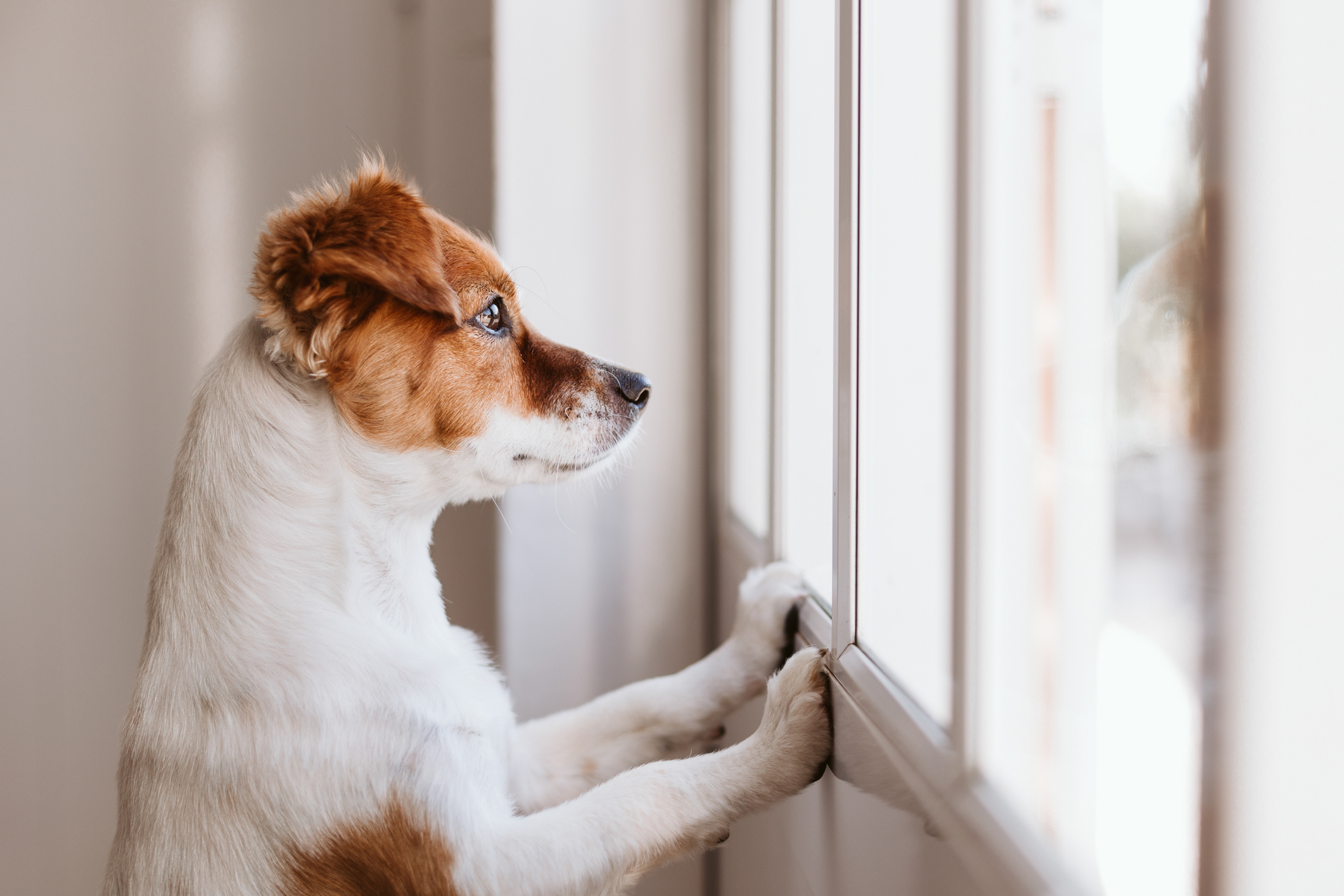
1. Your Dog Hears or Smells Something You Can’t
Dogs have incredibly sensitive senses.
-
Distant footsteps
-
Neighbors or elevators
-
Wildlife outside
-
Familiar scents lingering near the door
What seems like “nothing” to you may be very real to your dog.
2. Anticipation or Learned Routine
Dogs are excellent at predicting events.
-
Waiting for a family member to come home
-
Expecting a walk
-
Anticipating feeding time
If someone usually enters around that time, your dog may simply be waiting.
3. Protective or Guarding Instinct
Some dogs naturally monitor entry points.
-
Herding or guarding breeds
-
Dogs bonded strongly to their home or owner
This is often calm, silent vigilance—not aggression.
4. Anxiety or Insecurity
Staring can be a stress response.
-
Separation anxiety
-
Changes in routine
-
New home or visitors
An anxious dog may fixate on the door as a source of uncertainty.
5. Cognitive Changes (Especially in Senior Dogs)
⚠️ Common but often overlooked.
-
Canine Cognitive Dysfunction (dog dementia)
-
Confusion or disorientation
-
Fixation on familiar objects like doors
Senior dogs may stare because they don’t remember why they’re there.
6. Neurological or Medical Issues (Less Common, More Serious)
⚠️ Needs prompt evaluation if sudden or severe.
-
Focal seizures
-
Brain inflammation
-
Tumors or strokes
These are more likely if staring is prolonged, unresponsive, or paired with other symptoms.
When Door-Staring Is a Red Flag
🚨 Contact your vet if your dog:
-
Stares and does not respond to voice or touch
-
Appears confused or disoriented
-
Has head tilt, circling, or balance issues
-
Shows sudden personality changes
-
Is a senior dog with new staring behavior
-
Experiences trembling or seizure-like episodes
Sudden or worsening changes should never be ignored.
What You Can Do Right Now
Observe Patterns
-
Time of day
-
Duration of staring
-
Whether it stops with distraction
-
Triggers (sounds, routines, darkness)
Gently Test Responsiveness
-
Call your dog’s name
-
Clap softly
-
Toss a treat nearby
Lack of response is more concerning than the staring itself.
How Veterinarians Evaluate This Behavior
Your vet may:
-
Perform a physical and neurological exam
-
Check vision and hearing
-
Screen for pain or anxiety
-
Run blood work (especially for senior dogs)
-
Recommend imaging if neurological disease is suspected
Early evaluation can make a huge difference.
Is This Ever Just a Quirk?
Yes. Some dogs are simply:
-
Highly alert
-
Predictive thinkers
-
Routine-focused
If your dog:
✔ Responds normally
✔ Acts relaxed otherwise
✔ Shows no behavior changes
…it may be completely harmless.
Final Takeaway
When a dog stands still and stares at the door, they’re not being spooky—they’re processing information the only way they know how. Most of the time, it’s about senses or routine. But persistent, unresponsive, or new behavior—especially in older dogs—deserves attention.
🐾 Your dog may not speak, but stillness and staring are forms of communication. Listening early can prevent bigger problems later.