
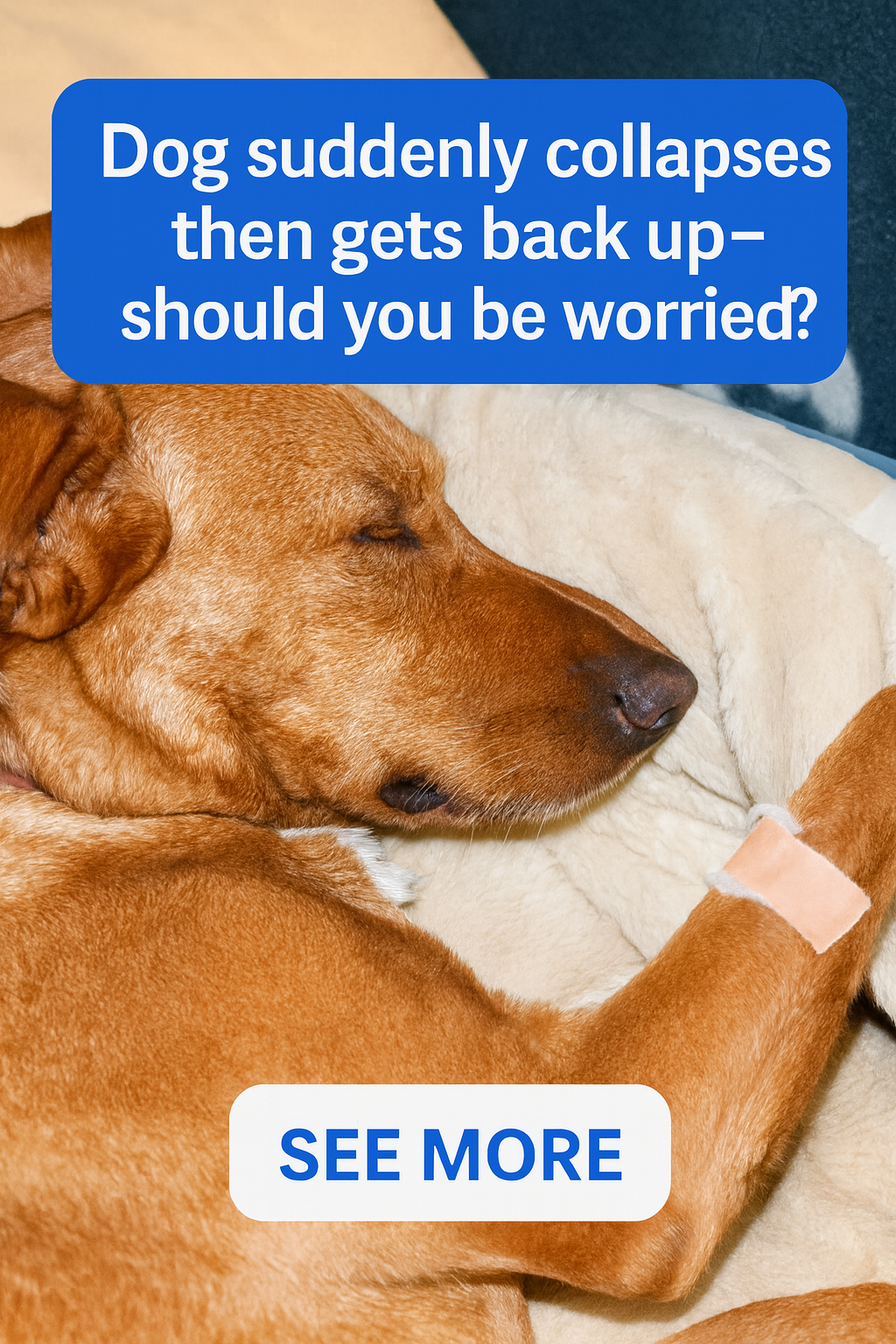
Seeing your dog suddenly collapse, stumble, or fall—then get back up as if nothing happened can be terrifying. Many owners are left wondering: Was that a seizure? A heart problem? Just clumsiness?
This type of episode is never something to ignore. While some causes are mild, others can be life-threatening if missed.
This article explains what sudden collapse means, the most common causes, how to tell what’s serious, and what you should do immediately.
What Does a “Collapse Episode” Look Like?
You may notice your dog:
-
Suddenly drops to the ground
-
Loses balance or strength briefly
-
Appears weak or wobbly
-
Lies down for seconds to minutes
-
Gets back up and acts mostly normal afterward
The brief recovery is an important clue—but it does not mean the issue is harmless.
Most Common Causes of Sudden Collapse

1. Fainting (Syncope) — Very Common
Syncope happens when the brain doesn’t get enough oxygen for a moment.
-
Often caused by heart rhythm problems
-
Collapse is sudden and quiet
-
Dog recovers quickly
⚠️ This is one of the most serious and commonly missed causes.
2. Heart Disease or Arrhythmia
Heart-related collapse may be triggered by:
-
Excitement
-
Exercise
-
Stress
-
Sudden standing
Dogs may appear perfectly normal between episodes.
3. Low Blood Sugar (Hypoglycemia)
More common in:
-
Small breeds
-
Puppies
-
Diabetic dogs
Signs include weakness, collapse, trembling, or confusion.
4. Heat Exhaustion or Overheating
Even mild heat can cause:
-
Sudden weakness
-
Collapse during or after activity
-
Rapid breathing
This can happen indoors or outdoors, especially in brachycephalic breeds.
5. Neurological Causes
Includes:
-
Mild seizures
-
Transient ischemic attacks (mini-strokes)
-
Vestibular episodes
Unlike fainting, these may include confusion afterward.
6. Pain or Orthopedic Weakness
Severe joint or spinal pain can cause a dog to:
-
Suddenly give out
-
Fall briefly
-
Recover once pressure changes
This is less common but still important.
Collapse vs. Seizure — Key Differences

More Like Fainting (Syncope)
✔ Sudden fall
✔ No paddling or convulsions
✔ Brief episode
✔ Quick recovery
✔ Often triggered by activity
More Like a Seizure
🚩 Signs include:
-
Stiffening or violent shaking
-
Paddling legs
-
Drooling or foaming
-
Loss of bladder/bowel control
-
Confusion after the episode
If you see these signs, seek veterinary care immediately.
When Sudden Collapse Is an Emergency
🚨 Go to the vet or ER immediately if your dog:
-
Collapses more than once
-
Collapses during exercise or excitement
-
Has pale or blue gums
-
Breathes rapidly or struggles to breathe
-
Becomes weak, confused, or lethargic afterward
-
Is a senior dog or has known heart disease
⏱️ Repeated or unexplained collapse is always urgent.
What You Should Do Right Now
-
Keep your dog calm and still
-
Do not force walking or activity
-
Check gum color (should be pink)
-
Record what happened (video if possible)
-
Contact your vet ASAP—even if your dog seems “fine” now
❌ Don’t assume it was a one-time thing
❌ Don’t wait days to mention it
How Vets Diagnose Sudden Collapse
Your veterinarian may perform:
-
Physical and neurological exam
-
Heart auscultation and ECG
-
Blood tests (glucose, electrolytes)
-
Chest X-rays
-
Blood pressure testing
Finding the cause early can prevent sudden death in heart-related cases.
Can Dogs Recover From Collapse Episodes?
Yes—many dogs do very well once the cause is identified.
-
Heart rhythm issues can often be managed
-
Blood sugar problems are treatable
-
Heat-related collapse improves with prevention
-
Some neurological causes are manageable
The key factor is speed of diagnosis.
Final Takeaway
If your dog suddenly collapses and then gets back up, don’t ignore it just because they seem okay afterward. These episodes are often warning signs—especially of heart or circulation problems.
🐾 Collapse is your dog’s body saying, “Something went wrong—please pay attention.” Acting early can save their life.