
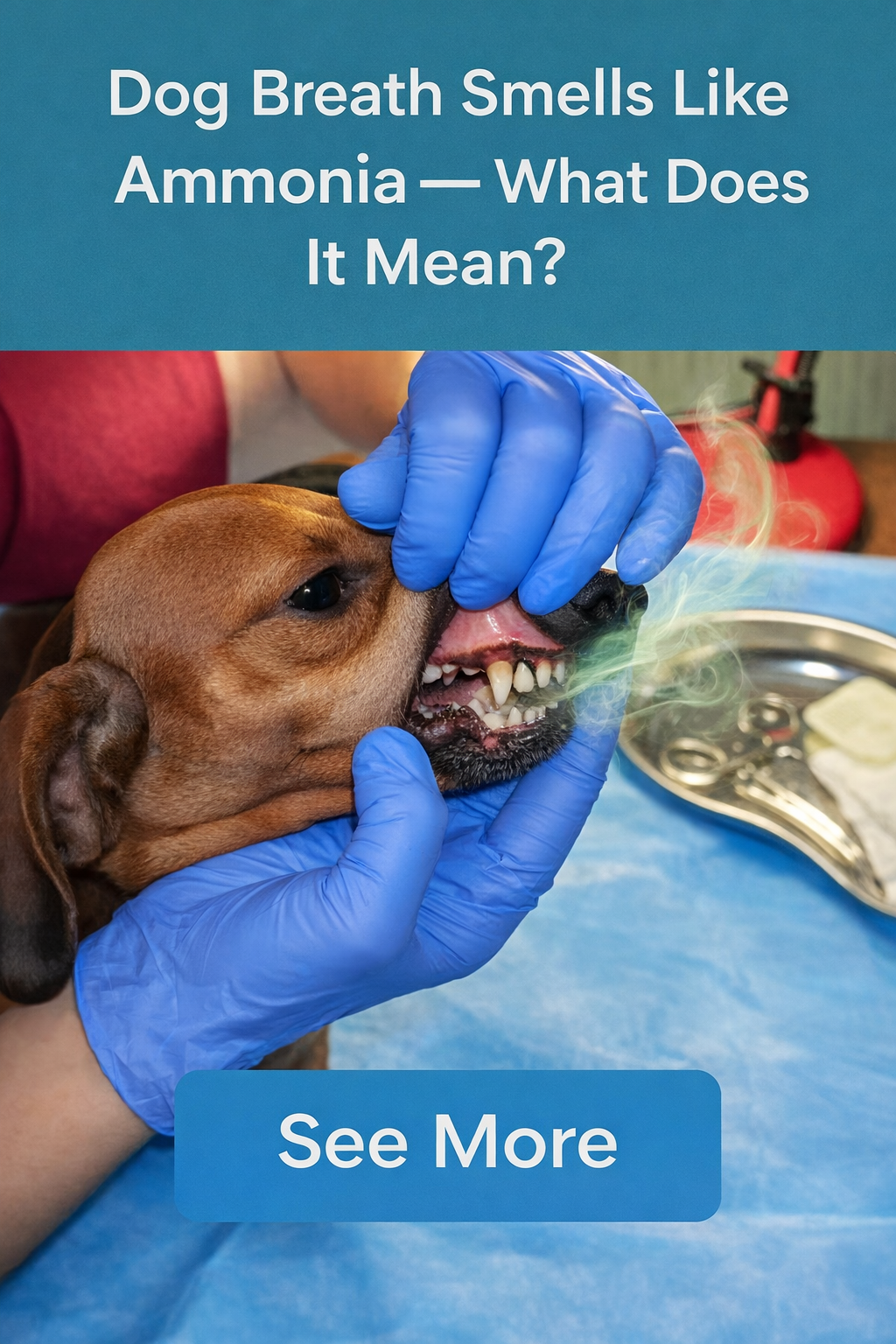
If your dog’s breath suddenly smells sharp, chemical, or like ammonia/urine, this is not normal dog breath. An ammonia-like odor is a classic warning sign of serious medical issues, most notably kidney disease, and it should be evaluated by a veterinarian as soon as possible.
This article explains why a dog’s breath can smell like ammonia, when it’s dangerous, and what to do right now.

What Does “Ammonia Breath” Smell Like?
Owners often describe it as:
-
Strong ammonia or urine smell
-
Chemical or metallic odor
-
Much harsher than normal “dog breath”
-
Persistent even after drinking water
👉 This smell usually does not come from food and doesn’t go away on its own.
Most Common Causes of Ammonia-Smelling Breath
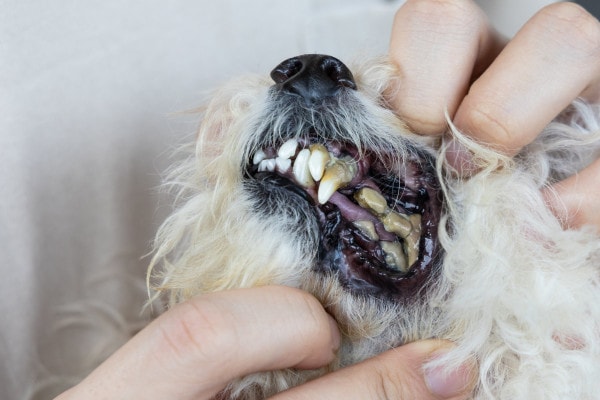
1. Kidney Disease (MOST CONCERNING)
⚠️ Top cause to rule out immediately
-
Failing kidneys can’t remove waste products
-
Toxins build up in the blood (uremia)
-
Waste is expelled through the lungs → ammonia breath
Other warning signs:
-
Increased thirst and urination
-
Weight loss
-
Poor appetite or nausea
-
Lethargy
-
Vomiting
Ammonia breath often appears when kidney disease is moderate to advanced.
2. Uremia (Advanced Kidney Failure)
A severe stage of kidney dysfunction.
-
Breath smells strongly of ammonia
-
Mouth ulcers may develop
-
Dog may seem very sick or weak
🚨 This is a medical emergency.
3. Severe Dental or Oral Infection
Less common, but possible.
-
Infected gums or abscessed teeth
-
Tissue breakdown creates harsh odors
Usually accompanied by:
-
Red or bleeding gums
-
Pain while eating
-
Drooling
4. Dehydration
Concentrated waste products can worsen breath odor.
-
Dry gums
-
Dark urine
-
Reduced skin elasticity
Dehydration alone rarely causes a true ammonia smell, but it can make kidney-related odors worse.
5. Liver Disease (Less Common)
Liver problems may cause:
-
Musty or chemical breath odor
-
Neurological signs (confusion, head pressing)
Still serious and needs veterinary testing.
When Ammonia Breath Is an Emergency
🚨 Seek veterinary care IMMEDIATELY if ammonia breath is paired with:
-
Loss of appetite
-
Vomiting or diarrhea
-
Lethargy or weakness
-
Weight loss
-
Increased drinking/urination
-
Mouth sores
-
Confusion or abnormal behavior
⏱️ Delaying care can allow irreversible kidney damage to progress.
What You Should Do Right Now
-
Call your vet today — do not wait
-
Ensure access to fresh water
-
Do NOT change diet or give supplements yet
-
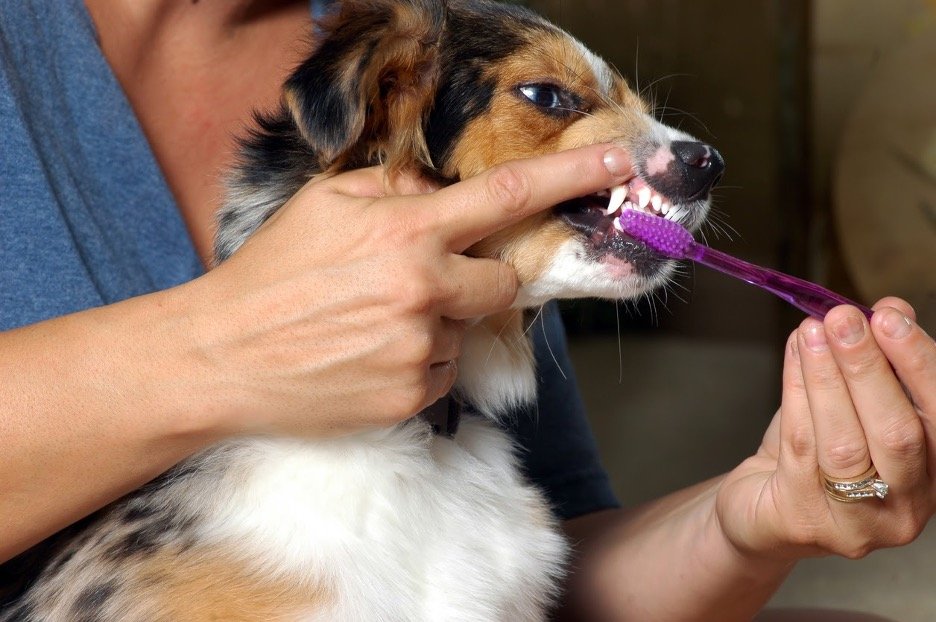
Avoid dental chews or treats until evaluated
-
Monitor urine output and appetite closely
❌ Do NOT assume it’s “just bad breath”
❌ Do NOT give human medications
How Vets Diagnose Ammonia Breath
Your veterinarian will likely recommend:
-
Blood tests (BUN, creatinine, SDMA)
-
Urinalysis (concentration and protein)
-
Blood pressure check
-
Dental/oral exam
-
Imaging (ultrasound or X-ray if needed)
These tests determine how well the kidneys are functioning and how advanced the problem may be.
Can Dogs Recover From This?
It depends on the cause and how early it’s caught:
-
Early kidney disease: often manageable with diet and medication
-
Advanced kidney failure: requires intensive care and long-term management
-
Dental causes: usually improve after treatment
While kidney damage can’t be reversed, early intervention can dramatically slow progression and improve quality of life.
Final Takeaway
If your dog’s breath smells like ammonia, this is a serious warning sign—most often linked to kidney disease. It’s not a cosmetic issue or a simple dental problem to ignore.
🐾 When a dog’s breath smells like chemicals, it’s often the kidneys asking for help. Acting quickly can protect both lifespan and comfort.