
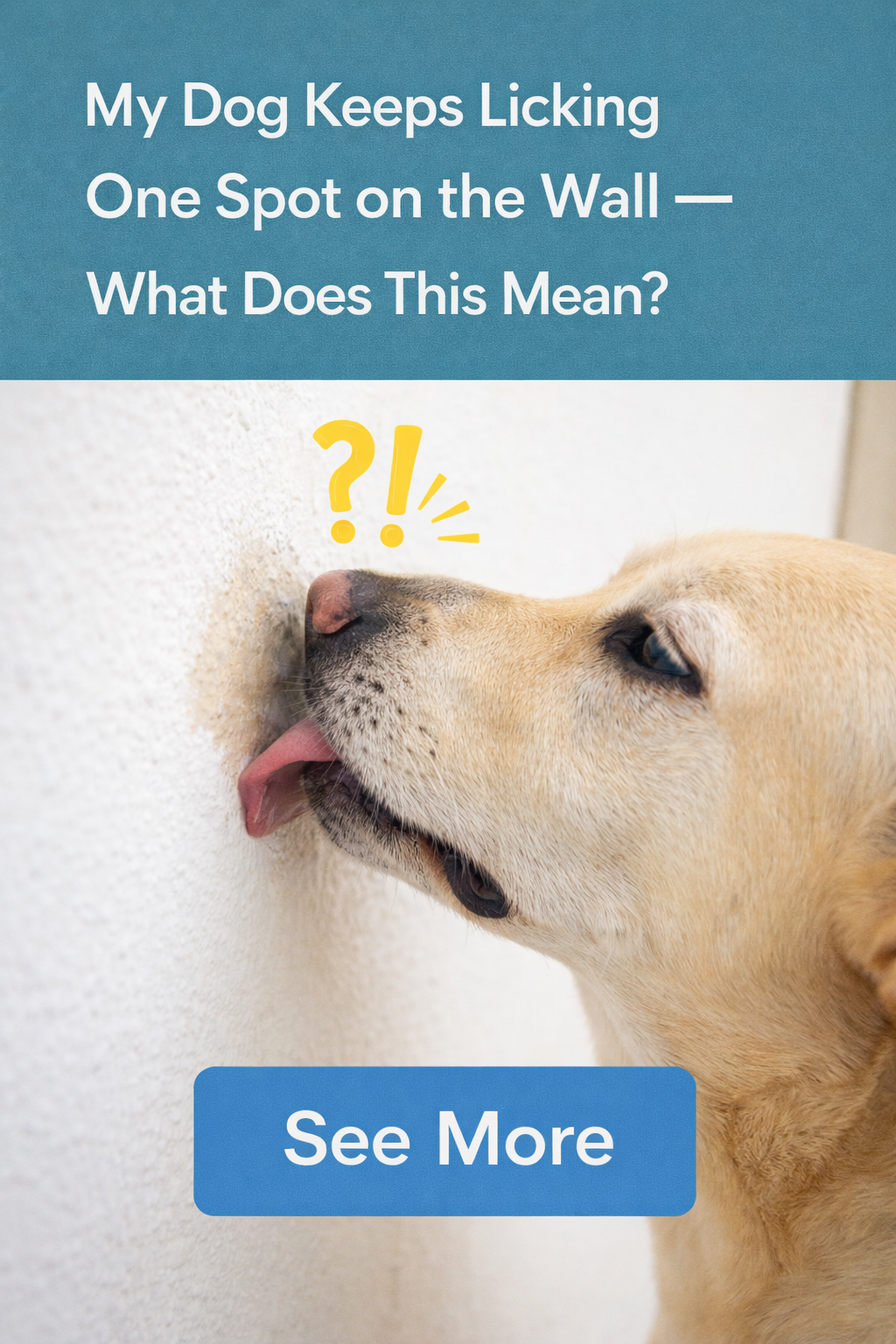
If your dog repeatedly licks the same spot on the wall, it can look strange, funny—or concerning. While an occasional lick may be harmless curiosity, persistent, focused wall-licking is not normal behavior and often points to sensory, behavioral, or medical issues that deserve attention.
This article explains why dogs lick walls, when it’s harmless, when it’s a red flag, and what you should do next.
What Does This Behavior Look Like?
You may notice your dog:
-
Licking the exact same spot repeatedly
-
Returning to that spot multiple times a day
-
Ignoring toys, food, or your voice while licking
-
Licking walls, floors, doors, or furniture
-
Becoming fixated or trance-like
The key concern is repetition and fixation, not understanding what’s on the wall.
Common Reasons Dogs Lick One Spot on the Wall
1. Taste, Smell, or Residue (Harmless at First)
Dogs have powerful noses and tongues.
-
Food splatter
-
Salt from sweat (near switches or hand-height areas)
-
Cleaning product residue
-
Insects or pest traces
If licking stops once the wall is cleaned, this was likely the cause.
2. Anxiety or Stress (Very Common)
Licking releases calming endorphins.
-
Separation anxiety
-
Boredom or lack of stimulation
-
Environmental stress
Stress-related licking often repeats daily and increases during quiet times.
3. Nausea or Gastrointestinal Discomfort
Dogs that feel nauseous may:
-
Lick walls or floors
-
Swallow excessively
-
Eat grass
This is often linked to:
-
Acid reflux
-
Empty stomach
-
Dietary intolerance
4. Compulsive Behavior (Can Become Serious)
⚠️ Known as canine compulsive disorder.
-
Repetitive, purposeless behavior
-
Difficult to interrupt
-
Worsens over time
Early intervention prevents long-term behavioral issues.
5. Cognitive Dysfunction (Senior Dogs)
In older dogs, wall-licking may signal:
-
Confusion
-
Disorientation
-
Repetitive behaviors
Often paired with pacing, staring, or night-time restlessness.
6. Neurological Issues (Less Common, More Serious)
⚠️ Must be ruled out if behavior is sudden or intense.
-
Focal seizures
-
Brain inflammation
-
Toxin exposure
Especially concerning if paired with staring, unresponsiveness, or circling.
When Wall-Licking Is a Red Flag
🚨 Contact your vet if your dog:
-
Licks obsessively or for long periods
-
Cannot be distracted
-
Appears confused or spaced out
-
Has other behavior changes
-
Is a senior dog with sudden onset
-
Shows vomiting, weight loss, or appetite changes
Persistent licking is often a symptom, not the problem itself.
What You Can Do Right Now
-
Clean the area thoroughly (pet-safe cleaner)
-
Block access temporarily
-
Increase mental & physical stimulation
-
Observe timing (after meals? at night? when alone?)
-
Record a short video for your vet
❌ Don’t scold or punish
❌ Don’t assume it’s “just weird” if it continues
How Vets Evaluate Repetitive Licking
Your veterinarian may:
-
Perform a physical and neurological exam
-
Screen for GI issues
-
Check for anxiety or compulsive behaviors
-
Run blood tests (especially in seniors)
-
Recommend behavior or medication support if needed
Identifying the root cause leads to much better outcomes.
Can This Be Treated?
Yes—treatment depends on the cause:
-
Residue: cleaning & prevention
-
Anxiety: routine, enrichment, behavior plans
-
GI issues: diet changes or medication
-
Cognitive decline: supportive therapy
-
Compulsive behavior: early behavioral intervention
Most dogs improve significantly once the underlying trigger is addressed.
Final Takeaway
If your dog keeps licking one spot on the wall, it’s not random. It’s usually a sign of stress, nausea, sensory curiosity, or cognitive change. Occasional licking is harmless—but repetitive fixation deserves a closer look.
🐾 Strange behaviors are often quiet messages. Listening early helps your dog feel better—physically and mentally.