
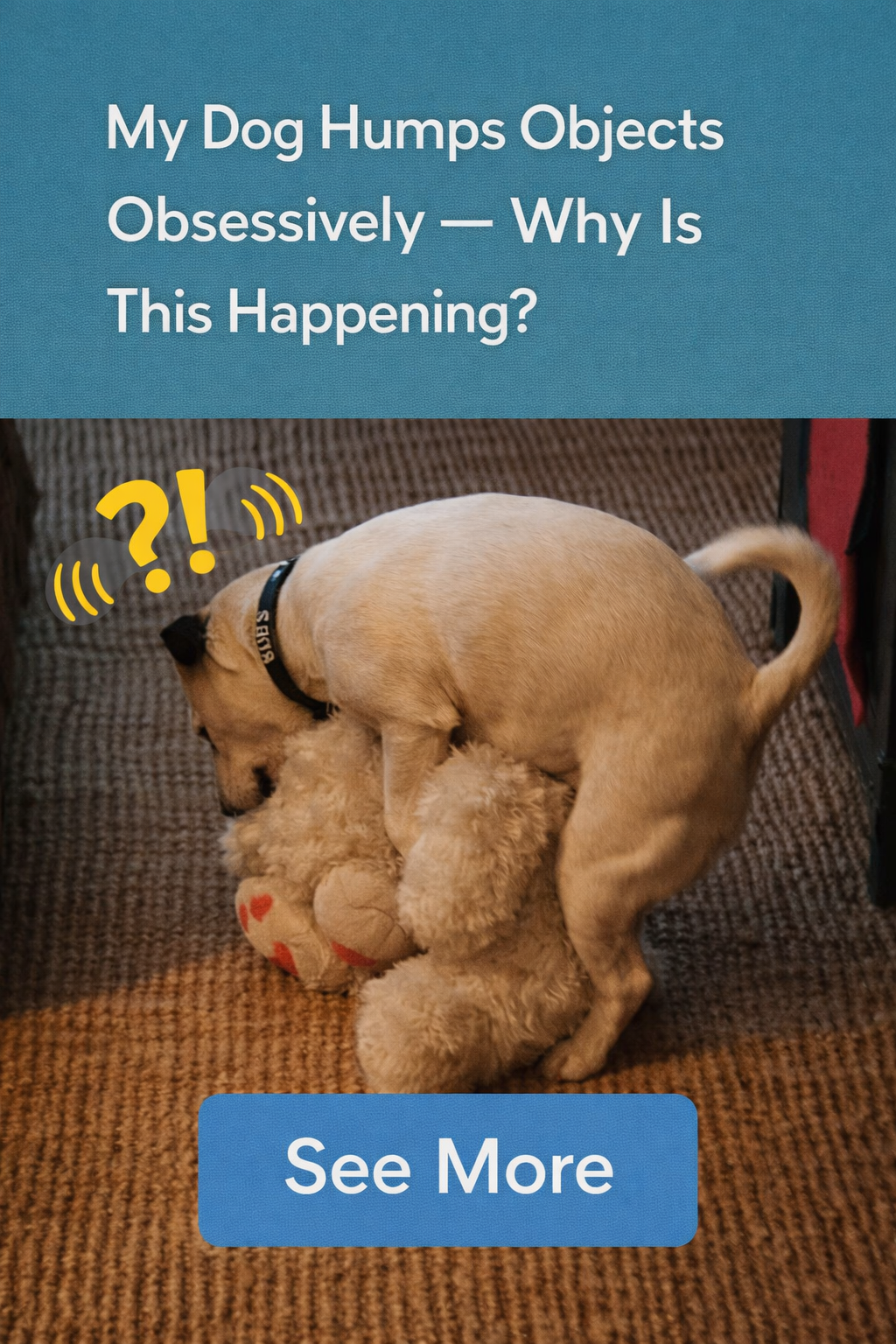
If your dog constantly humps pillows, blankets, toys, furniture—or even people, it can be awkward, frustrating, and confusing. While occasional humping can be normal, obsessive or escalating humping is not. It usually signals overarousal, stress, learned behavior, or an underlying medical issue rather than simple sexual behavior.
This article explains why dogs hump objects, when it’s normal vs. a red flag, and how to stop it safely and effectively.
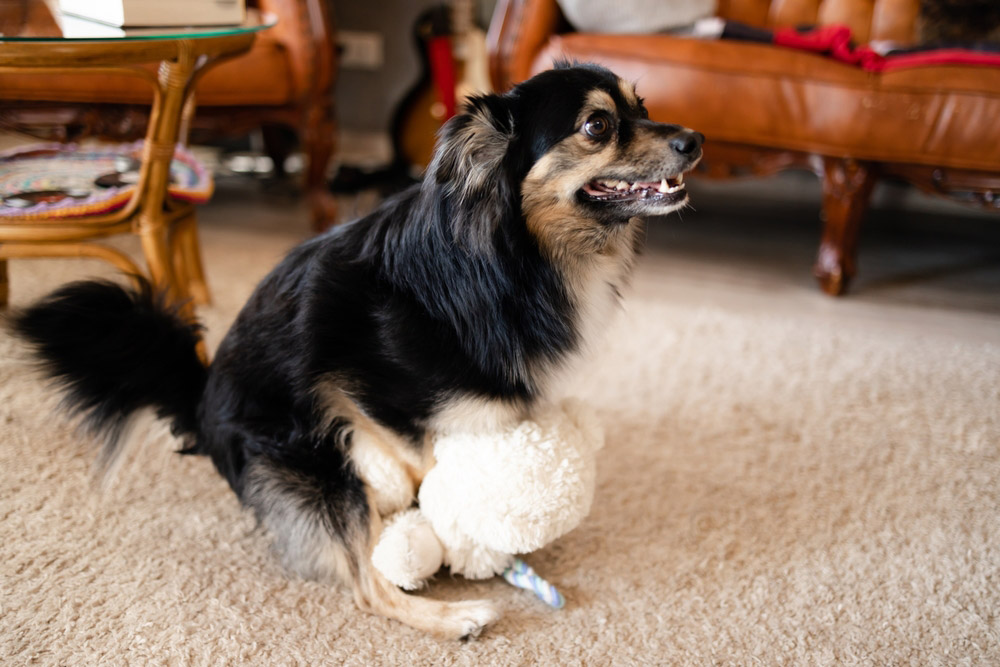
What Does “Obsessive Humping” Look Like?
You may notice your dog:
-
Humping the same object repeatedly
-
Becoming fixated and hard to interrupt
-
Humping during excitement or stress
-
Ignoring cues while mounting
-
Escalating behavior over time
-
Humping despite being neutered/spayed
The concern isn’t a single incident—it’s frequency, intensity, and loss of control.
Common Reasons Dogs Hump Objects

1. Overexcitement or Arousal (Most Common)
Humping is a release behavior.
-
During greetings
-
Playtime
-
After zoomies
-
When visitors arrive
Dogs may not know how to downshift from excitement.
2. Stress or Anxiety
Humping can be self-soothing.
-
Separation anxiety
-
New environments
-
Routine changes
-
Overstimulation
Stress-related humping often happens at predictable times.
3. Learned Behavior
If humping:
-
Gets attention (even negative)
-
Isn’t interrupted consistently
Your dog may learn it works.
4. Compulsive Behavior
⚠️ Can develop if behavior is repeated and reinforced.
-
Difficult to interrupt
-
Happens even when alone
-
Increases with stress
Early intervention is important to prevent escalation.
5. Medical Causes
Less common, but important to rule out:
-
Skin irritation or allergies
-
Urinary tract discomfort
-
Hormonal imbalances
-
Neurological issues
Pain or discomfort can drive repetitive behaviors.
6. Sexual Behavior (Not the Main Cause)
-
More common in intact dogs
-
Still not the primary cause of object humping
-
Neutered dogs can still hump
👉 Humping is rarely about dominance.
When Humping Is a Red Flag

🚨 Talk to your vet or trainer if your dog:
-
Humps obsessively every day
-
Cannot be distracted or redirected
-
Appears anxious or frantic
-
Shows other repetitive behaviors (licking, pacing)
-
Has sudden onset of humping
-
Is a senior dog with new behavior
Sudden or compulsive changes should never be ignored.
What You Can Do Right Now
Interrupt Calmly (Don’t Punish)
✅ Redirect with a cue (sit, place)
✅ Use a leash indoors if needed
✅ Remove access to trigger objects temporarily
❌ Don’t yell
❌ Don’t physically punish
Reduce Arousal
✅ Increase daily exercise
✅ Add mental enrichment (puzzles, training)
✅ Practice calm greetings
Teach an Alternative Behavior
-
Reward calm settling
-
Reinforce disengagement
-
Short training sessions build impulse control
Consistency matters more than intensity.
When Professional Help Is Needed
Seek a vet or certified behaviorist if:
-
Behavior is escalating
-
Anxiety signs are present
-
Medical causes haven’t been ruled out
-
Humping interferes with daily life
Medication + behavior modification may be needed in severe cases—and can be very effective.
Can This Be Stopped?
Yes. Most dogs improve significantly once the cause is addressed.
-
Stress reduction lowers frequency
-
Training builds control
-
Medical issues respond to treatment
The earlier you intervene, the easier it is to resolve.
Final Takeaway
Obsessive humping isn’t bad manners—it’s communication. It often means your dog is overstimulated, stressed, or lacking coping skills. Addressing the root cause—not just the behavior—leads to lasting change.
🐾 Helping your dog calm their body and mind is the fastest way to stop embarrassing behaviors—and improve their overall well-being.