
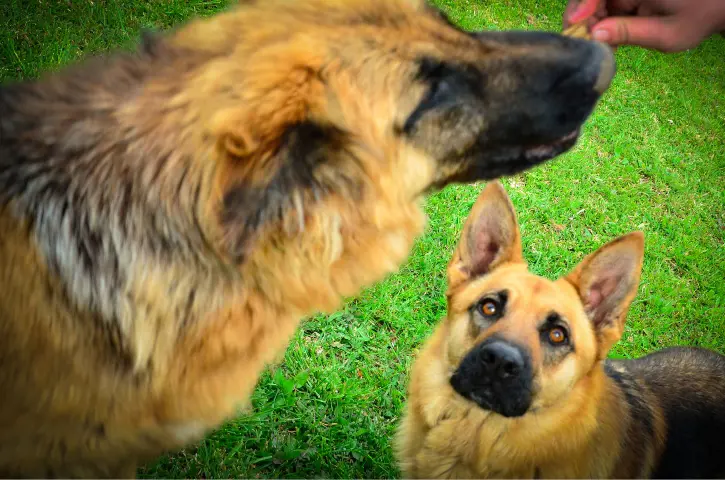
Does your dog push between you and another dog, whine, paw at you, bark, or even growl the moment you give attention elsewhere? What looks like jealousy is actually very real for dogs—and while it’s common, it can turn into stress or aggression if not handled correctly.
This article explains why dogs act jealous, when it’s harmless vs. concerning, and how to manage it safely and effectively.
What Does “Jealous” Behavior Look Like?
You may notice your dog:
-
Inserting their body between you and another dog
-
Pawing, nudging, or climbing onto you
-
Whining or barking for attention
-
Staring intensely while you pet another dog
-
Growling or snapping in more serious cases
The key factor is competition for your attention.
Why Dogs Get Jealous

1. Attention Is a Resource
To your dog, you are the most valuable resource.
-
Food, toys, and affection all matter
-
Losing access feels threatening
This is called resource guarding of a person.
2. Insecurity or Fear of Loss
Jealous behavior often comes from:
-
Fear of being replaced
-
Past instability (rehoming, shelter life)
-
Lack of confidence
It’s less about anger and more about anxiety.
3. Learned Behavior
If your dog:
-
Interrupts
-
You respond by petting them
They learn:
👉 “Interrupting works.”
4. Strong Bond / “Velcro Dog” Personality
Some dogs are naturally:
-
Highly bonded
-
People-focused
-
Sensitive to divided attention
This isn’t bad—but it needs boundaries.
5. Poor Social Skills
Some dogs struggle with:
-
Sharing attention
-
Waiting turns
-
Reading social cues
This is common in dogs with limited early social exposure.
When Jealousy Becomes a Problem
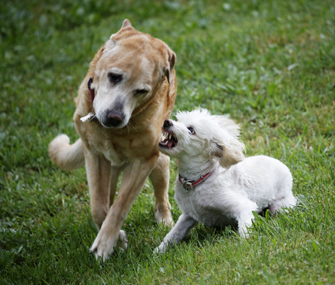
🚨 Take this seriously if your dog:
-
Growls or snaps
-
Shows stiff body language
-
Blocks access to you
-
Causes fights between dogs
-
Escalates instead of calming
This can evolve into dangerous resource guarding.
What NOT to Do
❌ Don’t punish growling (it removes warnings)
❌ Don’t reassure anxious behavior excessively
❌ Don’t pet the jealous dog during interruptions
❌ Don’t force dogs to “work it out”
These responses often increase anxiety and aggression.
What You Can Do Right Now
Teach Calm Waiting
✅ Reward calm behavior away from you
✅ Ask for a sit or place before petting
✅ Give attention after calm behavior
Practice Fair Attention
-
Pet dogs separately at first
-
Slowly build tolerance for shared space
-
Keep sessions short and controlled
Create Positive Associations
When you pet another dog:
-
Toss treats to the waiting dog
-
Calm behavior = rewards
Your dog learns:
👉 “Good things happen when I wait.”
Manage the Environment
-
Use leashes indoors if needed
-
Avoid high-arousal situations
-
Supervise all interactions
When to Get Professional Help
Contact a trainer or vet behaviorist if:
-
Jealousy includes aggression
-
Behavior worsens over time
-
Children or multiple dogs are involved
Early guidance prevents serious incidents.
Can Jealousy Be Resolved?
Yes—most dogs improve significantly with:
-
Consistent boundaries
-
Confidence-building
-
Calm, structured attention
This isn’t about loving your dog less—it’s about helping them feel secure without controlling you.
Final Takeaway
When your dog gets jealous as you pet another dog, it’s not spite—it’s fear of losing connection. Addressing the emotion behind the behavior, not punishing the behavior itself, is the key to change.
🐾 Teaching your dog that love isn’t limited—and that calm earns attention—builds trust, confidence, and safer relationships.