
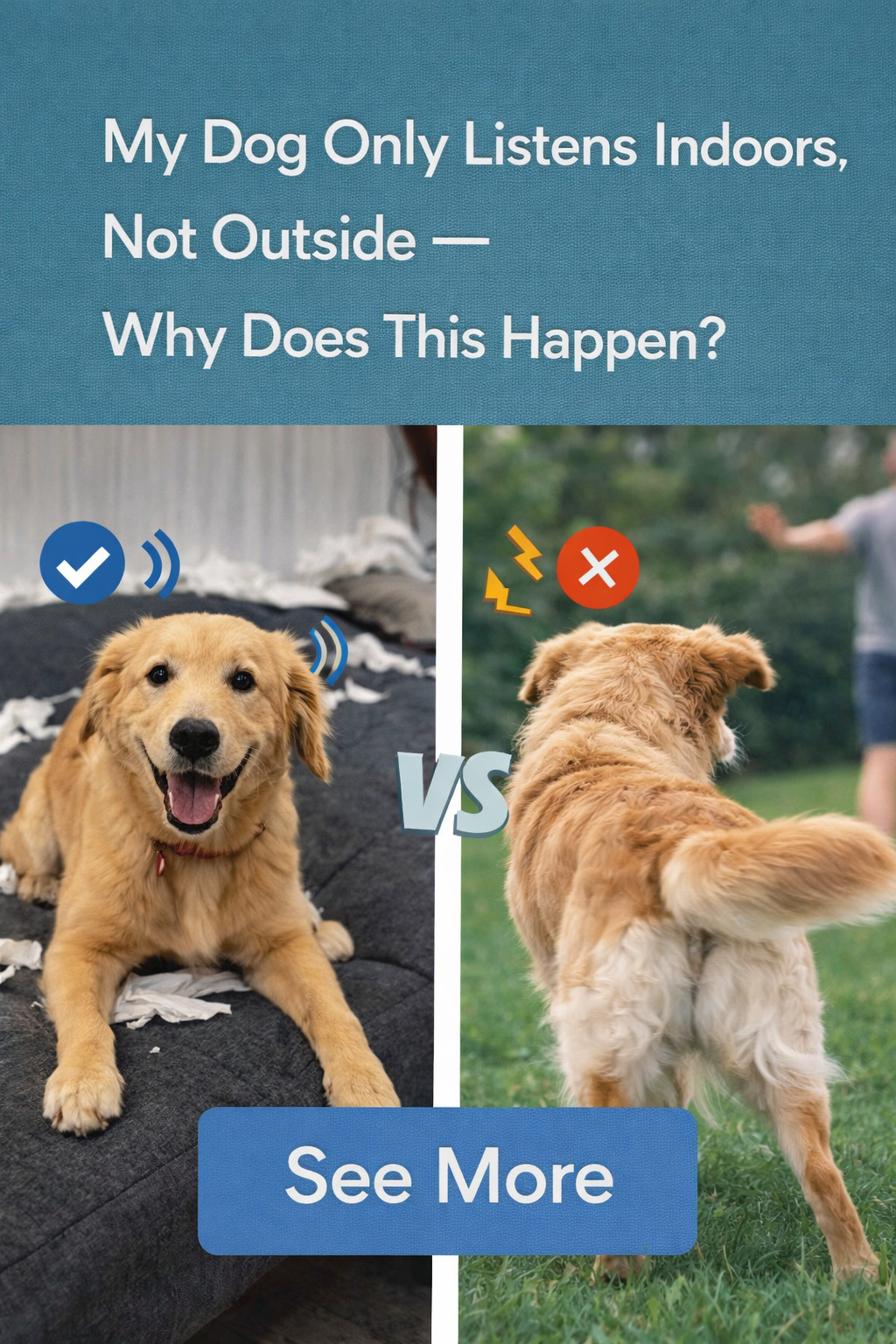
Does your dog respond perfectly at home—sit, stay, come—yet the moment you step outside, it’s like you don’t exist? This is one of the most common (and frustrating) issues dog owners face. The good news: it’s normal, explainable, and fixable.
This article explains why dogs listen indoors but ignore commands outside, what’s really going on in their brain, and how to fix it step by step.
What Does This Problem Look Like?
You may notice your dog:
-
Responds instantly inside the house
-
Ignores cues outside or on walks
-
Pulls, sniffs, or scans constantly
-
Acts “deaf” in parks or new places
-
Only listens when no distractions exist
👉 This is not stubbornness and not disobedience.
Why Dogs Stop Listening Outside

1. Outside Is Sensory Overload (Most Common)
Outside is a completely different world for dogs:
-
Thousands of smells
-
Moving animals and people
-
Sounds you can’t hear
Your dog’s brain is flooded with information, making it harder to process your voice.
2. Dogs Don’t Generalize Well
Dogs don’t automatically understand that:
“Sit in the living room” = “Sit in the park”
To them, inside and outside are different classrooms. Training must be retaught in each environment.
3. Rewards Aren’t Valuable Enough Outside
Inside, treats are exciting.
Outside, the environment itself is the reward:
-
Smells
-
Squirrels
-
Freedom
Your reward simply can’t compete yet.
4. Lack of Proofing and Gradual Exposure
Many dogs learn commands:
-
Only indoors
-
With low distractions
-
At close distance
Without gradual exposure, skills don’t transfer outdoors.
5. Emotional State Changes
Outside can trigger:
-
Excitement
-
Anxiety
-
Fear
A dog who’s overstimulated or anxious cannot listen well, even if they “know” the command.
When This Is a Red Flag
🚨 Get extra help if your dog:
-
Panics or freezes outside
-
Shows fear or reactivity
-
Completely shuts down
-
Is getting worse, not better
This may indicate anxiety, not a training gap.
How to Fix It (What Actually Works)
Step 1: Lower the Difficulty
Start where your dog can succeed:
-
Front yard
-
Quiet sidewalk
-
Empty parking lot
Success builds confidence.
Step 2: Upgrade Your Rewards
Use high-value treats outdoors:
-
Chicken
-
Cheese
-
Hot dogs
If it’s not special, it won’t work outside.
Step 3: Train Before the Walk
Ask for simple cues before your dog is overstimulated.
-
Sit
-
Watch me
-
Touch
Once arousal spikes, learning stops.
Step 4: Short Sessions, Big Wins
-
2–5 minute training bursts
-
Reward immediately
-
End before frustration
Step 5: Build Focus First
Teach engagement, not obedience:
-
Eye contact
-
Name response
-
Check-ins
Focus comes before commands.
What NOT to Do
❌ Don’t repeat commands louder
❌ Don’t yank the leash
❌ Don’t punish ignoring
❌ Don’t expect indoor performance outdoors instantly
These increase frustration and reduce trust.
Will My Dog Ever Listen Outside?
Yes—almost all dogs can learn this with:
-
Consistent practice
-
Gradual exposure
-
Proper rewards
Dogs don’t fail training—training fails to meet dogs where they are.
Final Takeaway
If your dog only listens indoors, it doesn’t mean they’re stubborn or disrespectful. It means the outside world is simply more interesting than you—right now.
🐾 With patience, better rewards, and smarter practice, you can become more interesting than the environment. That’s real training success.