
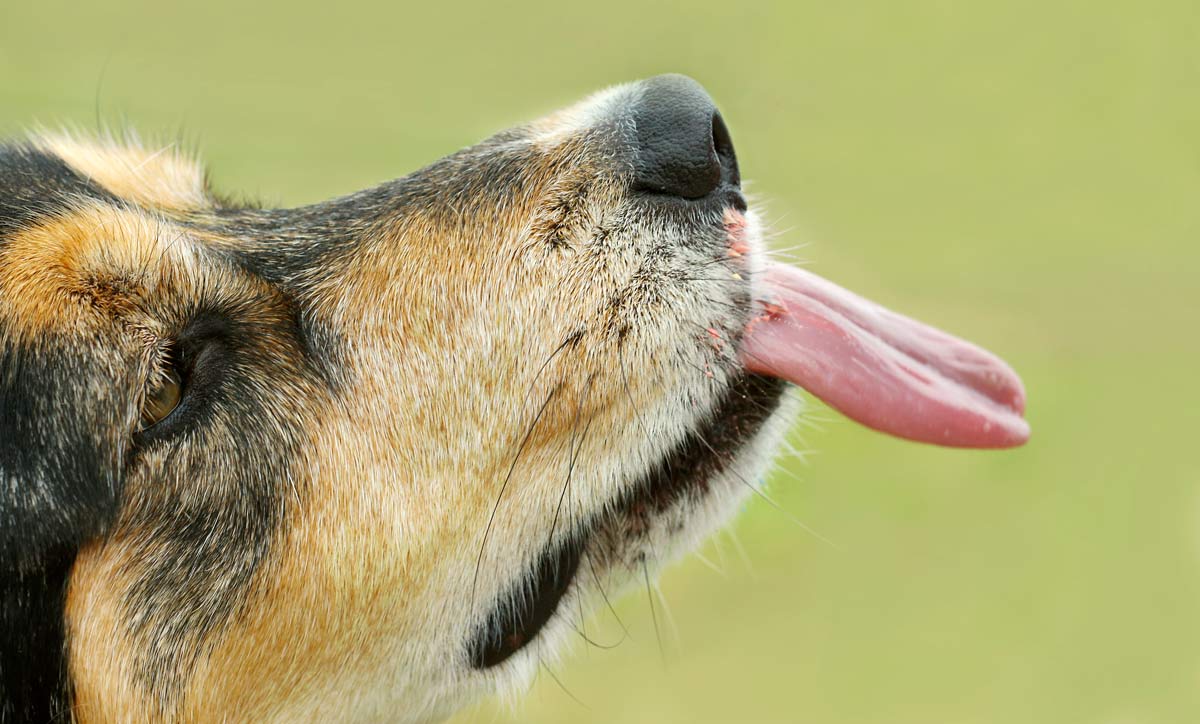
If your dog repeatedly licks the air, snaps at nothing, or flicks their tongue as if tasting something invisible, it can look strange—or even alarming. While an occasional air lick can be harmless, constant or repetitive air licking is not normal and often signals nausea, anxiety, pain, or a neurological issue that deserves attention.
This article explains why dogs lick the air, when it’s harmless, when it’s a red flag, and what you should do next.
What Does “Air Licking” Look Like?
You may notice your dog:
-
Licking the air repeatedly without food present
-
Snapping or chomping at nothing
-
Tongue flicking while staring into space
-
Licking more when stressed or at night
-
Pairing licking with swallowing or drooling
The concern is frequency, repetition, and loss of focus, not a single odd lick.
Common Reasons Dogs Lick the Air
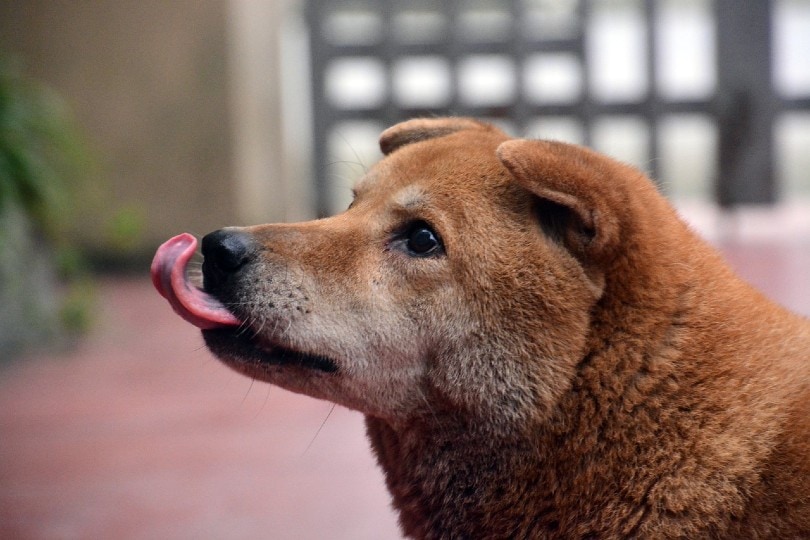
1. Nausea or Acid Reflux (Very Common)
One of the top causes of air licking.
-
Stomach acid irritates the throat
-
Dogs lick, swallow, and smack lips
Often worse:
-
Early morning
-
Late at night
-
On an empty stomach
2. Anxiety or Stress
Licking releases calming endorphins.
-
Separation anxiety
-
Overstimulation
-
Changes in routine
Stress-related air licking often repeats daily and increases during quiet moments.
3. Dental or Oral Pain
Pain inside the mouth can trigger licking.
-
Broken or infected teeth
-
Gum disease
-
Mouth sores
Dogs may lick to cope with discomfort.
4. Learned or Compulsive Behavior
⚠️ Can develop over time.
-
Repetitive
-
Hard to interrupt
-
Worsens with stress
Early intervention prevents escalation.
5. Gastrointestinal Disorders
Beyond reflux, causes may include:
-
Gastritis
-
Food intolerance
-
GI inflammation
Often paired with appetite changes or grass eating.
6. Neurological Issues (Less Common, More Serious)
⚠️ Must be ruled out if behavior is intense or sudden.
-
Focal (partial) seizures
-
Brain inflammation or tumors
Clues include:
-
Staring spells
-
Unresponsiveness
-
Repetitive mouth movements
When Air Licking Is a Red Flag

🚨 Contact your vet if your dog:
-
Licks the air constantly or obsessively
-
Cannot be distracted
-
Appears confused or “zoned out”
-
Has vomiting, weight loss, or appetite changes
-
Is a senior dog with sudden onset
-
Shows other behavior changes
Persistent air licking is usually a symptom, not the problem itself.
What You Can Do Right Now
-
Observe patterns (time of day, after meals, stress triggers)
-
Check the mouth gently for redness or broken teeth
-
Avoid reinforcing the behavior with constant attention
-
Offer calm enrichment and a predictable routine
-
Record a short video to show your vet
❌ Don’t punish or scold
❌ Don’t ignore it if it continues
How Vets Diagnose Air Licking
Your veterinarian may:
-
Examine the mouth, teeth, and throat
-
Assess GI health and nausea
-
Evaluate anxiety or compulsive behaviors
-
Run blood tests (especially in seniors)
-
Consider neurological screening if indicated
Finding the cause leads to targeted, effective treatment.
Can This Be Treated?
Yes—most dogs improve significantly once the cause is addressed:
-
Reflux/nausea: diet timing, medication
-
Anxiety: routine, training, behavior plans
-
Dental pain: dental care
-
Neurological causes: medical management
Early action prevents long-term discomfort.
Final Takeaway
If your dog keeps licking the air, it’s not random. It’s often your dog’s way of saying “I don’t feel right.” Occasional licking can be harmless—but constant, repetitive air licking deserves investigation.
🐾 Strange behaviors are messages. Listening early helps your dog feel better—inside and out.