
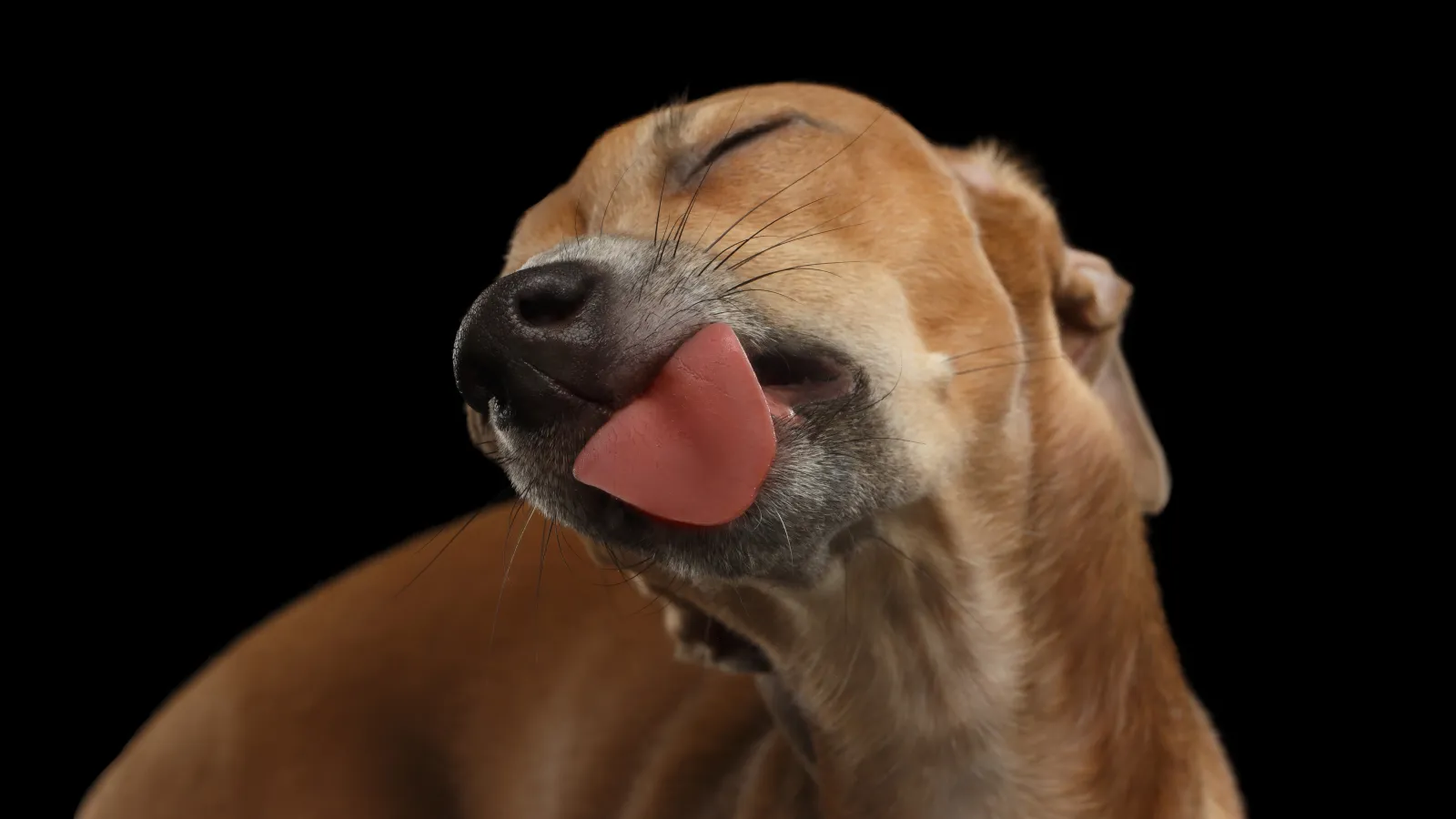
If your dog keeps licking the exact same spot over and over, to the point where the fur is wet, thinning, or gone, this is not a harmless habit. Constant licking is usually a sign of pain, skin disease, allergies, or anxiety—and the longer it continues, the harder it becomes to stop.
This article explains why dogs fixate on one spot, when it’s serious, and what you should do to protect your dog’s skin and comfort.
What Does Problem Licking Look Like?
You may notice:
-
Licking the same area repeatedly
-
Fur becoming dark, thin, or missing
-
Red, swollen, or moist skin
-
Scabbing or thickened skin
-
Licking mostly when resting or stressed
-
Difficulty distracting your dog from licking
👉 The concern is repetition + fixation, not occasional grooming.
Most Common Causes of One-Spot Licking

1. Skin Allergies (Very Common)
Allergies cause intense itching.
-
Food allergies
-
Environmental allergies (pollen, dust, grass)
-
Flea allergy dermatitis
Dogs often lick paws, legs, belly, or hips to relieve itch.
2. Hot Spots (Acute Moist Dermatitis)
⚠️ Can worsen rapidly.
-
Localized skin infection
-
Starts with licking → becomes red, wet, painful
-
Hair loss appears quickly
Hot spots require prompt treatment to prevent spread.
3. Pain Under the Skin
Dogs lick where it hurts.
-
Arthritis
-
Joint inflammation
-
Muscle strain
-
Nerve pain
Licking acts like self-soothing for pain—even when skin looks normal.
4. Lick Granuloma (Acral Lick Dermatitis)
A classic condition caused by:
-
Chronic licking
-
Stress or boredom
-
Underlying pain or allergy
Commonly affects front legs, creating thick, raised sores.
5. Anxiety or Compulsive Behavior
Stress increases repetitive behaviors.
-
Separation anxiety
-
Chronic stress
-
Lack of mental stimulation
The licking releases calming chemicals, making it self-reinforcing.
6. Parasites or Infections
-
Fleas or mites
-
Bacterial or yeast infections
Even a small irritation can trigger obsessive licking.
Why Constant Licking Is a Big Problem
If left untreated, nonstop licking can lead to:
-
Open wounds
-
Infections
-
Chronic skin thickening
-
Long-term compulsive habits
🚨 The earlier you intervene, the easier it is to stop.
When One-Spot Licking Is a Red Flag
🚨 Contact your vet if:
-
Skin is red, swollen, or oozing
-
Hair loss is worsening
-
Your dog cries or reacts when touched
-
Licking continues despite distraction
-
The area becomes thick, dark, or scabbed
-
Your dog seems anxious or restless
Persistent licking is almost always medical or behavioral, not random.
What You Can Do Right Now
-
Inspect the area closely (redness, wounds, parasites)
-
Prevent further licking (cone or protective wrap if advised)
-
Avoid applying human creams without vet approval
-
Reduce stress and boredom
-
Book a vet visit if licking lasts more than a day or two
❌ Don’t scold or punish
❌ Don’t ignore hair loss or redness
How Vets Diagnose One-Spot Licking
Your veterinarian may:
-
Examine skin and joints
-
Test for allergies or infections
-
Check for pain or mobility issues
-
Evaluate stress or compulsive behavior
Treatment works best when the root cause is addressed.
Can This Be Treated Successfully?
Yes—most dogs improve with proper care:
-
Allergies: diet changes, medication
-
Infections: antibiotics or antifungals
-
Pain: pain management and joint support
-
Anxiety: routine, enrichment, behavior plans
Stopping the lick cycle early prevents chronic damage.
Final Takeaway
If your dog licks one spot nonstop, it’s not a quirk—it’s a message. Whether the cause is itch, pain, or stress, your dog is trying to cope with discomfort.
🐾 Listening early and treating the cause can save your dog from chronic pain, infection, and long-term skin damage.