
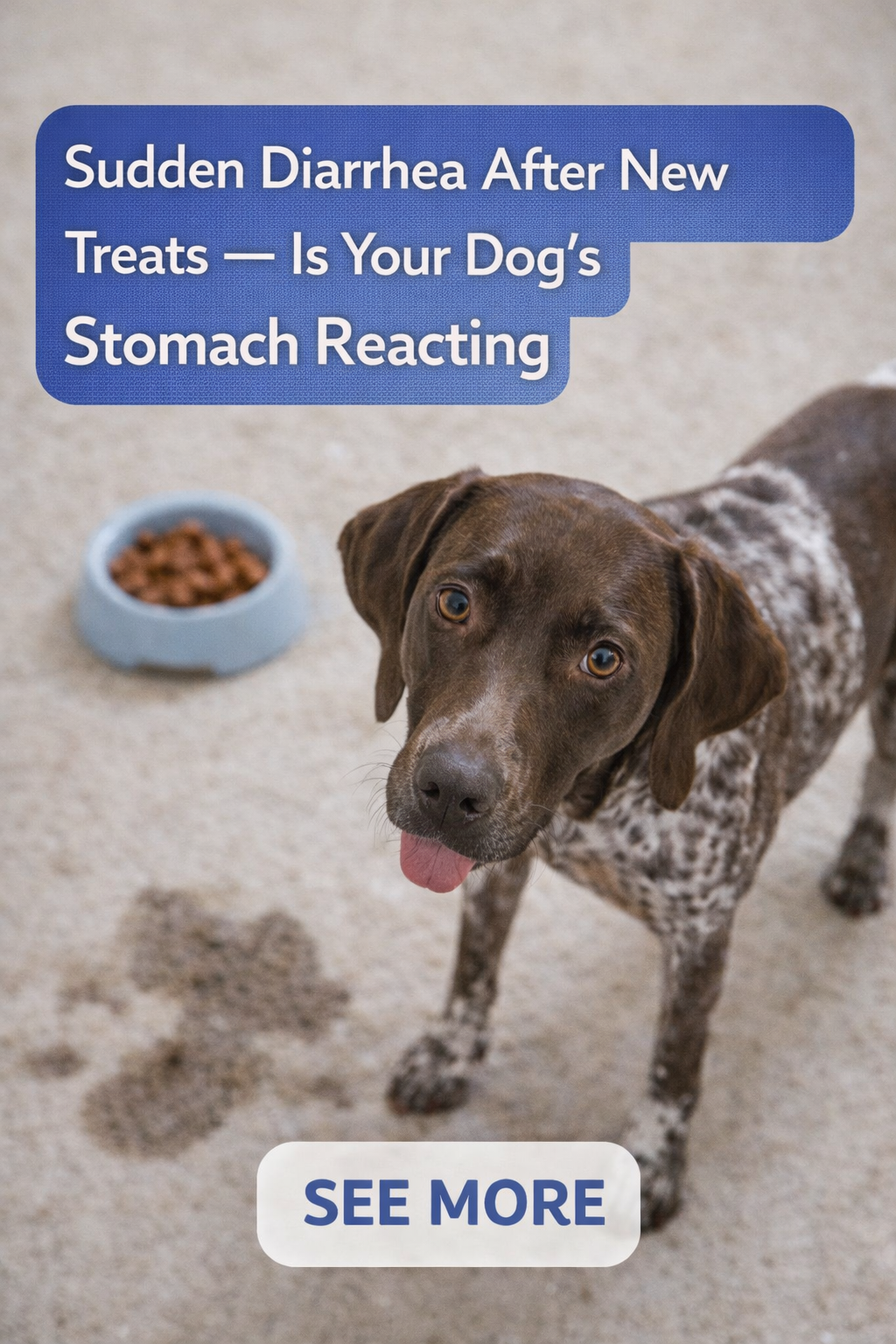
If your dog suddenly develops diarrhea shortly after trying new treats, you’re not alone—and you’re right to be concerned. A sudden change in snacks, even “healthy” ones, can irritate your dog’s digestive system and trigger loose stools. While many cases are mild and short-lived, some situations need closer attention.
This article explains why new treats cause diarrhea, how to tell mild upset from danger, and what you should do right now.
What This Usually Looks Like
You may notice:
-
Loose or watery stools
-
More frequent pooping
-
Mild gas or stomach noises
-
Urgency to go outside
-
Normal appetite and energy (in mild cases)
👉 Timing is key: symptoms often appear within hours to 1–2 days after the new treats.
Why New Treats Cause Sudden Diarrhea
1. Sudden Diet Change (Most Common)
A dog’s gut needs time to adjust.
-
New ingredients
-
New protein sources
-
New processing methods
Even one new treat can disrupt the gut microbiome.
2. Treats That Are Too Rich or Fatty
High-fat snacks can overwhelm digestion.
-
Jerky treats
-
Cheese-based snacks
-
Table scraps
Fat intolerance often causes sudden diarrhea.
3. Food Intolerance or Sensitivity
Some dogs react poorly to:
-
Chicken or beef
-
Dairy
-
Grains or additives
Unlike allergies, intolerance often shows up as GI upset only.
4. Artificial Additives or Sweeteners
Certain additives can irritate the gut.
-
Preservatives
-
Flavor enhancers
-
Sugar alcohols (⚠️ xylitol is toxic to dogs)
Always check ingredient labels carefully.
5. Overfeeding Treats
Even safe treats can cause problems if:
-
Given in large amounts
-
Replacing too much of the regular diet
Treats should make up no more than 10% of daily calories.
When Diarrhea After Treats Is a Red Flag
🚨 Contact your vet promptly if your dog:
-
Has diarrhea lasting more than 24–48 hours
-
Has blood or mucus in stool
-
Is vomiting repeatedly
-
Becomes lethargic or weak
-
Refuses food or water
-
Is a puppy, senior, or very small dog
Diarrhea can lead to dangerous dehydration, especially in vulnerable dogs.
What You Should Do Right Now
1. Stop the New Treat Immediately
Remove the trigger to let the gut settle.
2. Keep Your Dog Hydrated
-
Fresh water at all times
-
Watch for signs of dehydration
Never restrict water.
3. Feed a Bland Diet (If Mild)
For 24–48 hours:
-
Boiled chicken (no skin, no seasoning)
-
Plain white rice
Only if your vet hasn’t advised otherwise.
4. Monitor Closely
Track:
-
Stool consistency
-
Frequency
-
Energy and appetite
5. Reintroduce Treats Slowly
When stools normalize:
-
Reintroduce only one treat at a time
-
Give small amounts
-
Wait several days before adding anything new
How Vets Evaluate Treat-Related Diarrhea
If needed, your veterinarian may:
-
Review diet and treat ingredients
-
Check for parasites or infection
-
Assess dehydration
-
Recommend probiotics or medication
Most cases resolve quickly once the trigger is removed.
Can Dogs Go Back to Treats?
Yes—but carefully.
-
Stick to limited-ingredient treats
-
Choose treats matching your dog’s main protein
-
Introduce new snacks gradually
Some dogs simply have sensitive stomachs.
Final Takeaway
Sudden diarrhea after new treats is usually your dog’s gut saying “too much, too fast, or not for me.” While often mild, it should never be ignored—especially if symptoms persist or worsen.
🐾 Simple changes and close monitoring can prevent a small stomach upset from becoming a big health issue.