
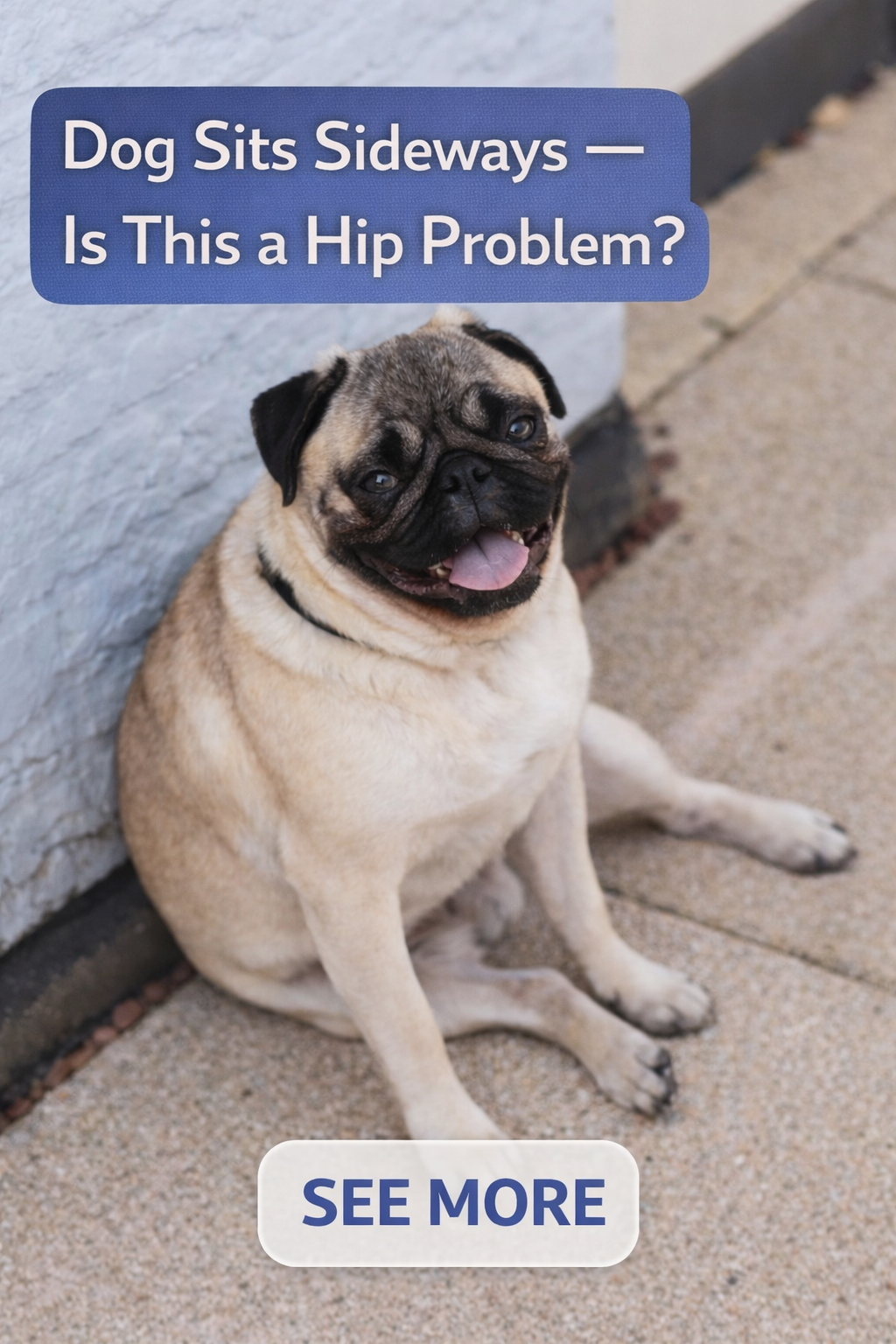
If your dog sits with one leg kicked out to the side, leans heavily on one hip, or avoids sitting squarely, it’s a behavior many owners notice—and worry about. While some dogs do sit oddly once in a while, repeated sideways sitting often signals discomfort, weakness, or joint issues, especially in the hips or lower back.
This article explains why dogs sit sideways, when it’s harmless vs. concerning, and what you should do to protect your dog’s mobility.
What Does “Sitting Sideways” Look Like?
You may notice your dog:
-
Sitting with one hip dropped to the side
-
Letting one back leg stick straight out
-
Avoiding a balanced, upright sit
-
Frequently changing sitting positions
-
Standing up quickly after sitting
👉 The key concern is consistency—not a single funny sit, but a pattern.
Common Reasons Dogs Sit Sideways

1. Hip Pain or Hip Dysplasia
One of the most common causes.
-
Unstable or painful hip joints
-
Sitting sideways reduces pressure on sore hips
-
More noticeable after rest or exercise
Large and medium breeds are especially prone—but any dog can be affected.
2. Arthritis (Degenerative Joint Disease)
With age or injury:
-
Cartilage wears down
-
Sitting squarely becomes uncomfortable
-
Dogs shift weight to avoid pain
Often paired with morning stiffness or reluctance to jump.
3. Lower Back or Spinal Discomfort
Back pain changes posture.
-
Disc disease
-
Muscle strain
-
Nerve irritation
Dogs may sit crooked to relieve spinal pressure.
4. Muscle Weakness or Imbalance
Weak core or hind-leg muscles can make upright sitting hard.
-
Seniors
-
Dogs recovering from injury
-
Dogs with reduced activity
Side sitting becomes a compensation strategy.
5. Past Injury or Structural Differences
Old injuries may permanently alter comfort.
-
Healed fractures
-
Ligament injuries
These dogs often favor one side.
6. Habit (Less Common)
Some dogs develop quirky sits—but:
-
Habitual sits shouldn’t cause stiffness or pain
-
The dog should still move normally otherwise
If other symptoms exist, it’s likely not just a habit.
When Sideways Sitting Is a Red Flag

🚨 Contact your vet if your dog:
-
Sits sideways most of the time
-
Limping or favoring one leg
-
Struggles to stand up
-
Avoids stairs, jumping, or play
-
Cries or flinches when hips are touched
-
Is a puppy with abnormal sitting (possible developmental issue)
Posture changes are often early pain signals.
What You Can Do Right Now
Observe Movement Closely
Watch for:
-
Limping
-
Bunny hopping
-
Stiffness after rest
Reduce Joint Strain
-
Avoid excessive jumping
-
Use ramps instead of stairs
-
Walk on non-slip surfaces
Support Comfort
-
Orthopedic bed
-
Warm resting area
-
Maintain a healthy weight
Extra weight increases hip stress dramatically.
Don’t Force “Correct” Sitting
❌ Don’t push your dog into a square sit
❌ Don’t punish posture
This can worsen pain and anxiety.
How Vets Diagnose Sideways Sitting
Your veterinarian may:
-
Perform a full orthopedic exam
-
Manipulate hips and spine gently
-
Take X-rays to assess joints
-
Evaluate muscle strength and balance
Early diagnosis allows less invasive and more effective management.
Can Dogs Sit Normally Again?
Often, yes.
-
Pain control improves posture
-
Physical therapy strengthens support muscles
-
Joint supplements and medication increase comfort
Even when posture doesn’t fully change, quality of life can improve greatly.
Final Takeaway
If your dog sits sideways, it’s rarely just a funny habit when it happens often. It’s usually a compensation for discomfort in the hips, back, or hind legs.
🐾 Noticing this early gives you the chance to reduce pain, protect joints, and keep your dog moving comfortably for years to come.