
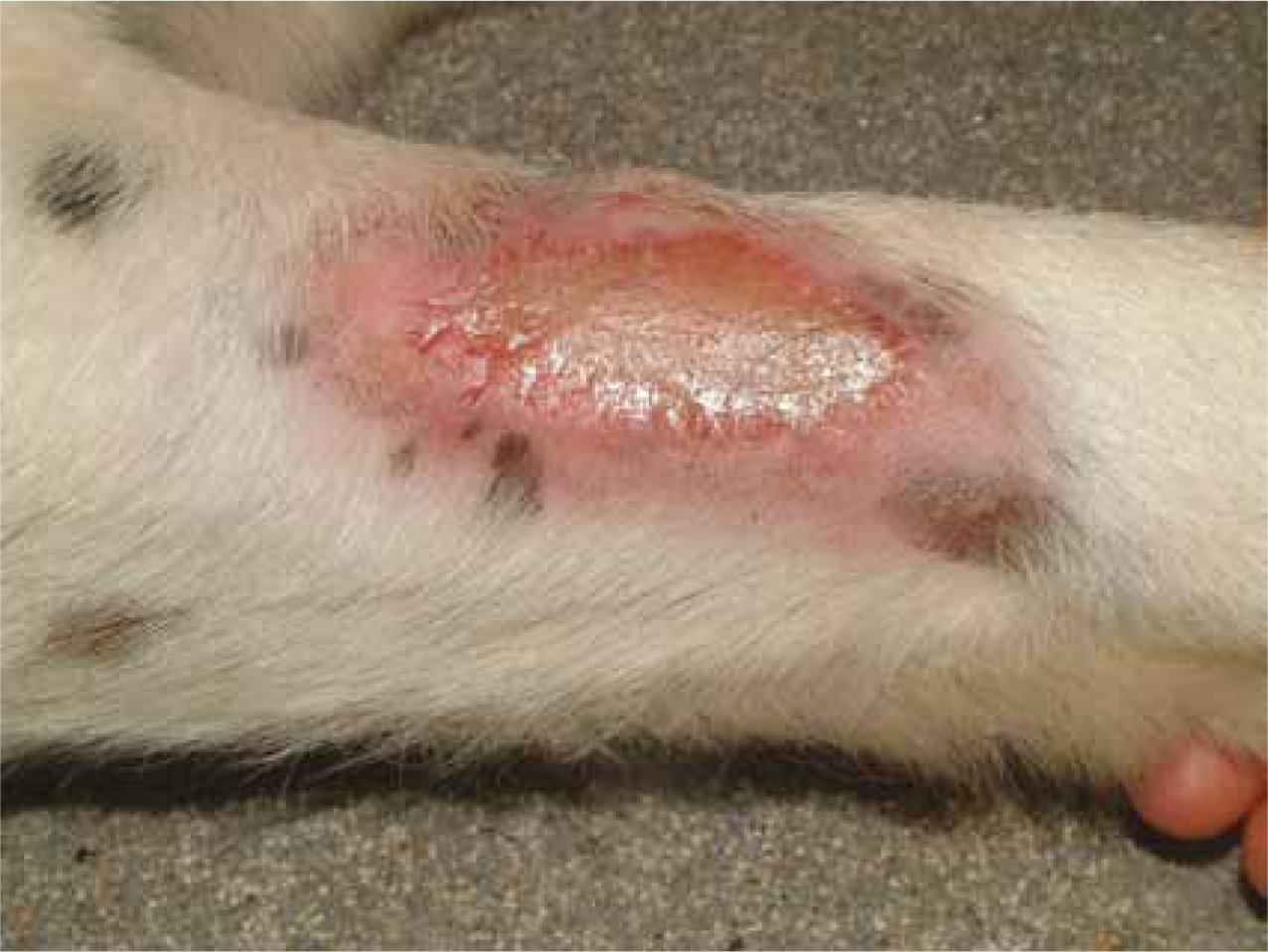
If your dog has a wound that doesn’t seem to be healing, looks the same day after day, or even appears worse, this is a sign that something is interfering with the normal healing process. While small cuts usually improve within days, a wound that stalls or deteriorates needs attention—and sometimes urgent care.
This article explains why dog wounds fail to heal, warning signs of complications, and what you should do to help your dog recover properly.
What a Non-Healing Wound Looks Like
You may notice:
-
Redness that doesn’t fade
-
Swelling or heat around the wound
-
Discharge (yellow, green, bloody, or foul-smelling)
-
Scabbing that repeatedly falls off
-
The wound getting larger instead of smaller
-
Your dog constantly licking or chewing the area
-
Pain when the area is touched
👉 Lack of visible improvement after 5–7 days is a major warning sign.
Most Common Reasons a Dog’s Wound Won’t Heal

1. Infection (Most Common Cause)
Bacteria prevent tissue repair.
-
Warmth, redness, swelling
-
Pus or bad odor
-
Pain and lethargy
Infected wounds rarely heal without treatment.
2. Constant Licking or Chewing
Saliva introduces bacteria and keeps the wound wet.
-
Breaks down new tissue
-
Reopens healing skin
Even short unsupervised moments can undo progress.
3. Foreign Material in the Wound
Hidden debris can block healing.
-
Hair
-
Dirt
-
Grass seeds
-
Sutures reacting poorly
The body can’t heal until the foreign material is removed.
4. Poor Blood Supply
Healing requires oxygen and nutrients.
-
Tight bandages
-
Pressure points
-
Older dogs with circulation issues
Poor circulation slows or stops repair.
5. Underlying Health Problems
Certain conditions interfere with healing:
-
Diabetes
-
Cushing’s disease
-
Autoimmune disorders
-
Malnutrition
These wounds often look “stuck” in one stage.
6. Incorrect Home Care
Common mistakes include:
-
Using hydrogen peroxide repeatedly
-
Applying human ointments
-
Leaving bandages on too long
These can damage healthy tissue.
When a Non-Healing Wound Is an Emergency

🚨 Seek veterinary care immediately if:
-
The wound is getting larger or deeper
-
There is pus, foul odor, or black tissue
-
Your dog has fever, lethargy, or loss of appetite
-
Swelling spreads rapidly
-
The wound was caused by a bite or puncture
-
Bone, muscle, or tissue is visible
Delaying treatment can lead to serious infection or systemic illness.
What You Should Do Right Now
Protect the Wound
-
Use an E-collar (cone) to stop licking
-
Keep the area clean and dry
-
Prevent dirt exposure
Clean Gently (If Advised by Your Vet)
-
Use saline or vet-approved antiseptic
-
Pat dry—don’t scrub
❌ Avoid hydrogen peroxide unless specifically instructed.
Follow Vet Instructions Exactly
-
Finish all antibiotics
-
Apply topical meds as directed
-
Attend recheck appointments
Skipping steps delays healing.
How Vets Treat Non-Healing Wounds
Your veterinarian may:
-
Culture the wound to identify bacteria
-
Remove dead tissue (debridement)
-
Prescribe antibiotics or antifungals
-
Improve bandaging technique
-
Address underlying health conditions
-
Recommend laser therapy or advanced wound care
Proper treatment often leads to rapid improvement.
Can a Dog’s Wound Still Heal?
Yes—most non-healing wounds recover well once the root cause is addressed. Early intervention prevents chronic wounds and scarring.
How to Support Healing at Home
-
Keep your dog calm and rested
-
Ensure good nutrition and hydration
-
Prevent licking at all times
-
Monitor the wound daily
Healing is a process—but it should always move forward, not backward.
Final Takeaway
If your dog’s wound isn’t healing, it’s not just slow—it’s a signal that something is wrong. Infection, licking, foreign material, or health issues often stand in the way.
🐾 Act early. Proper care today can prevent weeks of pain, infection, and complications.