
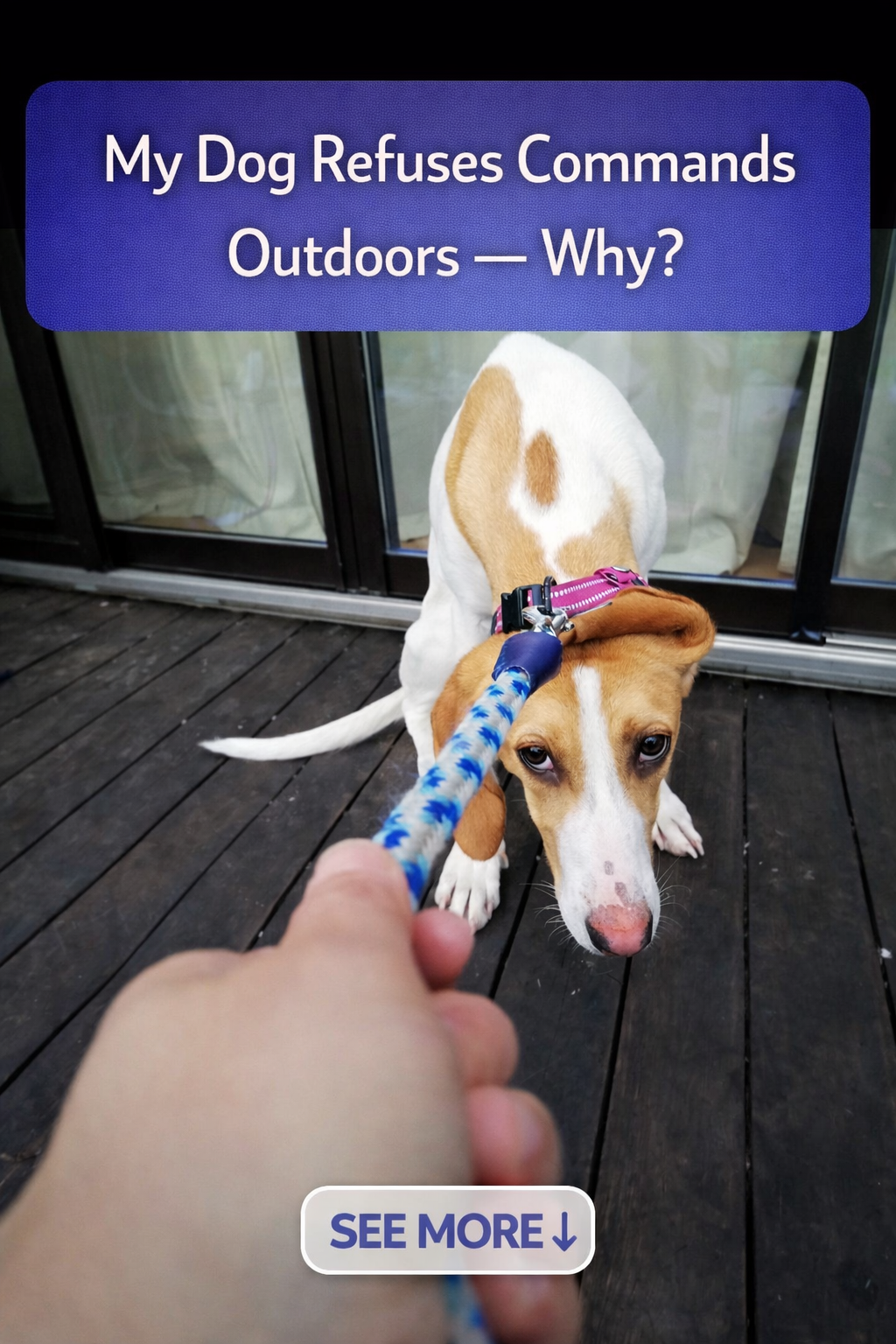
Does your dog listen flawlessly at home, but the moment you step outside it’s like all the training disappears?
You’re not alone—and no, your dog isn’t being stubborn or “disrespectful.”
This is one of the most common (and fixable) training frustrations dog owners face.
This article explains why dogs ignore commands outdoors, what’s really happening in their brain, and how to fix it step by step.
What This Problem Looks Like
You may notice your dog:
-
Sits, stays, and comes perfectly at home
-
Completely ignores cues on walks or at the park
-
Pulls, lunges, or fixates on smells
-
Responds only after several repeats
-
Acts like they’ve never been trained
👉 The pattern: obedience disappears only in distracting environments.
Why Dogs Listen Indoors but Not Outdoors
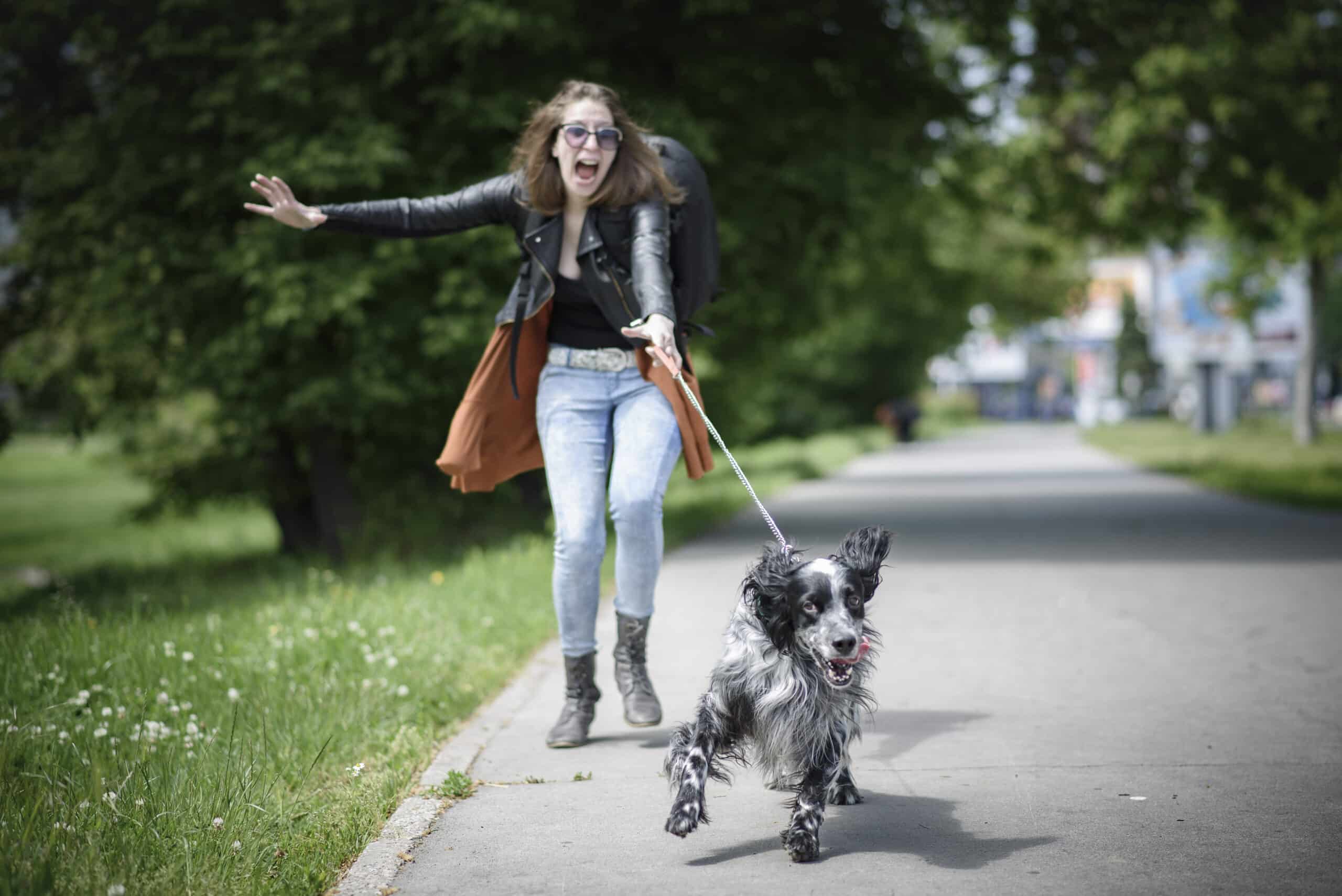
1. Dogs Don’t Automatically Generalize Training
Dogs don’t think like humans.
-
“Sit” in the living room ≠ “sit” outside
-
New smells, sights, and sounds change everything
To your dog, outside is a whole different classroom.
2. Outdoor Distractions Are Overwhelming
Outside is a sensory explosion:
-
Thousands of smells
-
Moving people and dogs
-
Noises, wind, vehicles
These distractions compete directly with your voice—and often win.
3. Excitement or Over-Arousal
Excitement shuts down thinking.
-
The emotional brain takes over
-
The learning brain goes offline
Your dog literally can’t process commands when too excited.
4. Commands Haven’t Been Reinforced Outside
If commands only get rewarded indoors:
-
The dog learns they matter only there
Dogs repeat behaviors that pay off in that environment.
5. Impulse Control Isn’t Strong Enough Yet
Impulse control is a skill.
-
Puppies
-
Adolescents
-
High-energy breeds
These dogs struggle most when stimulation is high.
When This Is Normal vs. a Problem
✅ Totally Normal
-
Puppies and young dogs
-
New locations
-
Busy or exciting environments
🚨 Needs Training Adjustment If
-
Happens on every walk
-
Leads to unsafe behavior (bolting, pulling)
-
Gets worse over time
-
Dog never checks in with you outdoors
How to Fix It (Step by Step)

1. Lower the Difficulty
Start where your dog can succeed:
-
Backyard before sidewalk
-
Quiet street before park
-
Distance from distractions
Training only works below the excitement threshold.
2. Re-Teach Commands Outdoors
Assume your dog is a beginner again.
-
Use high-value treats
-
Short sessions (1–3 minutes)
-
Reward immediately
Outside training ≠ indoor training.
3. Increase Rewards Outdoors
Your reward must beat the environment.
-
Use better treats
-
Faster reward timing
-
Fewer repetitions
Pay your dog more for harder work.
4. Practice Engagement First
Before commands, build attention:
-
Reward eye contact
-
Reward choosing you over distractions
-
Praise check-ins
Attention comes before obedience.
5. Teach Calm Before Movement
Movement is a powerful reward.
-
Sit before walking
-
Pause before crossing streets
-
Eye contact before leash tension releases
Your dog learns: calm = access to fun.
6. Don’t Repeat Commands
Repeating teaches:
-
The first cue doesn’t matter
Say it once—help your dog succeed or reset.
What NOT to Do
❌ Scold or punish
❌ Yank the leash
❌ Expect indoor-level obedience outside
❌ Train only when distractions are extreme
This increases frustration and slows progress.
Can Dogs Learn to Listen Outdoors?
Yes—almost all dogs can with:
-
Gradual exposure
-
Consistent rewards
-
Patience
Outdoor obedience is a skill built over time, not a personality trait.
Final Takeaway
If your dog refuses commands outdoors but is perfect indoors, your training didn’t fail—it just hasn’t been practiced where it matters most. Outdoor obedience is harder, and your dog needs help learning how to think through excitement.
🐾 Train the environment, not just the command—and your dog will start listening everywhere.