
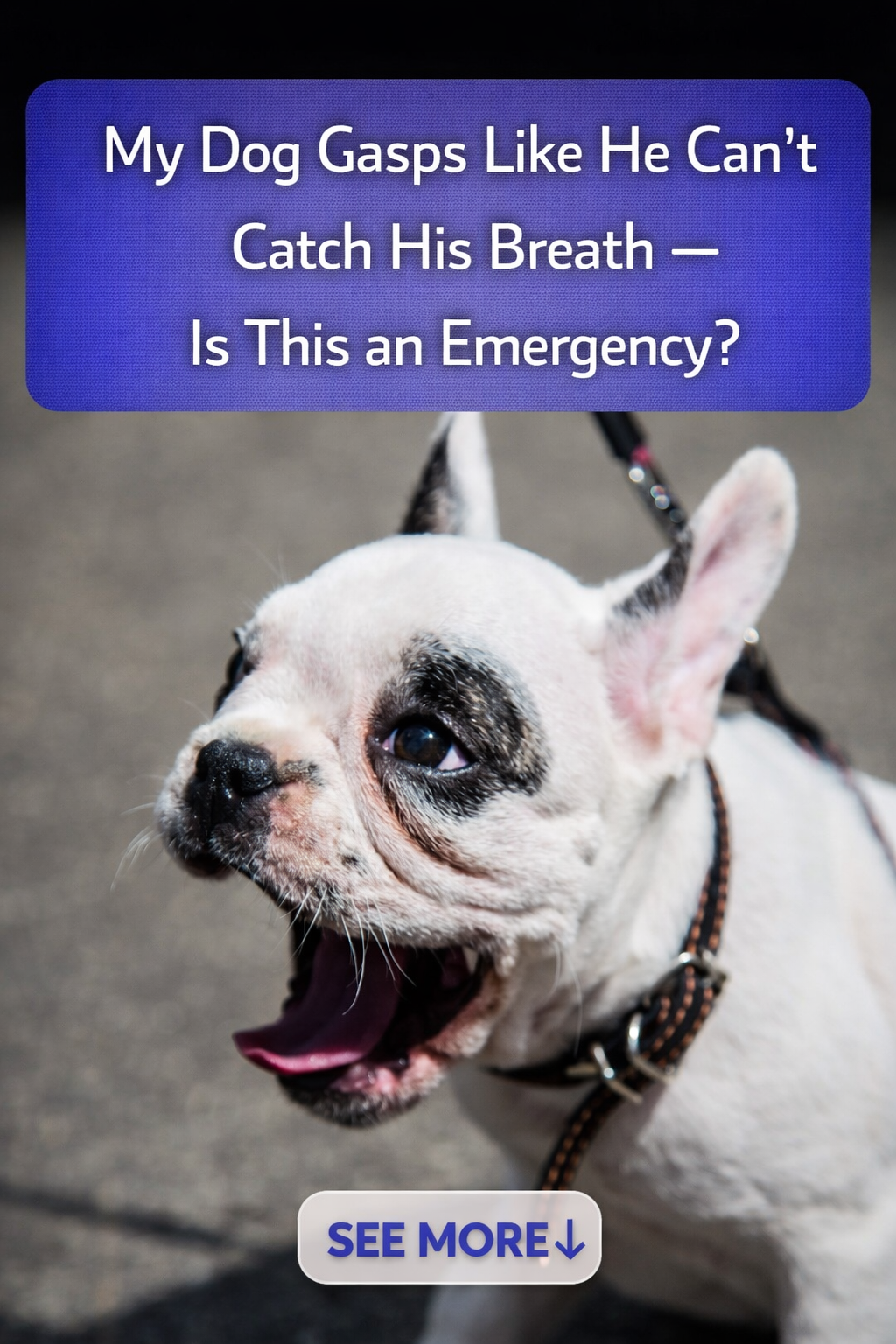
If your dog suddenly gasps for air, struggles to breathe, or looks like he can’t catch his breath, this is not something to ignore. Breathing problems can escalate very quickly, and in some cases, they are life-threatening emergencies.
This article explains what gasping in dogs can mean, how to tell a mild episode from a true emergency, and what you should do immediately.
What Gasping or Breathing Distress Looks Like
You may see your dog:
-
Gasping or gulping air
-
Stretching the neck forward to breathe
-
Breathing very fast or very shallow
-
Flaring nostrils
-
Open-mouth breathing (especially when resting)
-
Blue, gray, or pale gums/tongue
-
Panicked or restless behavior
👉 Any visible struggle to breathe is serious.
Common Reasons Dogs Gasp for Breath

1. Reverse Sneezing (Often Scary but Usually Not Dangerous)
This is a common cause of sudden gasping-like sounds.
-
Rapid inhalation through the nose
-
Snorting or honking noise
-
Episodes last seconds to a minute
Dogs are usually alert and recover quickly.
2. Airway Obstruction or Choking
⚠️ Emergency
-
Foreign object (toy, bone, food)
-
Swelling in throat
-
Severe coughing or gagging
If airflow is blocked, oxygen levels drop fast.
3. Tracheal Collapse
Common in small breeds.
-
Goose-honk cough
-
Gasping during excitement or pressure on neck
-
Worsens with pulling on collar
Can progress from mild to severe.
4. Heart Disease or Heart Failure
Poor circulation leads to breathing distress.
-
Rapid breathing at rest
-
Coughing, especially at night
-
Weakness or collapse
Often seen in senior dogs.
5. Lung Problems
Includes:
-
Pneumonia
-
Fluid in lungs
-
Asthma-like conditions
Breathing may sound wet, crackly, or labored.
6. Heatstroke or Overheating
⚠️ Life-threatening
-
Excessive panting
-
Gasping
-
Collapse
Dogs cool by breathing—failure is dangerous.
7. Pain, Panic, or Severe Anxiety
Extreme distress can alter breathing.
-
Trembling
-
Wide eyes
-
Vocalization
Still requires evaluation to rule out physical causes.
When Gasping Is an Immediate Emergency

🚨 Go to the emergency vet NOW if your dog:
-
Is gasping or struggling to breathe
-
Has blue, gray, or very pale gums
-
Collapses or can’t stand
-
Has sudden breathing trouble with no obvious cause
-
Is open-mouth breathing at rest
-
Is a short-nosed breed (bulldog, pug, frenchie)
⏱️ Do not wait to see if it passes.
What You Should Do Right Now
-
Keep your dog calm and still
-
Remove collars or harness pressure from the neck
-
Move to a cool, quiet area
-
Do NOT force water or food
-
Go to the nearest emergency vet immediately
If safe, call ahead and say:
“My dog is having trouble breathing.”
What the Vet May Do
Emergency care may include:
-
Oxygen therapy
-
X-rays or ultrasound
-
Sedation to reduce panic
-
IV medications
-
Airway support or intubation
Fast treatment can be life-saving.
Can Dogs Recover From Breathing Episodes?
Yes—many dogs recover well when treated quickly.
Delays, however, can lead to:
-
Organ damage
-
Collapse
-
Death
Breathing issues are never something to watch and wait.
Final Takeaway
If your dog gasps like he can’t catch his breath, trust what you’re seeing. Breathing distress is one of the most urgent medical signs in dogs.
🐾 When breathing looks hard, time matters. Acting fast can save your dog’s life.