
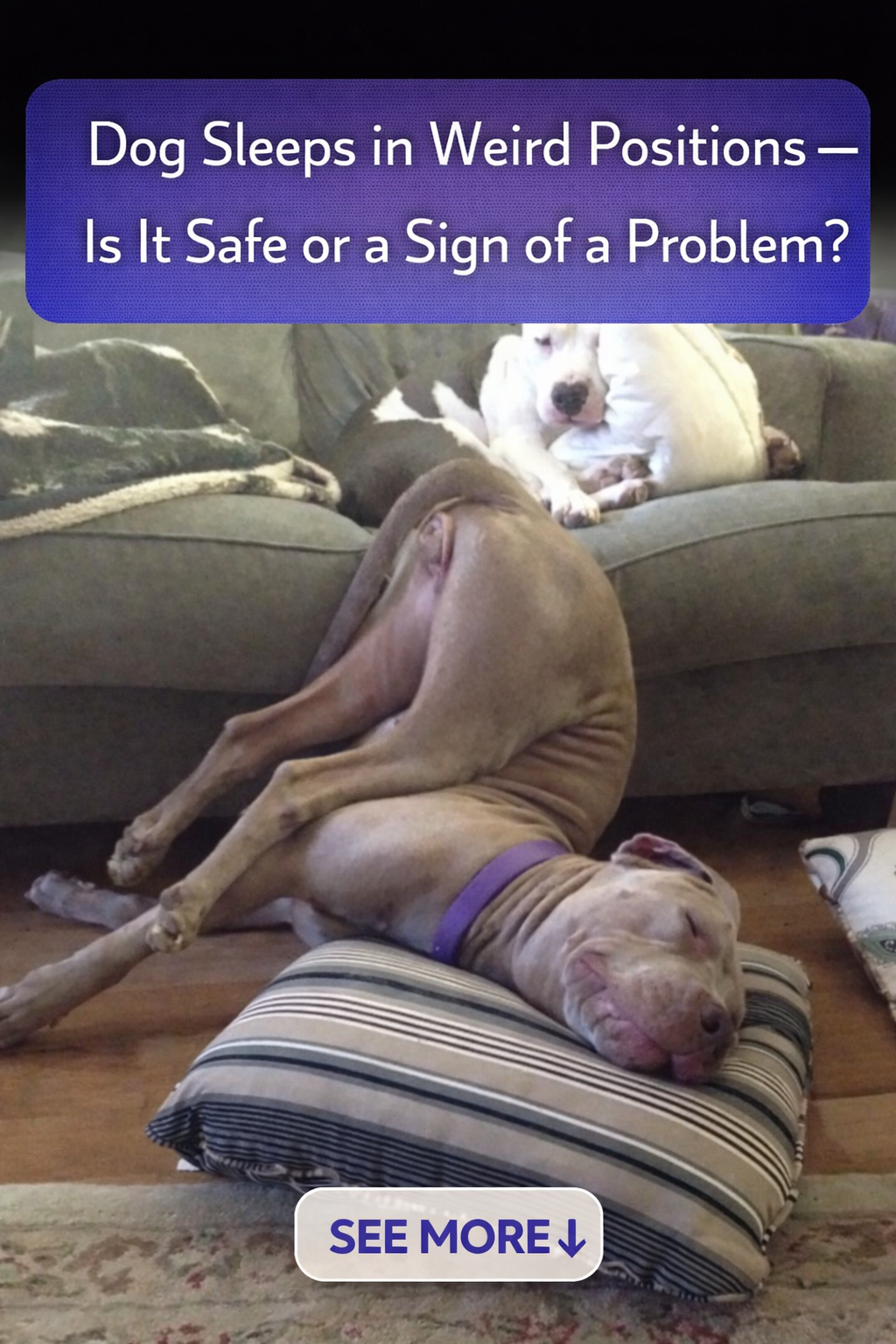
If your dog sleeps twisted, upside down, sprawled out like a pretzel, or with legs sticking straight up, you might wonder whether it’s normal—or something to worry about. The short answer: most weird sleeping positions are completely safe and often a good sign. However, some positions can hint at discomfort, pain, or health issues, depending on context.
This article explains why dogs sleep in strange positions, which ones are normal, and when you should pay closer attention.
Common “Weird” Dog Sleeping Positions (and What They Mean)
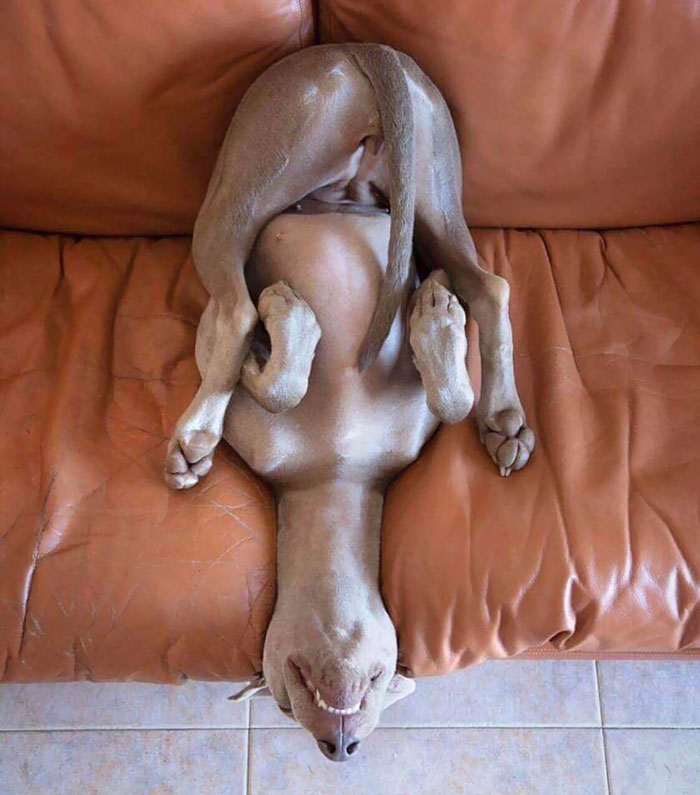
1. On the Back, Belly Up (Legs in the Air)
✅ Very safe & positive
-
Dog feels secure and relaxed
-
Belly exposed = trust
-
Helps release heat
This often means your dog feels safe in their environment.
2. Twisted or Contorted (Pretzel Pose)
✅ Usually normal
-
Flexible spine
-
Deep relaxation
-
Comfortable sleeping surface
Dogs are far more flexible than humans—this rarely causes harm.
3. Sploot (Flat on Belly, Legs Stretched Out)
✅ Normal, especially in young dogs
-
Comfortable hip and leg position
-
Helps cool the body
-
Often seen in puppies and athletic breeds
If your dog moves easily afterward, it’s not a problem.
4. Curled Tightly Into a Ball
✅ Normal
-
Conserves warmth
-
Protective instinct
-
Common in cooler rooms
If your dog switches positions later, this is healthy behavior.
5. Side Sleeping (Legs Extended)
✅ Very healthy
-
Muscles fully relaxed
-
Deep, restful sleep
One of the most comfortable and restorative positions.
When Weird Sleeping Positions Might Signal a Problem

🚨 Pay attention if your dog:
-
Always sleeps in one stiff position
-
Avoids lying on one side
-
Whimpers or shifts constantly
-
Struggles to stand after resting
-
Suddenly changes sleeping posture
-
Is a senior dog with new sleep habits
These may suggest joint pain, arthritis, abdominal discomfort, or breathing issues.
Do Dogs Hurt Themselves Sleeping Like This?
In healthy dogs:
-
❌ No joint damage
-
❌ No spine harm
-
❌ No circulation issues
Dogs naturally reposition themselves when uncomfortable. If a position were painful, they wouldn’t stay in it.
How to Support Healthy Sleep
✔ Provide a supportive bed
✔ Match bed type to age and size
✔ Keep sleeping area temperature comfortable
✔ Watch how easily your dog gets up
Comfort affects sleep quality and joint health.
Senior Dogs & Sleep Positions
Older dogs may:
-
Avoid belly-up sleeping
-
Change positions more often
-
Prefer firmer or orthopedic beds
This is normal aging—but sudden discomfort is not.
Final Takeaway
Weird sleeping positions in dogs are usually a sign of comfort, flexibility, and trust—not danger. If your dog sleeps deeply, changes positions freely, and moves normally when awake, you can relax.
🐾 Strange-looking sleep is usually a happy, healthy dog doing what dogs do best.