
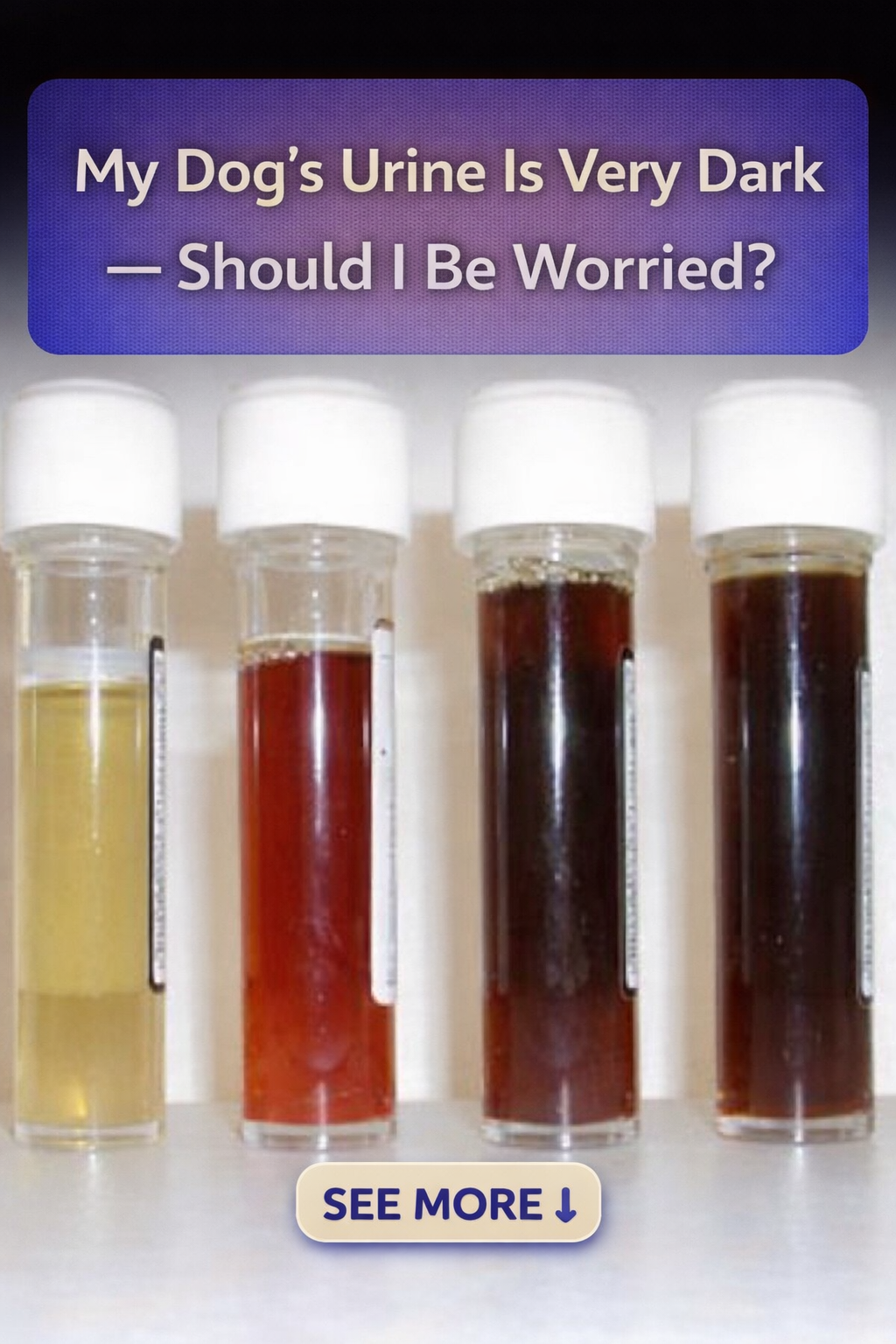
If your dog’s urine suddenly looks dark yellow, brown, tea-colored, or reddish, this is not something to ignore. While mild color changes can happen, very dark urine often signals dehydration, internal disease, or bleeding and may require prompt veterinary attention.
This guide explains what dark urine means, the most common causes, how to tell an emergency from a mild issue, and what to do next.
What “Very Dark” Urine Can Look Like
Owners describe it as:
-
Deep yellow or amber
-
Brown or tea-colored
-
Orange or rust-colored
-
Red-tinged
👉 Normal urine should be pale yellow to light straw-colored.
Common Causes of Dark Urine in Dogs
1. Dehydration (Most Common & Often Fixable)
When dogs don’t drink enough:
-
Urine becomes concentrated and dark
-
Often paired with dry gums or lethargy
This can worsen quickly in hot weather or illness.
2. Blood in the Urine (Hematuria)
Blood may appear:
-
Pink, red, or brown
-
Mixed throughout urine or at the end of urination
Possible causes:
-
Urinary tract infection
-
Bladder stones
-
Trauma
-
Tumors
3. Liver Disease
Liver problems can cause:
-
Orange or brown urine
-
Yellowing of gums or eyes (jaundice)
-
Loss of appetite, vomiting
4. Breakdown of Red Blood Cells (Hemolysis)
⚠️ Serious
-
Tea- or cola-colored urine
-
Weakness, pale gums
Can be caused by toxins, immune disease, or infections.
5. Muscle Breakdown (Myoglobinuria)
After severe exertion, trauma, or heatstroke:
-
Dark brown urine
-
Painful or stiff muscles
This is a medical emergency.
6. Certain Foods or Medications
Some substances can temporarily darken urine.
-
Medications
-
Supplements
However, medical causes must be ruled out first.
When Dark Urine Is an Emergency

🚨 Go to the vet immediately if dark urine is accompanied by:
-
Weakness or collapse
-
Pale, white, or yellow gums
-
Vomiting or refusal to eat
-
Pain while urinating
-
Fever or lethargy
-
Reduced or no urine output
⏱️ Delaying care can lead to kidney failure or worse.
What You Should Do Right Now
-
Encourage water intake (don’t force)
-
Observe urine color carefully
-
Check gum color (should be pink)
-
Collect a urine sample if possible
-
Contact your veterinarian promptly
❌ Do not give human medications
❌ Do not assume it will “clear on its own”
How Vets Diagnose Dark Urine
Your veterinarian may:
-
Run urinalysis
-
Do blood tests (liver, kidneys, red blood cells)
-
Perform imaging (X-ray, ultrasound)
Early diagnosis often makes treatment much easier and more successful.
Can Dogs Recover From Causes of Dark Urine?
Yes—many dogs recover fully, especially when treated early:
-
Dehydration resolves quickly
-
Infections respond to medication
-
Liver or blood disorders need early management
The outcome depends heavily on how fast you act.
Final Takeaway
Very dark urine is your dog’s way of saying something inside isn’t right. While dehydration is common, serious conditions can look similar—so it’s always safer to check.
🐾 When urine color changes dramatically, trust your instincts and involve your vet. It’s one of the clearest warning signs your dog can give.