
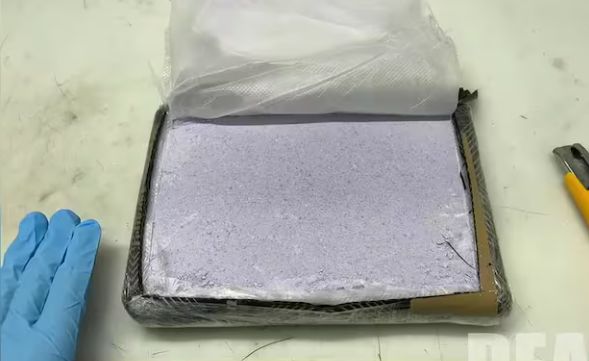
A new and potentially deadlier form of fentanyl is spreading across the Midwest, and law enforcement officials warn that the opioid overdose reversal drug naloxone may not be effective against it.
The drug, known as “purple fentanyl,” has been seized in Midwest states, such as Missouri, Nebraska, North Dakota, and Minnesota, according to the U.S. Drug Enforcement Administration. The pills and powder have a distinctive purple hue.
“Clearly, it’s a problem, it’s a threat, we are aware of it,” said Dustin Gillespie, special agent in charge of the DEA’s Omaha Division. “Colored fentanyl has been around from the beginning. We have seen it in pill form. We’ve seen it now in the last 12 months really evolve into powder form. We see the proliferation of fentanyl powder now that we haven’t seen in the past.”
According to Minnesota court documents, on Friday, Dec. 26, a Grand Forks woman was charged with third-degree murder and second-degree controlled substance after allegedly selling purple fentanyl that led to a fatal overdose in East Grand Forks in April.
“To see it in purple form like we have in North Dakota, it’s incredibly concerning, but it’s not unusual; we’re seeing the same trends across the entire nation,” Gillespie said.
Dealers mixing fentanyl with lidocaine
According to the DEA, cartels are cutting the fentanyl with lidocaine, a local anesthetic. Lidocaine is most commonly used to numb certain parts of the body.
However, the mixture is creating a dangerous problem for overdose victims. Naloxone, the generic name for the overdose reversal drug often sold under the brand name Narcan, may not work on people who overdose on purple fentanyl.
Gillespie explained that fentanyl alone is already extremely lethal.
“So fentanyl in its pure form, just fentanyl alone, just two milligrams is a potential lethal dose, that’s just enough granules to fit on the tip of a pencil,” he said. “Now imagine that you’re adding another substance which can amplify the effects of fentanyl, like lidocaine. It just makes fentanyl that more potent, that much more deadly and that much more difficult to revive someone.”
He said cartels frequently adulterate fentanyl with other substances.
“When we see the addition, the adulterating of fentanyl, that’s not unusual; we see that all the time,” Gillespie said. “Cartels are always mixing in different ingredients to try to amplify the effects of fentanyl to make it bigger and bulkier, to make it cheaper to produce.”
The combination of lidocaine and fentanyl creates an especially dangerous situation.
‘Purple means pure’ is a marketing ploy
Reports of agencies seizing the drug have begun appearing across the Midwest, and users are being misled into believing that purple means pure.
However, law enforcement officials say the purple color is thought to be just a marketing ploy by drug dealers and has nothing to do with the drug’s potency.
“On top of that, the cartels are always looking for ways to market and peddle their poison into our communities and expand their client base,” Gillespie said. “Coloring those powders and coloring those pills to any different color of the rainbow is very easy and it’s very inexpensive, and that’s exactly what they’re doing.”
DEA: Still use naloxone if overdose suspected
Despite concerns about naloxone’s effectiveness, the DEA says people should still try reviving overdose victims with the drug.
Because fentanyl is the active ingredient in purple fentanyl, there’s a chance naloxone might help, according to the DEA.
Gillespie urged families to have conversations about the dangers of fentanyl.
“Now is the time you need to have that conversation,” he said. “It never feels like the right context or the right time to talk about fentanyl, but there is no better time, and it’s never been more urgent.”
The DEA is urging anyone who encounters purple fentanyl to contact law enforcement immediately.