
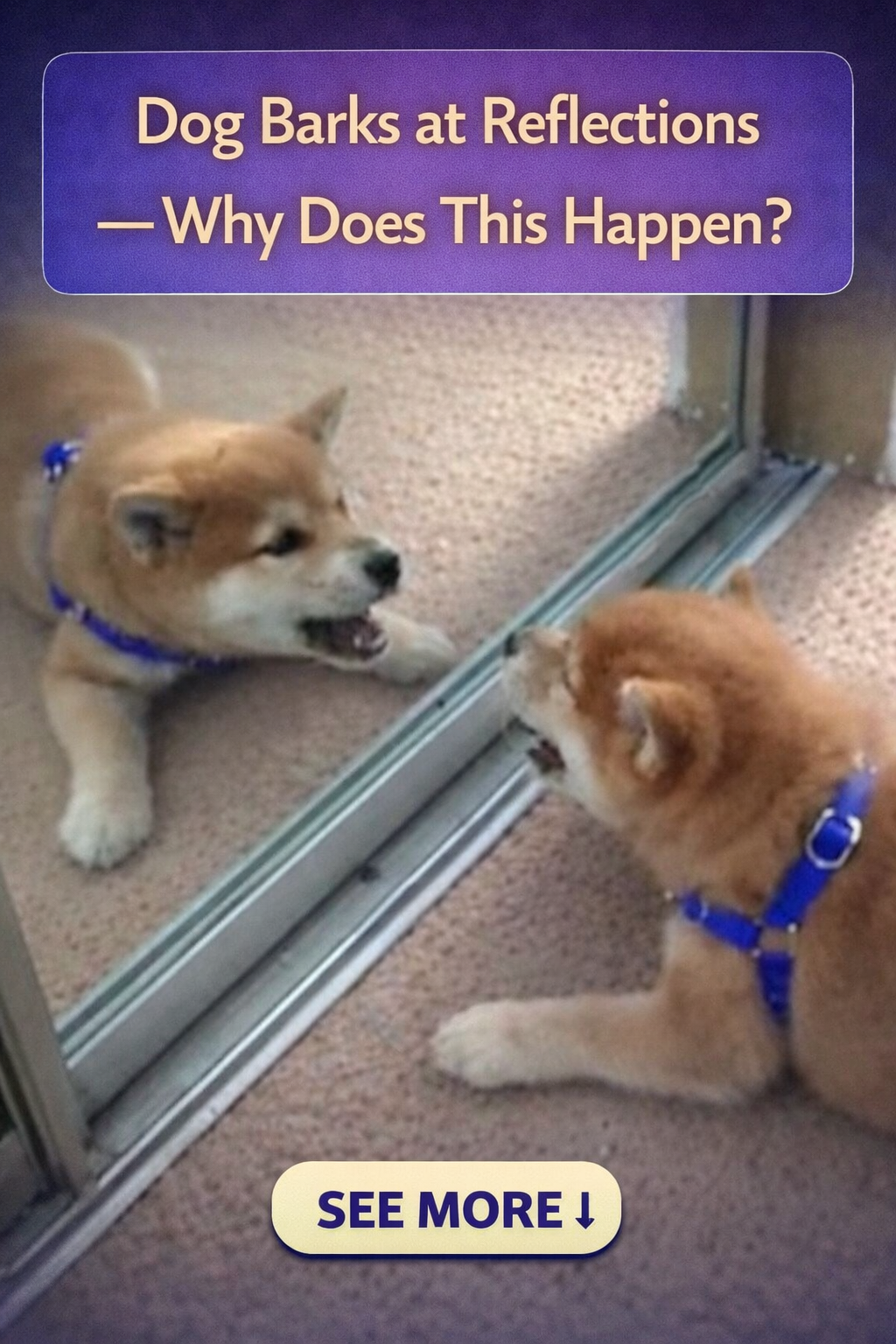
If your dog barks, growls, lunges, or fixates on reflections in mirrors, windows, TVs, or shiny surfaces, you’re seeing a very common behavior. To most dogs, reflections don’t register as “me”—they look like another animal appearing and disappearing unpredictably, which can trigger fear, excitement, or frustration.
Here’s how to understand why dogs bark at reflections, when it’s harmless, and how to stop it from becoming a habit.
What Reflection Reactivity Looks Like
You may notice your dog:
-
Barking at mirrors or glass doors
-
Lunging at window reflections at night
-
Growling at their image in TVs or appliances
-
Freezing and staring, then exploding
-
Calming only when the reflection disappears
👉 The key feature is movement without scent—very confusing for dogs.
Why Dogs Bark at Reflections

1. Dogs Don’t Recognize Themselves
Most dogs fail the mirror self-recognition test.
-
They see a dog-shaped movement
-
No smell = unfamiliar
-
The “other dog” won’t leave
This feels threatening or irritating.
2. Territorial Instinct
Reflections often appear:
-
Near doors or windows
-
In boundary areas
Your dog may be trying to defend the home from an “intruder.”
3. Low Light Makes It Worse
At dusk or night:
-
Glass acts like a mirror
-
Reflections become stronger
-
Shadows amplify fear
Nighttime reflection barking is especially common.
4. Anxiety or Hypervigilance
Anxious dogs:
-
Scan environments constantly
-
React faster to visual triggers
Reflections become a focus for nervous energy.
5. Learned Behavior
If barking made the reflection “go away” (lights change, dog moves):
-
The dog learns barking works
-
The behavior repeats
When Reflection Barking Is a Problem
🚨 Pay attention if your dog:
-
Fixates and can’t disengage
-
Reacts intensely or panics
-
Gets worse over time
-
Redirects frustration toward people or dogs
-
Loses sleep or appetite
Persistent fixation can turn into compulsive behavior.
What You Can Do Right Now
1. Reduce or Remove Reflections
-
Cover mirrors temporarily
-
Close curtains or blinds at night
-
Use frosted window film
-
Adjust lighting to reduce glare
Management prevents rehearsal.
2. Don’t Confront the Reflection
❌ Don’t point it out
❌ Don’t laugh or encourage
❌ Don’t hold your dog in front of mirrors
Neutral responses reduce importance.
3. Redirect Early
Before barking escalates:
-
Call your dog away
-
Scatter treats to sniff
-
Use a calm cue like “this way”
Sniffing lowers arousal.
4. Teach a “Disengage” Skill
Reward:
-
Looking away from the reflection
-
Choosing you instead
The goal isn’t obedience—it’s emotional regulation.
5. Improve Nighttime Comfort
-
Soft night lights
-
Predictable evening routine
-
Calm bedtime environment
Less uncertainty = fewer reactions.
When to Get Help
Seek professional advice if:
-
Behavior started suddenly
-
Your dog is a senior (rule out vision or cognitive changes)
-
Fixation is obsessive
-
There’s aggression or redirection
A vet or behaviorist can rule out vision, neurological, or anxiety-related causes.
Can Dogs Learn to Ignore Reflections?
Yes—most dogs improve quickly when:
-
Reflections are managed
-
Calm alternatives are reinforced
-
Anxiety is reduced
The earlier you intervene, the easier it is.
Final Takeaway
When a dog barks at reflections, he isn’t being silly—he’s responding to a confusing visual world. With fewer triggers and calmer routines, most dogs learn that reflections are meaningless and safe.
🐾 If it moves but doesn’t smell right, dogs will question it. Help them feel safe—and the barking fades.