
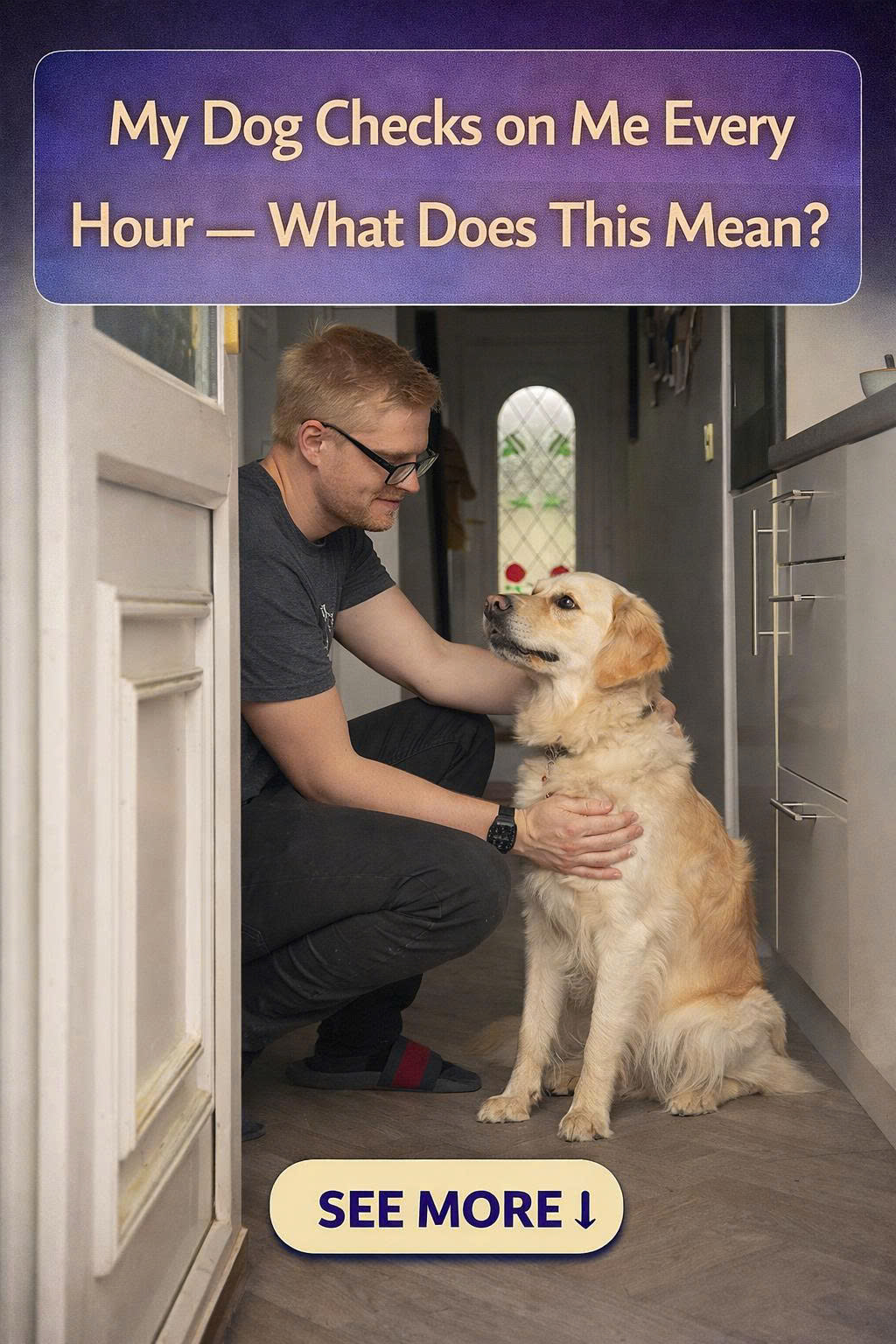
If your dog comes to look at you, approaches briefly, then leaves—only to return again and again throughout the day, this behavior is usually a form of monitoring and bonding, not something “odd” or wrong. Dogs are social animals, and many naturally keep tabs on the people they’re attached to.
That said, why your dog checks on you matters. It can range from healthy affection to a subtle sign of anxiety—depending on the context.
What “Checking on You” Typically Looks Like
Your dog may:
-
Walk over, look at you, then lie down elsewhere
-
Peek into the room you’re in
-
Make brief eye contact and leave
-
Follow you for a minute, then disengage
-
Return periodically, especially when you’re quiet or inactive
👉 Brief, calm check-ins are very different from clingy or panicked following.
The Most Common (Healthy) Reasons

1. Strong Bond & Attachment (Most Common)
Dogs naturally:
-
Track the location of their “person”
-
Feel safer knowing where you are
-
Check in the way pack animals do
This is secure attachment, not neediness.
2. Emotional Awareness
Dogs are excellent at reading:
-
Body language
-
Energy levels
-
Emotional states
If you’re tired, stressed, sick, or unusually quiet, your dog may check on you more often to make sure everything is okay.
3. Routine Monitoring
Many dogs develop habits like:
-
Checking on you during work breaks
-
Visiting when the house is quiet
-
Making rounds of their “territory”
To your dog, this is simply part of the day.
4. Learned Check-Ins
If in the past:
-
You smiled
-
Spoke to them
-
Petted them
Your dog learned that checking in = gentle social reward.
When Hourly Check-Ins Might Signal Anxiety
Pay closer attention if your dog also:
-
Follows you constantly without disengaging
-
Becomes distressed when you close doors
-
Whines, paces, or pants
-
Refuses to relax unless touching you
-
Checks on you every few minutes
This suggests hypervigilance, not calm bonding.
How to Tell Healthy Bonding From Anxiety
✅ Healthy Check-Ins
-
Dog leaves on their own
-
Can nap or relax between visits
-
Comfortable when you’re out of sight
-
Calm body language
⚠️ Anxious Monitoring
-
Dog can’t settle
-
Constant following
-
Stress behaviors (licking, yawning, pacing)
-
Escalates when routines change
What You Should Do
In most cases—nothing at all.
👍 Let it be if:
-
Your dog seems relaxed
-
There’s no distress
-
Behavior isn’t escalating
This is simply connection.
🔧 Support independence gently if needed:
-
Reward calm resting away from you
-
Encourage naps on a bed or mat
-
Avoid reinforcing constant hovering
-
Keep predictable routines
No punishment—just balance.
Why This Behavior Is Often a Compliment
To your dog:
-
You are safety
-
You are stability
-
You are the center of their social world
Checking on you is their way of saying:
“You’re still here. We’re okay.”
Final Takeaway
If your dog checks on you every hour with calm curiosity and then goes about their day, it’s a sign of healthy attachment and emotional awareness. Only when the behavior becomes intense or distress-driven does it need intervention.
🐾 To your dog, checking on you isn’t surveillance—it’s love in motion.