
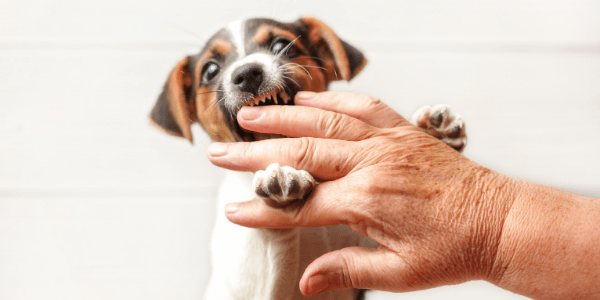
If your puppy bites hands, arms, clothes, or ankles too hard during play, this is one of the most common puppy behaviors. It doesn’t mean your puppy is aggressive. It means they’re learning bite control—and they need your help to learn it correctly.
The key is teaching bite inhibition, not punishment.
What Hard Play Nipping Looks Like
You might notice:
-
Sharp puppy teeth during tug or wrestling
-
Nipping when excited or zooming
-
Grabbing hands instead of toys
-
Biting harder as play escalates
👉 Excitement + immature self-control = hard nips.
Why Puppies Bite Too Hard
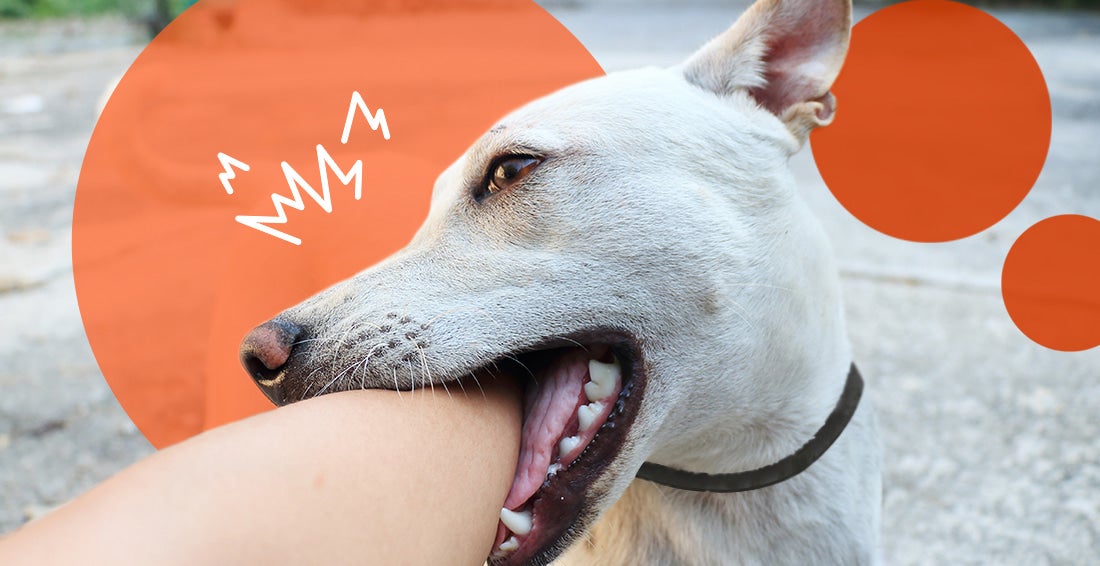
1. Bite Inhibition Is Learned, Not Automatic
Puppies learn bite pressure from:
-
Littermates
-
Play feedback (“that hurt!”)
If separated early—or if humans don’t teach it—puppies don’t know their strength.
2. Teething Pain (Very Common)
Between 3–6 months, gums hurt.
Chewing and biting relieve discomfort.
3. Overstimulation
When puppies get:
-
Too excited
-
Too tired
-
Too aroused
They lose control of their mouths first.
4. Hands Accidentally Became Toys
If hands were used for play early on, puppies learn:
“Hands are chew toys.”
What NOT to Do
❌ Don’t hit, yell, or alpha-roll
❌ Don’t flick the nose
❌ Don’t hold the mouth shut
❌ Don’t encourage rough hand play
Punishment increases fear and worsens biting.
How to Teach Gentle Play (Step by Step)
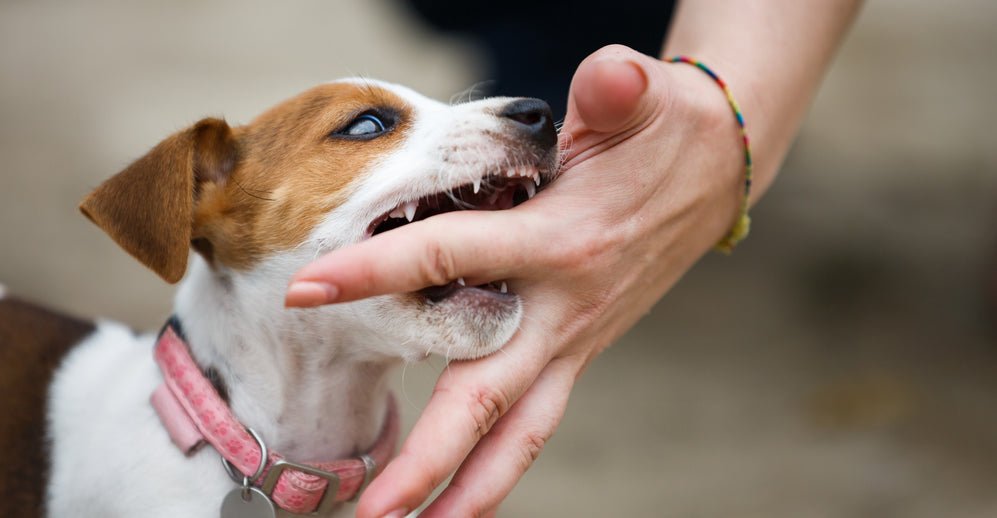
1. End Play Immediately When Teeth Hurt
-
Say a calm “ouch” or “too bad”
-
Freeze briefly
-
Stand up and disengage
No yelling. No drama.
Hard bite = play stops.
2. Redirect to Toys Instantly
Always have toys nearby.
-
Tug toys
-
Chew toys
Hands disappear, toys appear.
3. Reward Gentle Mouth Use
If your puppy:
-
Licks
-
Mouths softly
-
Chooses toys
Praise calmly. Gentle gets rewarded.
4. Use Time-Outs Properly (Very Short)
If biting continues:
-
Step away behind a gate or door
-
20–30 seconds only
This is loss of access, not punishment.
5. Prevent Overtired Biting
Most hard biting happens when puppies need:
-
A nap
-
Calm time
Overtired puppies bite harder—just like cranky toddlers.
Adjust Play to Reduce Nipping
-
Shorter play sessions
-
More breaks
-
Less wrestling, more tug
-
Tug rules: teeth on toy only
How Long Does This Phase Last?
-
Peaks around 3–5 months
-
Improves steadily with consistency
-
Mostly gone by 6–7 months
Adult dogs with good bite inhibition are safe even when excited.
When to Get Help
📞 Seek professional help if:
-
Bites break skin
-
Growling or guarding accompanies bites
-
Puppy doesn’t respond to disengagement
-
Biting worsens with age
Early guidance prevents future problems.
Final Takeaway
Hard play nipping is part of puppy development—not a flaw. Every gentle interruption teaches your puppy an important life skill: how to control their mouth.
🐾 You’re not stopping play—you’re teaching manners. And manners last a lifetime.