
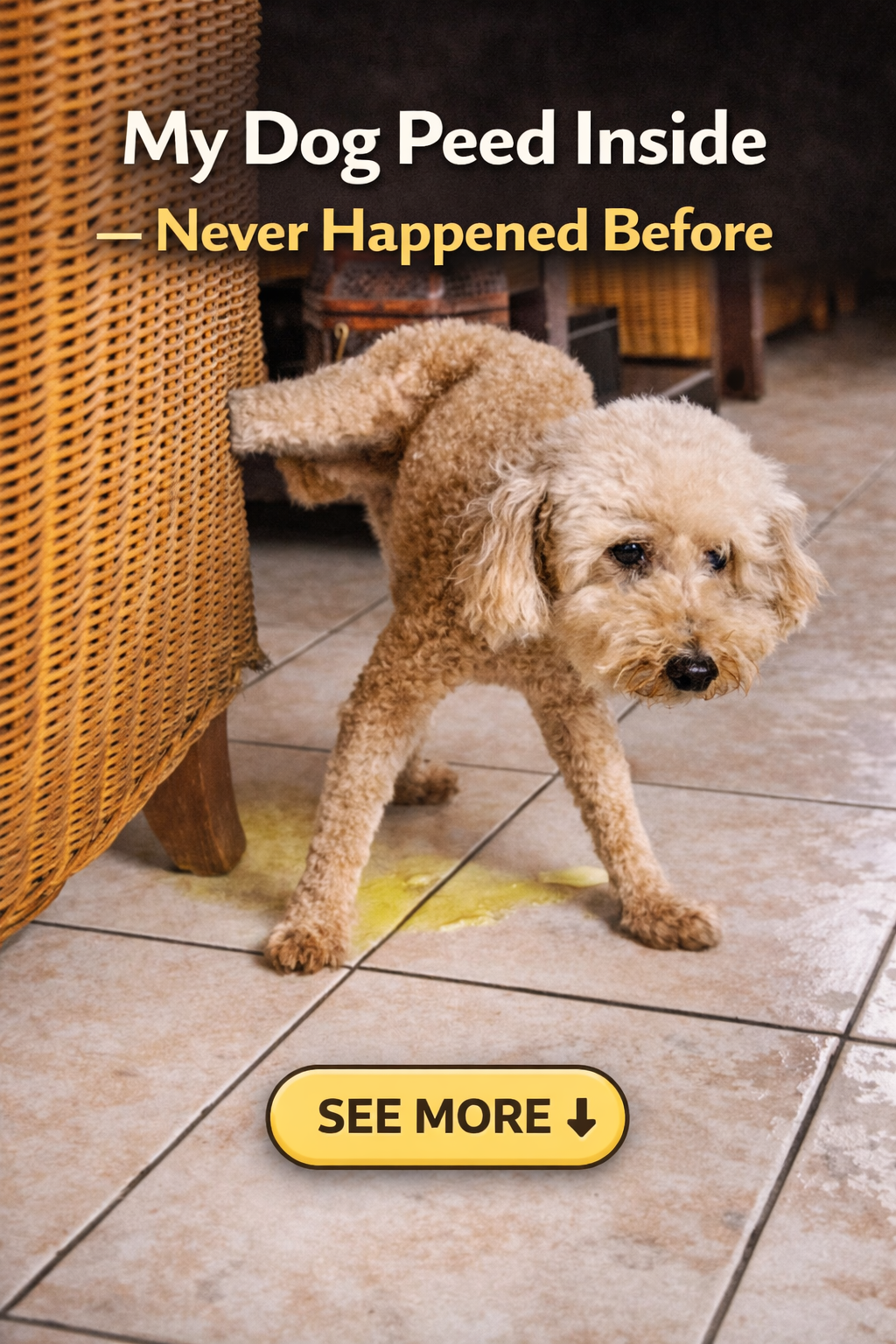
When a fully house-trained dog suddenly urinates indoors, it’s not misbehavior—it’s information. A one-off accident can happen, but a new, unexplained indoor pee often points to a medical issue, stressor, or routine change that needs attention.
Here’s how to figure out why it happened, what to do right now, and when to call the vet.
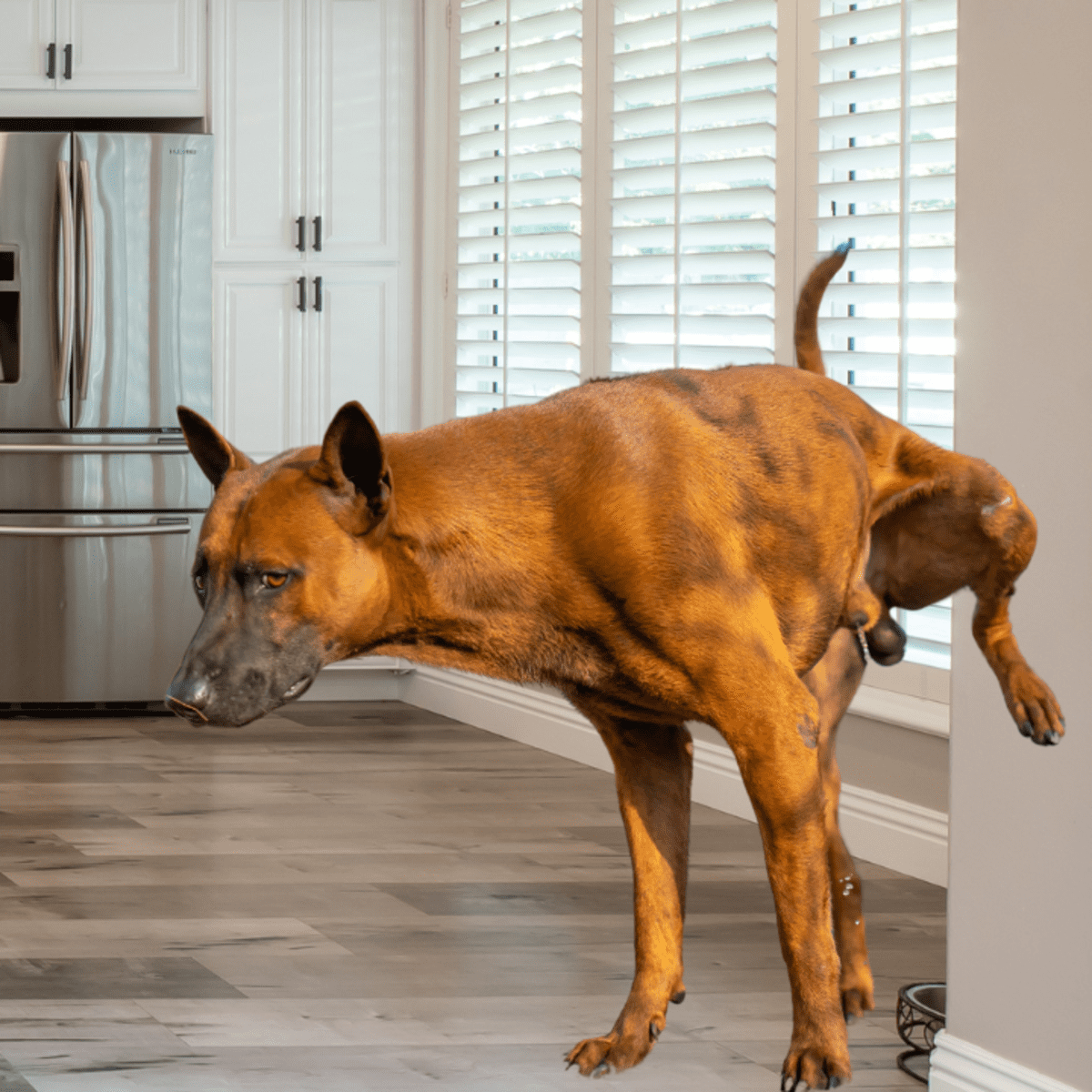
First: What Did the Accident Look Like?
The details matter:
-
Small puddle near doors/furniture? → possible marking or urgency
-
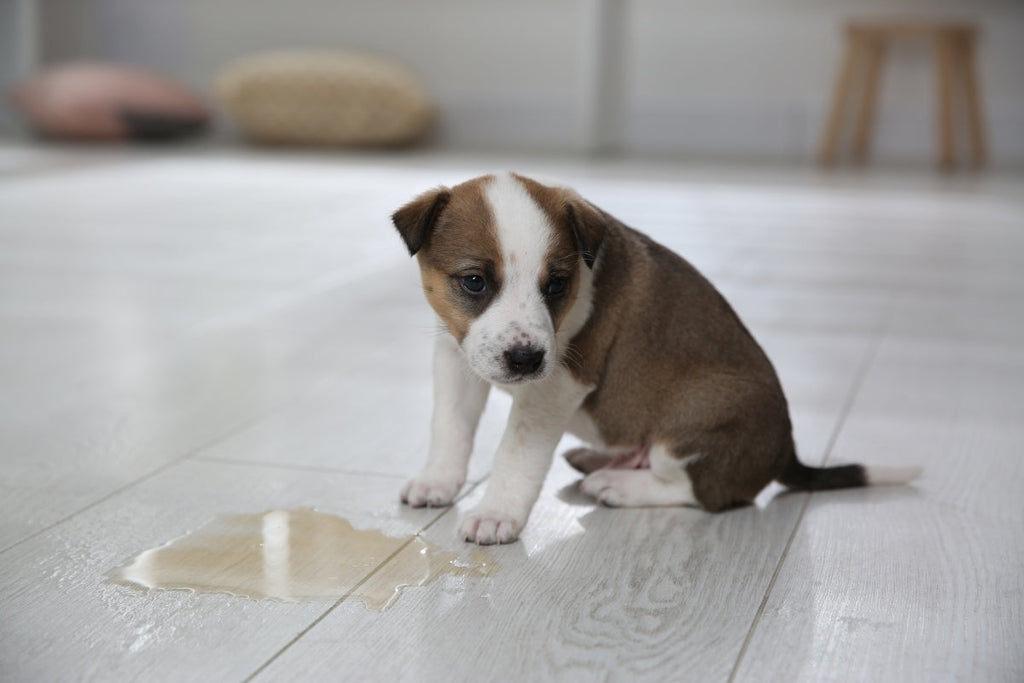
Large puddle where they rested? → loss of control/incontinence
-
Squatting repeatedly, little urine? → bladder irritation
-
No warning signs at all? → medical or neurological cause
👉 A sudden change from “never” to “now” is the key red flag.
Most Common Causes of a First-Ever Indoor Accident
1. Urinary Tract Infection (Very Common)
UTIs cause urgency.
-
Sudden accidents
-
Frequent attempts to pee
-
Licking genitals
-
Strong or unusual urine smell
Dogs often can’t hold it, even if perfectly trained.
2. Increased Thirst → Increased Urine
Triggers include:
-
Hot weather
-
New treats/food (salty)
-
Medications (steroids)
-
Diabetes or kidney issues
More urine overwhelms normal bladder control.
3. Stress or Anxiety
Dogs may pee inside due to:
-
Guests
-
Loud noises
-
Schedule changes
-
Being left longer than usual
Stress affects bladder control—even in confident dogs.
4. Age-Related Changes
-
Senior dogs may develop weaker bladder muscles
-
Young dogs can regress briefly during growth phases
New accidents in seniors should always be checked.
5. Hormonal or Neurological Issues (Less Common)
-
Spay/neuter-related incontinence
-
Spinal or nerve problems
Often paired with leakage during sleep or weakness.
6. Marking (Sometimes)
If the accident was:
-
On new furniture
-
Near doors
-
On vertical surfaces
It may be marking—not a house-training failure.
What NOT to Do
❌ Don’t scold or punish
❌ Don’t assume “he forgot training”
❌ Don’t restrict water
❌ Don’t ignore a sudden change
Punishment increases anxiety and more accidents.
What You Should Do Right Now
1. Clean Thoroughly
-
Use an enzymatic cleaner
-
Avoid ammonia (smells like urine to dogs)
2. Increase Potty Breaks (Temporarily)
-
Take your dog out more often
-
Praise outdoor peeing calmly
3. Observe for 24–48 Hours
Watch for:
-
Repeated accidents
-
Increased thirst
-
Straining or discomfort
-
Lethargy
Keep notes—this helps your vet.
When to Call the Vet
📞 Schedule a vet visit if:
-
It happens again
-
Your dog drinks or pees more than usual
-
There’s blood, odor, or straining
-
Your dog is a senior
-
Behavior or appetite changed
🚨 Urgent care if:
-
Your dog can’t pee
-
There’s pain, vomiting, or weakness
-
Accidents are sudden and frequent
Can This Be Fixed?
Yes—very often.
Once the cause is treated:
-
UTIs clear quickly
-
Hormonal issues are manageable
-
Stress-related accidents resolve with routine
Most dogs return to perfect house manners.
Final Takeaway
A dog who pees inside for the first time is asking for help, not forgiveness. One accident might be nothing—but two is a message. Listen early, act calmly, and you’ll protect both your dog’s health and your home.
🐾 House-trained dogs don’t “forget.” Something changed—your job is to find out what