

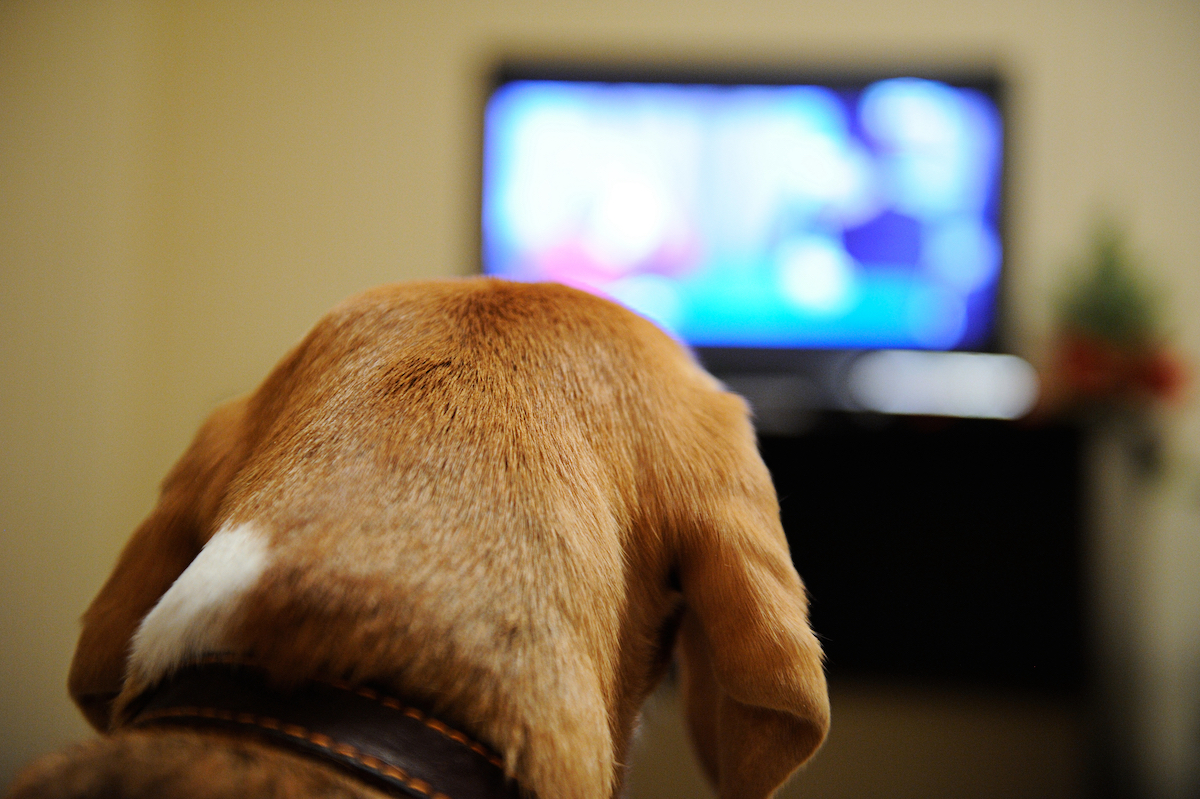
If your dog locks eyes with a blank TV, ears perked, body still, it can look eerie—but in most cases it’s normal canine perception, not anything supernatural. Dogs experience the world very differently than we do, especially with sound, reflection, and subtle movement.
Here’s how to understand why it happens, when it’s harmless, and when to look deeper.
Common (Usually Harmless) Reasons
1. Residual Sounds You Can’t Hear (Most Common)
Even when “off,” TVs can emit:
-
Faint electrical hums
-
Clicks from standby mode
-
Background noise from connected devices
Dogs hear frequencies far beyond human range, so they may be responding to sound—not the screen.
2. Reflections or Light Changes
A black TV screen acts like a mirror.
Your dog may notice:
-
Reflections of movement behind them
-
Light shifts from windows or passing cars
To dogs, that’s real-time motion.
3. Learned Association
If your dog has seen animals or exciting scenes on TV before, they may:
-
Anticipate movement
-
Wait for it to “come back on”
This is expectation, not confusion.
4. Heightened Alertness or Curiosity
Dogs often stare to:
-
Gather information
-
Monitor a space
-
Decide if action is needed
Stillness doesn’t mean distress.
Behavioral or Emotional Factors
5. Mild Anxiety or Vigilance
Some dogs scan rooms more when:
-
Routine changes
-
Visitors recently left
-
It’s quiet at night
Staring can be a self-check behavior.
6. Boredom
A bored dog may fixate on:
-
High-contrast objects
-
Familiar shapes
Especially if there’s little enrichment.
7. Senior Cognitive Changes (Less Common)
Older dogs may:
-
Stare at objects
-
Seem momentarily “stuck”
-
Pause before moving
If this is new and increasing in a senior dog, note it.
When Staring Might Be a Concern
🚩 Pay attention if staring is paired with:
-
Unresponsiveness to name
-
Head tilt or circling
-
Confusion or getting stuck
-
Sudden personality changes
-
Seizure-like signs (twitching, lip smacking)
These warrant a vet check, especially if frequent.
What You Can Do Right Now
-
Turn the TV fully off at the power strip
-
Close curtains to reduce reflections
-
Add gentle background noise
-
Redirect calmly with a cue or toy
-
Increase daily mental enrichment
Avoid startling or scolding—curiosity isn’t misbehavior.
Quick Self-Check
-
Does your dog stop when you call them? ✅ reassuring
-
Does the behavior happen briefly and then end? ✅ normal
-
Is your dog otherwise playful and engaged? ✅ likely harmless
Final Takeaway
Dogs staring at an off TV are usually reacting to sounds, reflections, or expectations we don’t notice. If your dog is responsive and otherwise normal, it’s almost always benign. Watch for patterns and changes, not the stare itself.
🐾 Dogs don’t see an “empty screen”—they see a world full of subtle signals.