

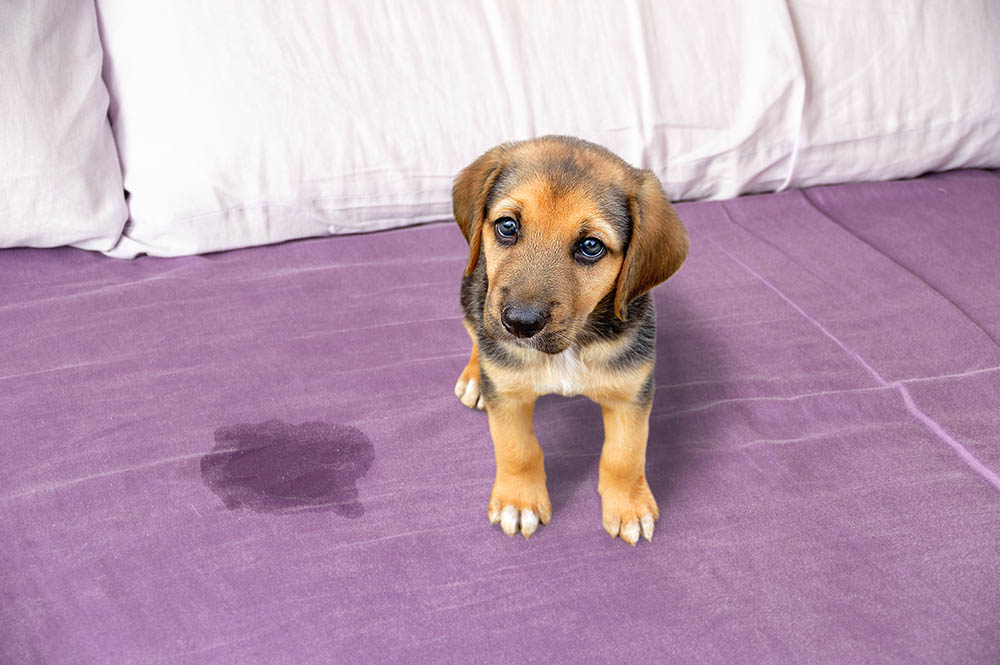
When a dog urinates on the bed seemingly out of nowhere, it’s upsetting—and confusing. This behavior is not spite and rarely “random.” Beds are high-value scent zones, and accidents here usually point to medical issues, anxiety, or marking-related behavior.
Here’s how to figure out the real cause, what to do immediately, and when it’s serious.

First: How Did It Happen? (Details Matter)
Ask yourself:
-
Was it a large puddle or a small spot?
-
Did it happen while sleeping or when awake?
-
Is this one time or repeating?
-
Is your dog male or female, young or senior?
These clues narrow the cause fast.
Most Common Reasons Dogs Pee on Beds
1. Urinary Tract Infection (Very Common)
UTIs cause urgency and loss of control.
Signs include:
-
Sudden indoor accidents
-
Licking genitals
-
Strong or odd-smelling urine
-
Frequent attempts to pee
Dogs may choose the bed because they can’t hold it.
2. Anxiety or Emotional Stress
Beds smell strongly like you.
Dogs may urinate on them when:
-
Left alone
-
Routine changes
-
Guests or noise
-
Separation anxiety
This is stress-related, not disobedience.
3. Marking Behavior
More likely if:
-
Small amounts of urine
-
Happens after changes (new pet, partner, move)
-
Often near pillows or edges
Marking is about scent communication, not bladder control.
4. Incontinence (Especially in Seniors)
If urine appears:
-
During sleep
-
Without awareness
-
As damp patches
This often points to hormonal or age-related incontinence.
5. Medical Conditions Beyond UTIs
Less common, but possible:
-
Diabetes (increased urine volume)
-
Kidney disease
-
Neurological issues
Usually paired with thirst, lethargy, or weakness.
What NOT to Do
❌ Don’t punish or scold
❌ Don’t rub your dog’s nose in it
❌ Don’t restrict water
❌ Don’t assume “revenge”
Punishment increases anxiety → more accidents.
What to Do Right Now
1. Block Bed Access (Temporarily)
-
Close bedroom doors
-
Use baby gates
-
Protect the bed while investigating
Prevents repeat behavior.
2. Clean Thoroughly
-
Use enzymatic cleaners only
-
Regular cleaners leave scent markers dogs can smell
3. Increase Potty Opportunities
-
Extra potty break before bed
-
Calm praise for outdoor peeing
4. Observe for 48 Hours
Watch for:
-
Increased thirst
-
Repeated accidents
-
Straining or discomfort
-
Lethargy
When to Call the Vet
📞 Make an appointment if:
-
It happens more than once
-
Your dog drinks or pees more
-
There’s odor, blood, or straining
-
Your dog is a senior
🚨 Urgent if:
-
Your dog can’t pee
-
There’s pain, vomiting, or collapse
-
Accidents are sudden and frequent
Can This Be Fixed?
Yes—in most cases.
Once the cause is treated:
-
UTIs resolve quickly
-
Incontinence is manageable
-
Anxiety-related peeing improves with structure
Final Takeaway
Dogs don’t pee on beds out of spite. A sudden accident there is a signal, not a choice. Beds are comforting scent zones—when accidents happen there, it’s often because your dog feels unwell, stressed, or unable to hold it.
🐾 A wet bed is a message. Listen early, act calmly, and the problem is usually solvable.