
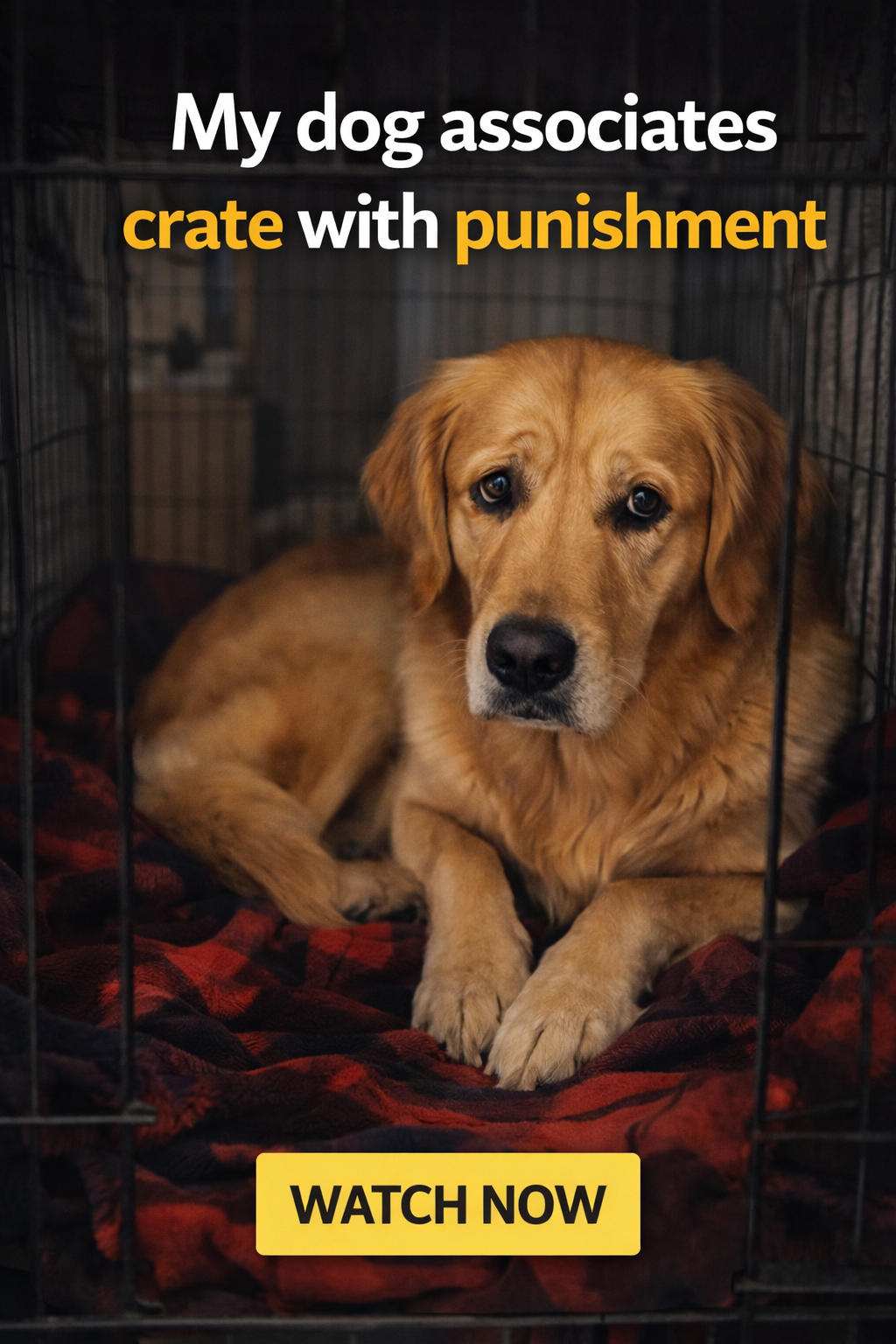
If your dog panics, freezes, or runs away when you bring out the crate, it’s likely because the crate has become linked to punishment, fear, or isolation. This is a common issue—and the good news is that it can be fixed. Crates should feel like a safe bedroom, not a jail.
Let’s explore why this happens and how to rebuild positive crate associations step by step.

🦴 Why Dogs Associate the Crate With Punishment
1. The Crate Was Used for Time-Outs
If your dog was put into the crate:
-
After misbehavior
-
When scolded or yelled at
-
During moments of anger
they may associate the crate with stress and rejection, not rest.
2. Being Crated Only When Left Alone
Dogs quickly learn patterns.
If the crate appears only when:
-
You leave the house
-
Guests arrive
-
Something stressful happens
your dog may see the crate as a predictor of abandonment.
3. Forced Confinement
Dragging or pushing a dog into the crate can:
-
Destroy trust
-
Trigger panic responses
-
Create long-term crate aversion
Fear memories form quickly—and last.
4. Long or Inappropriate Crate Time
Being crated too long, especially without:
-
Exercise
-
Mental stimulation
-
Bathroom breaks
can cause frustration and anxiety linked to the crate itself.
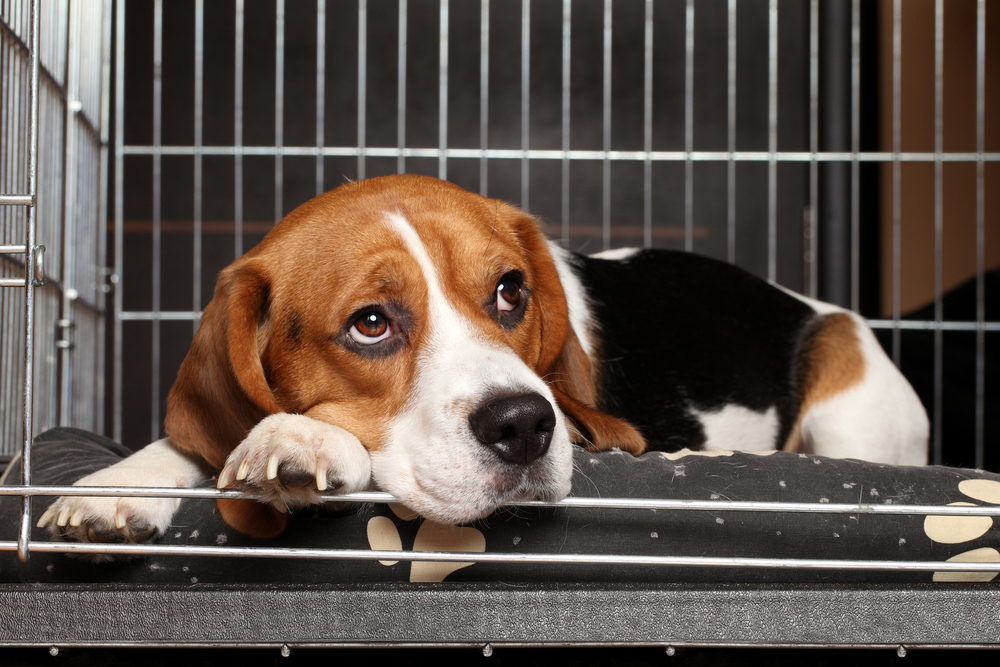
🐕 Signs Your Dog Has Negative Crate Associations
-
Running away when the crate door opens
-
Freezing, trembling, or refusing to enter
-
Whining, barking, or drooling inside
-
Scratching or biting the crate
⚠️ These are fear signals—not stubbornness.
🏠 How to Rebuild a Positive Relationship With the Crate
✅ Step 1: Stop Using the Crate for Punishment
Immediately end all negative uses of the crate.
The crate must only mean safety and comfort from now on.
🍗 Step 2: Reintroduce the Crate Slowly
-
Leave the crate door open
-
Toss treats near—not inside—at first
-
Let your dog explore freely
No pressure. Let curiosity lead.
🧠 Step 3: Feed High-Value Rewards Inside
-
Feed meals near or inside the crate
-
Use stuffed Kongs or chew treats
-
Sit nearby while your dog relaxes
The crate should predict good things.
🛏️ Step 4: Make the Crate Cozy
Add:
-
Soft bedding
-
A blanket with your scent
-
A quiet, low-traffic location
Comfort helps reduce anxiety.
⏱️ Step 5: Practice Short, Calm Sessions
Start with:
-
10–30 seconds inside
-
Door open at first
-
Gradually close the door briefly
Always release your dog before stress begins.
❌ What NOT to Do
-
Don’t force your dog into the crate
-
Don’t scold crate-related fear
-
Don’t leave an anxious dog crated for long periods
-
Don’t rush the process
Fear fades with patience, not pressure.
🚑 When to Seek Professional Help
Consult a trainer or veterinarian if:
-
Panic escalates inside the crate
-
Your dog injures himself trying to escape
-
Anxiety affects daily life
In severe cases, behavior therapy—and sometimes medication—may be necessary.
🐾 Final Thoughts
A crate should be a safe haven, not a symbol of punishment. If your dog fears the crate, it’s not too late to change the story. With consistency, kindness, and positive reinforcement, your dog can learn to see the crate as a place of comfort again.