
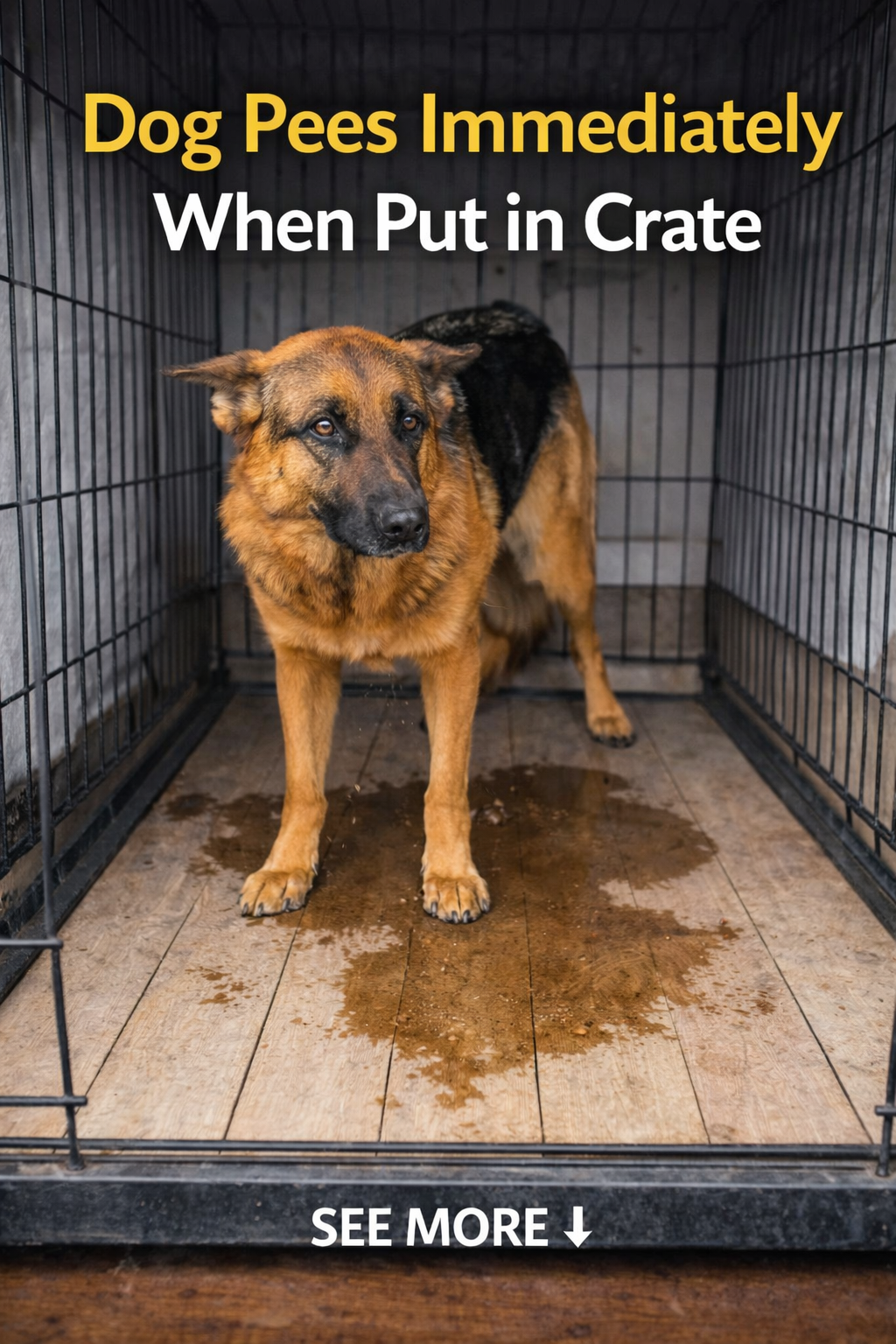
If your dog urinates immediately when placed in a crate, this is not stubbornness or a house-training failure. In most cases, it’s a sign of fear, anxiety, loss of bladder control due to stress, or an underlying medical issue. Understanding the reason behind this behavior is essential to fixing it without making the problem worse.

🦴 Common Reasons a Dog Pees Immediately in the Crate
1. Crate-Related Anxiety or Fear
If your dog associates the crate with:
-
Punishment
-
Being left alone
-
Past negative experiences
their stress level can spike instantly—causing involuntary urination.
⚠️ Stress urination is not under conscious control.
2. Submissive or Fear-Based Urination
Some dogs urinate when they feel:
-
Overwhelmed
-
Threatened
-
Pressured
This is common in:
-
Rescue dogs
-
Puppies
-
Dogs with a history of harsh training
Even gentle crate placement can trigger this response.
3. Separation Anxiety
Dogs with separation anxiety may:
-
Urinate the moment confinement begins
-
Panic when they realize you’re leaving
This often happens before the crate door is even closed.
4. Incomplete House Training or Age-Related Issues
-
Puppies may not yet have bladder control
-
Senior dogs may struggle with incontinence
If the crate is too large, dogs may also feel comfortable urinating in one corner.
5. Medical Causes
Always rule out health issues such as:
-
Urinary tract infections (UTIs)
-
Bladder inflammation
-
Hormonal incontinence
💡 If urination is sudden or new, a vet visit is essential.
🐕 Signs It’s Anxiety-Related (Not Training)
-
Peeing happens immediately—not after time passes
-
Trembling, panting, or freezing in the crate
-
Avoidance of the crate
-
Urination only occurs during crating
These are strong indicators of fear or stress.

🏠 How to Fix the Problem (Without Making It Worse)
✅ Step 1: Stop Forcing Crate Use
Forcing an anxious dog into a crate reinforces fear and increases accidents.
Pause crate training temporarily if needed.
🍗 Step 2: Rebuild Positive Crate Associations
-
Leave the crate door open
-
Toss high-value treats near, then inside
-
Feed meals in or near the crate
Let your dog enter voluntarily.
⏱️ Step 3: Use Very Short, Calm Sessions
Start with:
-
Seconds—not minutes
-
Door open at first
-
Calm praise and rewards
End sessions before stress appears.
🚽 Step 4: Potty Break Before Crating
Always:
-
Take your dog outside immediately before crating
-
Reward successful elimination
This reduces pressure and anxiety.
🛏️ Step 5: Right-Size the Crate
The crate should allow your dog to:
-
Stand up
-
Turn around
-
Lie down comfortably
Too much space can encourage accidents.
❌ What NOT to Do
-
Don’t scold or punish crate accidents
-
Don’t clean accidents in front of your dog angrily
-
Don’t assume your dog is being defiant
Punishment increases anxiety and worsens stress urination.
🚑 When to Get Professional Help
Contact a veterinarian or certified behaviorist if:
-
Urination is sudden or frequent
-
Panic escalates in the crate
-
Your dog injures himself trying to escape
Medical issues and severe anxiety must be addressed early.
🐾 Final Thoughts
When a dog pees immediately in the crate, it’s usually a cry for help—not bad behavior. With patience, positive reinforcement, and proper support, most dogs can overcome crate-related urination and learn to feel safe again.