
-

Next up in 5
PRIORITY: Washington Huskies NEED Miami WR Joshisa Trader In Transfer Portal To Add HIGH-END DEPTH
-

TURNAROUND: Georgia State Panthers and Jelani Hamilton SHOCK Sun Belt, WIN Four Straight Games
LOUISVILLE, Ky. — In less than a year, three Louisville families have made the same heartbreaking decision to pack up their lives – not for opportunity, but for safety.
Their destination is the same out-of-state residential facility chosen by two Louisville families before them. Three families, one decision, and a growing question: Why are parents concluding Kentucky can’t protect children with profound autism?
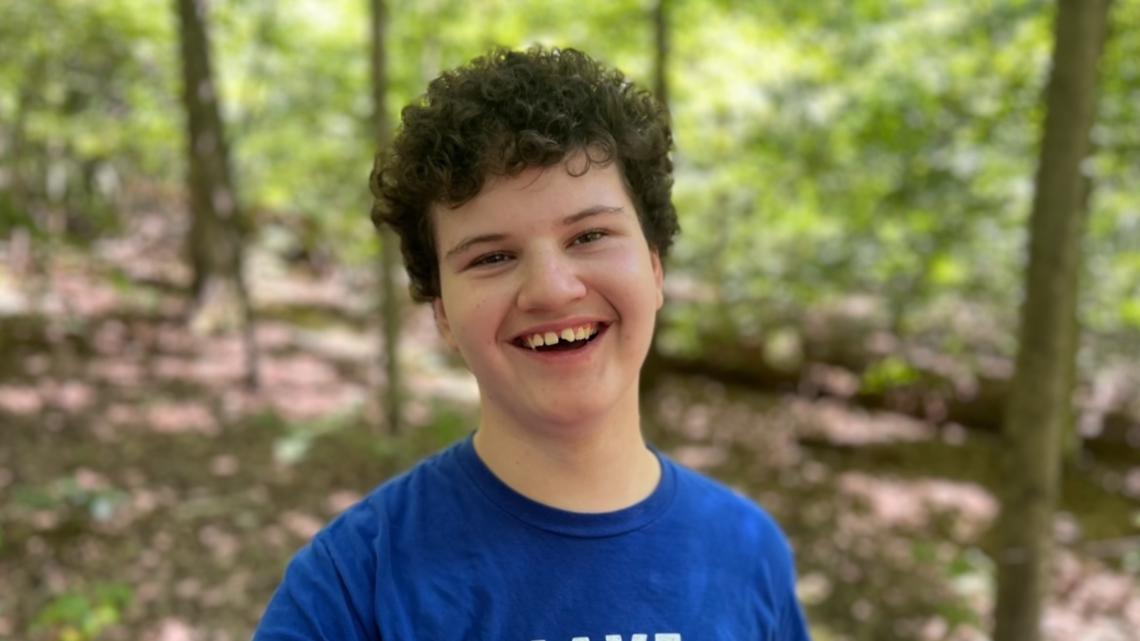
If 15-year-old Chase Crawford had a say, his family believes he’d stay right here in Louisville, surrounded by familiar faces at the Bluegrass Center for Autism, with staff who know him and therapies that have supported him most of his life.
“Pretty much everything you can imagine,” his mother, Shannon Crawford, said of the care he receives during the day.
Chase is nonverbal and has profound autism. And about five years ago, everything changed.
“When you look at profound autism and puberty,” Crawford said, “it’s a different game.”

When safety becomes the daily battle
Chase elopes, slipping away without warning, and doesn’t understand danger. At 5-foot-9 and 160 pounds, his strength and impulsivity have become impossible to manage at home.
“He feels no pain,” Crawford said.
She drives a truck equipped with a third-row harness and autism alert stickers. At home, Chase’s bedroom is padded. The family sticks to strict routines. Even so, nothing is foolproof.
“We’ve gone through probably 30 broken iPads, broken windows,” she said. “He’s hit me, taken some hits to my family.”
Crawford says she reached a point many parents of children with profound autism quietly fear, but rarely say out loud.
“This can’t go on.”

Searching Kentucky for help – coming up empty.
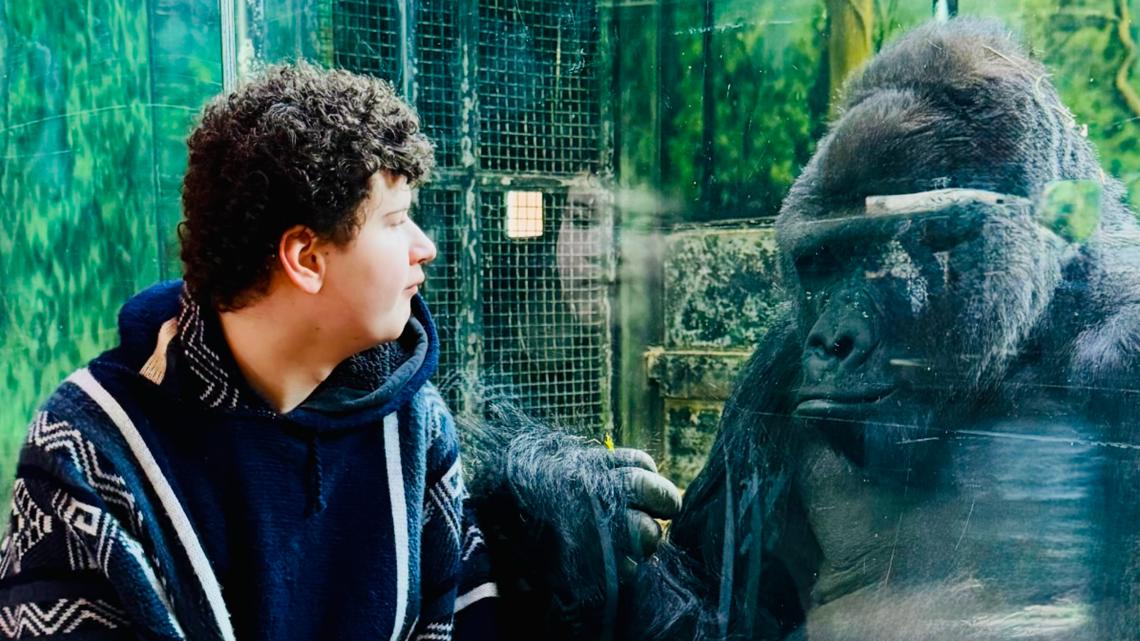
The Crawfords toured the few residential facilities in Kentucky that serve children with special needs. None could care for a child like Chase unless he became a ward of the state.
“I knew I had to do something else,” Crawford said. “Our state has nothing.”
What finally pushed her to act was a WHAS11 story aired a year ago this month, following another Louisville family who made the same painful decision.
“When I saw the story you aired with Rachel [Moldoveanu], that was the big wow factor for me,” she said.
A path already taken
Last year, a Louisville family drove to Wichita, Kansas, to say goodbye to their son, Frankie Moldoveanu, as he moved into Heartspring, a residential facility specializing in profound autism and other neurological and physical disabilities. WHAS11 followed their journey, never imagining it would become a roadmap for others.
The application to Heartspring sat on Crawford’s desk for weeks.
“To send my son 700 miles away… to relinquish my control of him,” she said. “I remember calling my mom and my dad and saying, I did it. This is a huge, huge step for me. It was one of the hardest things I’ve ever had to do.”
Next week, Chase will become the third child from Louisville to move into that same facility in the last year—and the ninth from Kentucky.
“He knows something’s coming,” Crawford said. “He’s given me more hugs and kisses in the last month than he ever has.”
“He needs 24/7 care – for life.”
Crawford says sending Chase away is the only way she can remain a mother to both her children.
“He needs 24/7 care for the rest of his life, and that’s a hard pill to swallow,” she said.
Care, she says, simply doesn’t exist in Kentucky.

A structural problem, not a hidden one
Chase’s grandfather, Ron Carmicle, helped build the Fern Creek campus for the Bluegrass Center for Autism. He says the issue isn’t awareness, it’s infrastructure.
“At this point in time,” Carmichael said, “there is not a facility in the state of Kentucky designated to handle profound autistic residents 24 hours a day.”
Day programs, he says, aren’t enough.
“These families, they’re trapped.”
We know there’s a demand for a residential facility in Kentucky. So, what’s the holdup?
Carmicle says the biggest hurdle isn’t construction costs, which he estimates would be around $10 million for a 20-bed facility.
“It’s not the capital expense,” he said. “It’s what it takes to run it 365 days a year.”
He says Kentucky would need 400 to 500 residential beds and a long-term commitment to staffing and funding from lawmakers.
“The challenge is commitment. They’d be paying in perpetuity,” Carmicle said.
Fighting to bring him home
Carmicle says as long as he’s alive, he’ll work to make sure there’s a place for Chase to come home to, in the best-case scenario, before he ages out of the system, which is at 22.
“This isn’t a quick fix,” Crawford said. “We have to pay caregivers more. Open up more space on these waivers. We need residential facilities that can help these kids.”
She says lawmakers in Frankfort need to truly understand what profound autism means and what families are facing every day.
Because right now, Kentucky parents are doing the unthinkable on their own.
“Everything I learned was through autism moms, which is crazy. There’s no map,” Crawford said. “Rachel helped me. Your story helped me.”
A community ready to fight, ready to build.
“We’re by the grace of God going to get a place back here,” Crawford said.
“So my son can come home.”
This is not an isolated case. It’s a pattern. Parents say the question now isn’t whether Kentucky can do better, but how many children will leave before it does.