
Julie Kornack discusses the importance of the NASEM st

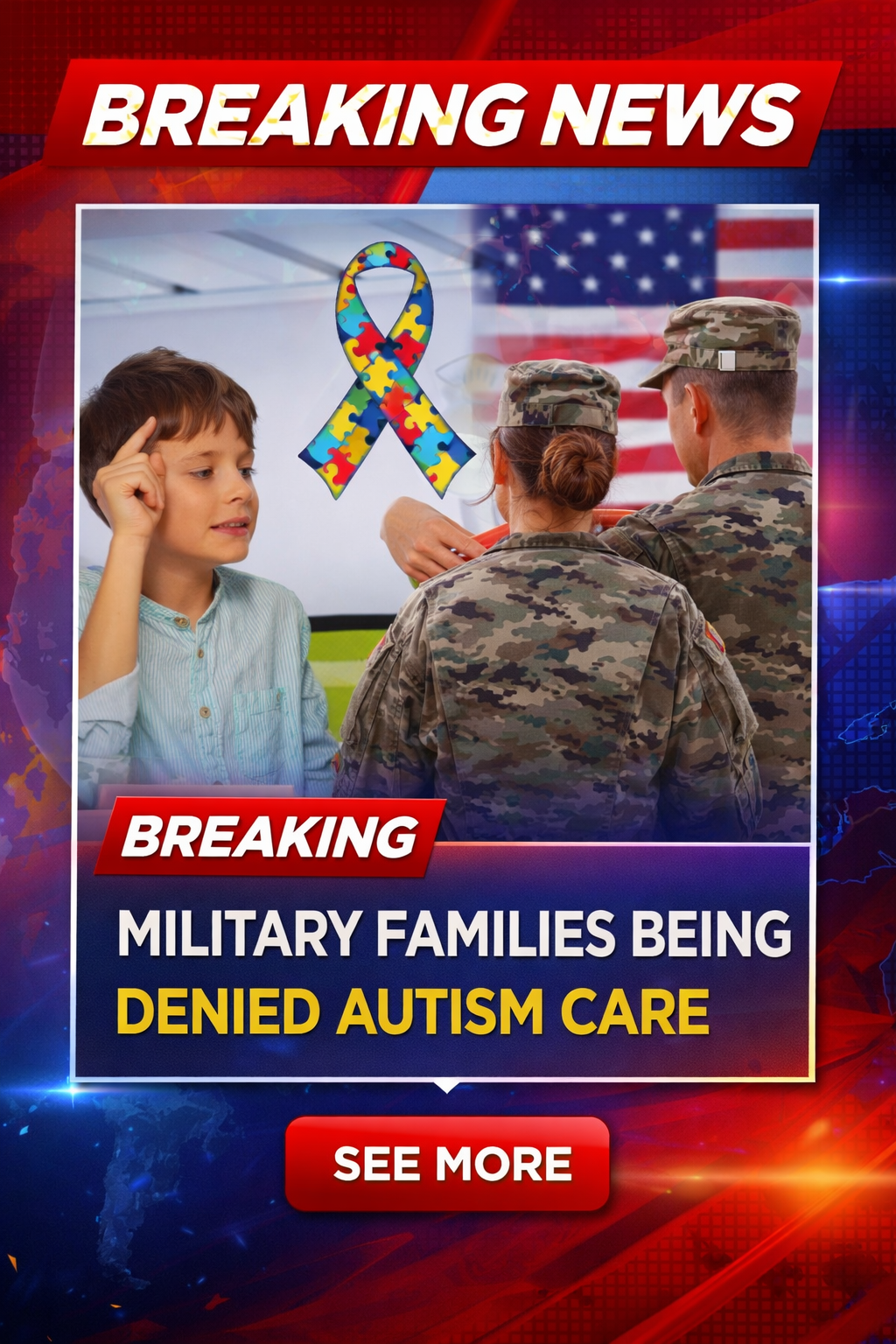
In September, a congressionally mandated review from the National Academies of Sciences, Engineering, and Medicine (NASEM) concluded that the Department of Defense (DoD) is falling short for military families with autistic children, denying full insurance coverage for the gold-standard autism therapy and limiting children’s ability to receive that care in schools and at home.
The report recommends that TRICARE, the military’s health insurance, cover the gold-standard autism therapy, applied behavior analysis (ABA), as a basic coverage benefit.
Healthcare Innovation spoke with Julie Kornack, founding board member of The National Coalition for Access to Autism Services (NCAAS) and chief government and payor relations officer at the Center for Autism and Related Disorders.
Could you provide a bit of background on the organizations you contribute to?
NCAAS is a DC-based nonprofit that we founded in the wake of the election outcome of 2016, when there was a lot of talk about repealing and replacing the Affordable Care Act (ACA), and we were concerned about preserving access to services for our families with autism. And out of that came a focus on other issues that are affecting our families at the national level.
Sponsored Recommendations
The Center for Autism and Related Disorders is one of the co-founders of NCAAS. It’s just a large provider of applied behavior analysis (ABA), which is the gold standard treatment for people who’ve been diagnosed with autism, for the deficits and behaviors commonly associated with it.
Could you provide some information on the National Academies report’s findings?
In 2018 was the first time that the defense health agencies’ report to Congress said that it seemed that ABA wasn’t effective for most of its patients. Nobody questioned the report. We thought something else was happening because we know that ABA is effective, and like other providers, when we looked at our TRICARE patients, we saw that it’s as effective for our TRICARE patients as it is for our commercially insured patients and our Medicaid patients.
We realized that they were relying on data from something called the PDDBI, which is an assessment. We went to the creator of the PDDBI, Doctor Ira Cohen, to say, can you take a look at this and see? He realized that they were not using the data correctly. We were kind of excited about that because we thought, “Oh, this is a simple fix. We get to take the creator of this assessment to the Pentagon, have him explain how to use his assessment.”
We had a meeting with the Pentagon and brought Doctor Ira Cohen, and he explained how they were discarding scores. Yet, we got another report to Congress that said ABA is not effective, and they were using the PDDBI data in the same inappropriate way they had used it earlier.
That’s when we decided our approach had to change. We went to the House and Senate Armed Services committees. We got language in the National Defense Authorization Act mandating that TRICARE use NASEM to do a study.
It is just so gratifying to see what a great job all these committee members did in thoroughly analyzing every aspect of the benefit and impact on families and on ABA, and whether it’s effective. The findings in that report couldn’t have been better if I’d written it myself. It’s everything that we believed was true to begin with. There’s this unnecessary administrative burden put on these military families. The DoD had come to conclusions that weren’t appropriate based on the data that it was collecting.
It said that the ABA should become a standard, a basic benefit, which is the thing we’ve always wanted. Right now, it’s part of what they call an autism care demonstration (ACD). That means that TRICARE can change it and add different requirements, and add all these new extra assessments, instead of having it be a basic benefit, so that anybody who has TRICARE can just access ABA the way you would if you were a civilian. We’re very excited about the recommendations, and now there’s the work of getting TRICARE to adopt the recommendations in the next phase.
With this new report, what are the chances they will adopt this?
I think it’s going to require some pressure from Congress and, honestly, for the right people at the DoD to review the study. It’s early days still, and so who knows how many people have actually read the study. I think that when it gets in front of the right people, I’m hopeful that they’ll adopt the recommendations. I think everything like that happens pretty slowly, and that’s one of the things that we’ve learned over the seven-year period.
Our military families are not accessing treatment for their children the way they would if they weren’t in the military.
Other insurances cover ABA treatment?
Historically, insurance did not cover it and denied it as investigational or educational. And then in 2002, we had our first mandate in the state of Indiana, which was an autism insurance reform law that mandated that insurers cover ABA for autism. Quite a few years went by before we had our next date that got an autism mandate, and then Autism Speaks hired the mom who got that mandate in every state. She happened to have been a lawyer at the Department of Justice (DoJ). Her kid got autism, and then she went to get the care that he needed and realized it wasn’t covered. She ended up leading this grassroots advocacy initiative to get autism treatment mandated in all 50 states, which it is today. Now all the commercial plans cover it. Even the self-funded plans have to cover it. They can’t exclude it. Then, all state Medicaid agencies also cover it for their pediatric populations. It’s covered until you go into the military–it’s covered, but not as a basic benefit, and you have all these hoops to jump through to be able to get the service and then to actually maintain your eligibility for it.
What do you hope for the future?
We’re hoping that somebody at the DoD reads the NASEM study and has a light bulb moment and realizes that they should do the right thing for their military members who have children who have autism and make this a basic benefit, and make sure that they authorize adoption of all of the billing codes, allow services to be in all locations.
I hope that the right people at TRICARE read the NASEM study, see how spot-on it is, and do the right thing by adopting the recommendations quickly.
Is it helpful that the topic of autism is getting some traction politically?
Autism is not just a bipartisan issue. It’s a nonpartisan issue because there’s the Congressional Autism Caucus. It’s comprised of Democrats and Republicans. And it was never something where you had to worry about whether the person you were talking to was a Democrat or a Republican. Everybody knows folks with autism. Now it seems a little bit politicized, and the families who talk to me about that wish it weren’t the case.
udy, which exposes the misapplication of data leading to inadequate autism treatment coverage in the military