
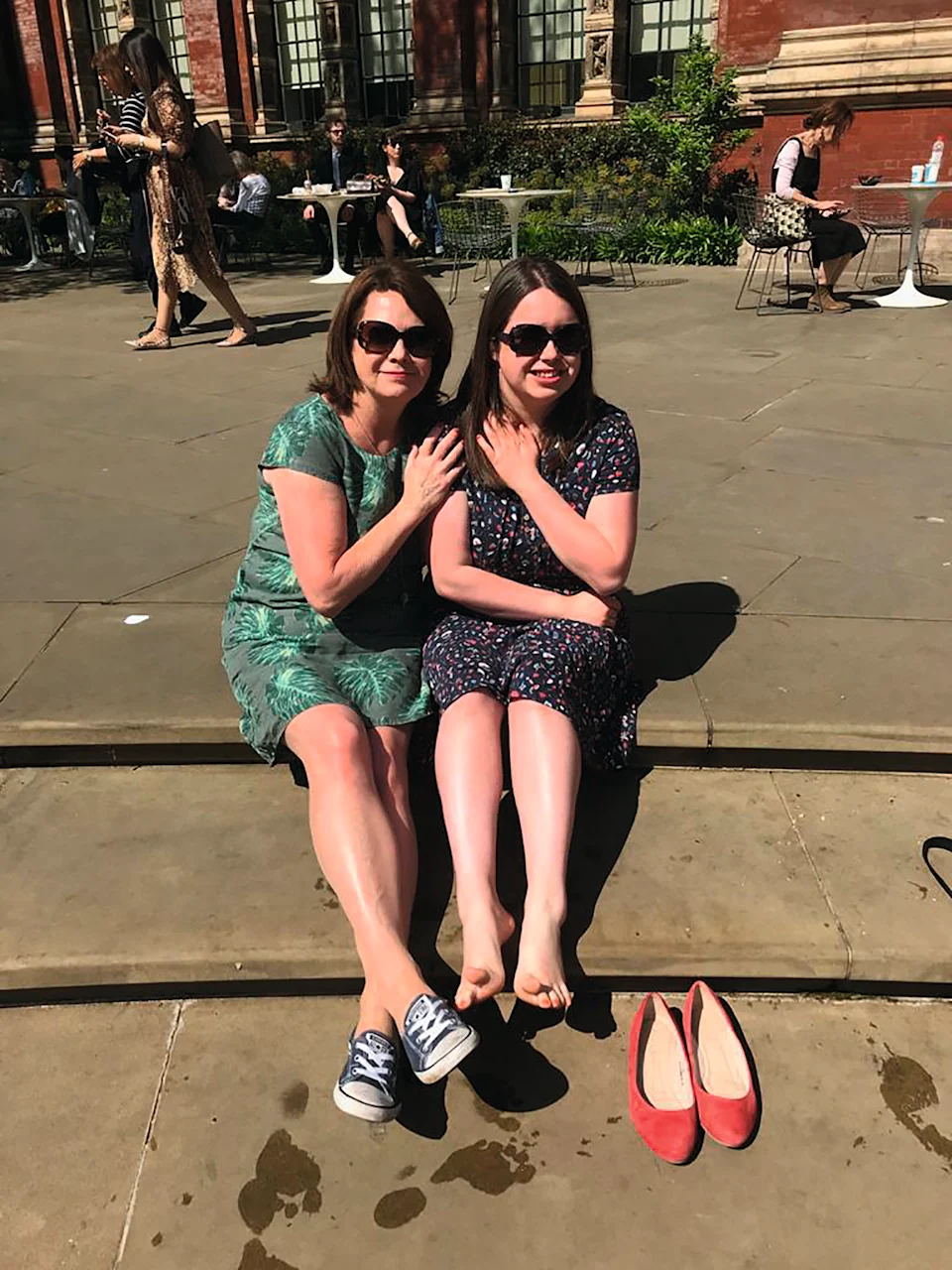

The way that people respond to big challenges in life can vary wildly, and reveal much – and we’re pretty sure that mother Bridget Wood’s response to her daughter Lucy’s differences makes her a remarkable woman.
When faced with a difficult situation for her family, Bridget found a way to give back to others, proving that we can find a positive in almost any situation. We hope her story lifts you up as much as it did us.
“23 years ago, I was in woman&home magazine talking about my little girl Lucy, who was six. The article was called Losing Lucy because at that time I felt as though my real daughter was locked in a cage while I desperately searched for a key,” remembers Bridget.
“Lucy had been a happy baby until she was two, when her words started to disappear. She fell silent, except for sometimes making awful noises. She stopped enjoying cuddles and stared blankly ahead.
“I spent months taking her to doctors, and when I heard the diagnosis, it felt like the world had ended. Lucy was autistic, and back then, it was a case of sorry, there’s nothing we can do.
“The child I’d hoped might go to university, maybe have a family, was gone, and I just didn’t feel strong, brave or clever enough to cope with a three-year-old autistic child. I started to dread meeting other mums in the park, hearing about their children’s progress, knowing mine would not hit those milestones.
“I felt weighed down with guilt too. My son Alex was two years older, and plans to do something special for him were usually cancelled when his sister had a tantrum.”

“Doing my best for Lucy became my mission, and in 2000, together with other parents of autistic children, we set up the Rainbow School, now called BeyondAutism.
“There was tailored teaching helping Lucy to start to talk again, and one day when she was about five, she pointed out of the car window and said, ‘Mummy, horse!’ My heart leapt. A chink of light at last.”
“When I see Lucy smile, the hard times melt away”
“But when Lucy was nine and Alex 11, my marriage ended. Suddenly, I was a single mum struggling for money, struggling for time, struggling to cope. I had to find a full-time job and sort out childcare. It was a hideous, lonely time.
“Lucy went to a secondary school for children with autism and our life found some rhythm. As the years passed, she learned to write simple words and would flash me the loveliest smiles.
“When she went to a specialist college at 18 I worried she wouldn’t cope away from home, but she absolutely loved it. Then I worried that when she left college, we’d be back to square one. That’s how the story ends for many people like Lucy – living with ageing parents.”

“I worked out that if Lucy pooled her benefits with other young people, they could fund an independent life. So in 2017 I set up All The Other Lucys with a group of others. We rented a property in Somerset, and Lucy moved in with three housemates and support workers on a rota – a formula we want to share with other parents.
“Lucy will always be autistic, so she will always need some sort of chaperone. She would struggle with unplanned situations. For instance, if she went to wait for a bus and it didn’t turn up, she would just wait all day.
“Yet now, she’s able to live a fulfilling life. Lucy helps at an equestrian centre, and works at a hairdresser and a cafe staffed by people with disabilities. She’s leading her own life and that makes both of us happy. When I see that smile on her face as she helps with the horses, all those hard times melt away.