
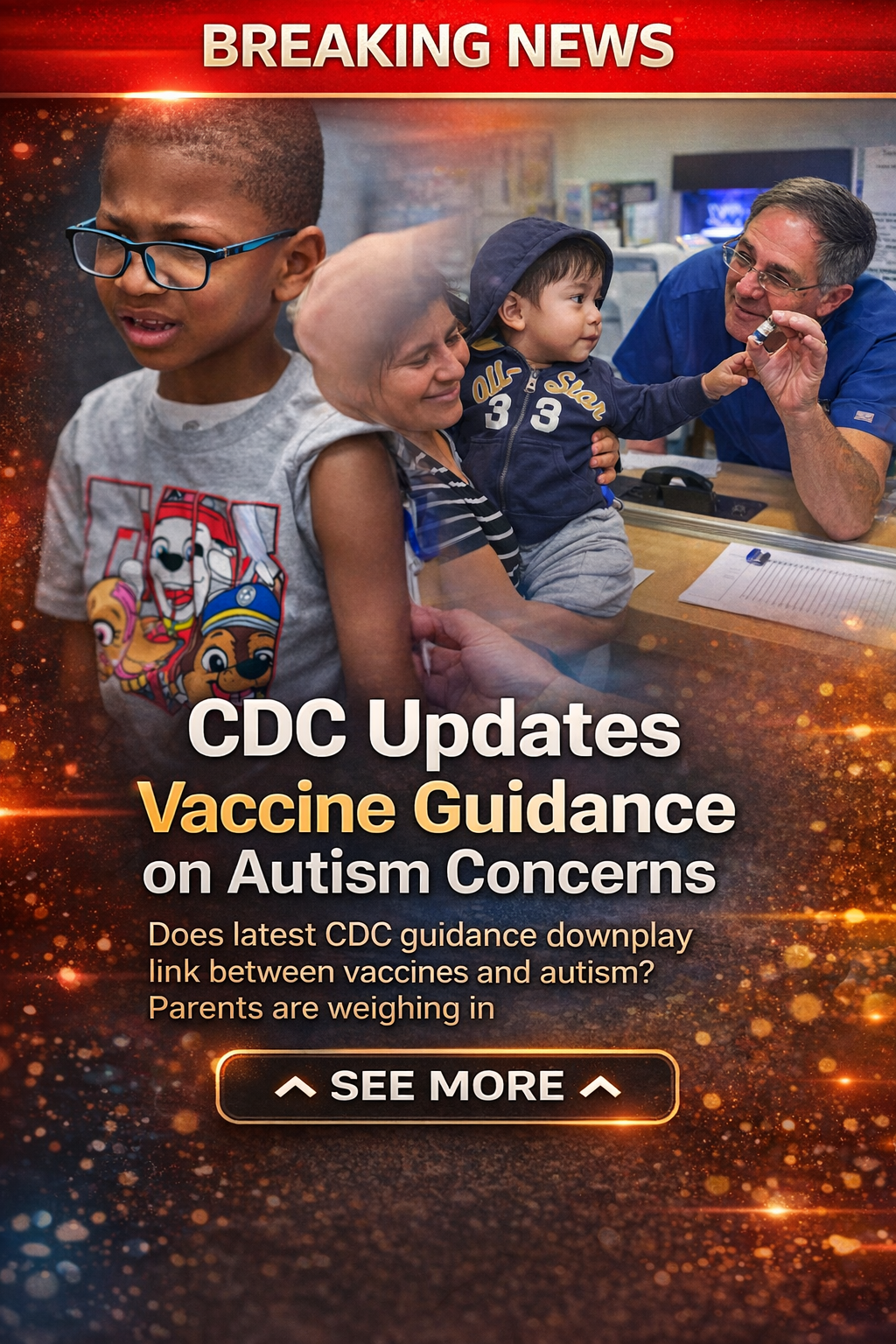
When trusted voices like the CDC send mixed signals, the ripple effects are immediate. Families pause, delay or decline vaccines. As a result, we now have the increasing spread of diseases like measles, pertussis and meningitis.
When a parent asks us, as pediatricians, whether it’s safe to immunize their child, we speak from the conviction born of decades of evidence and practice: yes. We vaccinate not only to protect the individual child, but to protect every child and the communities they live in. So when the Centers for Disease Control (CDC) quietly altered its long-standing language around childhood vaccines and autism, we felt the ground shift beneath us.
Until recently the CDC’s web page on autism and vaccines stated this: “Many studies have looked at whether there is a relationship between vaccines and [autism spectrum disorder]. To date, the studies continue to show that vaccines are not associated with ASD.” Then on Nov. 19, 2025, the CDC updated the text to say: “The claim ‘vaccines do not cause autism’ is not an evidence-based claim because studies have not ruled out the possibility that infant vaccines cause autism.”
This wasn’t a routine update. It was a seismic shift — one that has already prompted confusion among families trying to understand what, if anything, has actually changed.
Why does this matter? Because trust in public health is built not only on data, but on clarity and consistency. For years we have relied on large-scale studies and multiple systematic reviews — including more than 40 published investigations involving more than 5.6 million people — that have shown no causal link between routine immunizations and autism. This remains true across continents, populations and research methods. To reverse this message — or to make it more ambiguous — without new evidence invites confusion, anxiety and harm.
Vaccinating children depends on a contract of trust. When we ask a parent to bring their healthy child into the clinic, we ask for their trust in our care. For that to work, we need clarity. When the most trusted U.S. agency signals uncertainty where it had previously signaled assurance, that contract frays.
Some might say: “Isn’t it just transparency to acknowledge we haven’t ruled every possibility out?” But transparency without context is not transparency, it is distortion. The CDC change was not accompanied by a new landmark study, new data or any evidence overturning decades of rigorous work. Instead, the new language opens the door to a possibility scientists have repeatedly shown is unsupported.
How would you feel if the HHS secretary said we cannot prove that children’s daily vitamins do not cause autism? Like it’s nonsense? That is how we feel, and he’s using the same distortions with vaccines.
As pediatricians, we can feel the aftershocks of these shifts in our conversations with patients: Families who previously followed routine immunization schedules pause. Others choose to delay or decline. And as a result of decreasing vaccination rates, we now have the increasing spread of diseases like measles, pertussis and meningitis. When our reference agency sends mixed signals, the ripple effects are immediate. This puts kids and the immunocompromised people in our lives — like pregnant moms, babies, grandparents and disabled people — at risk. It also leads to missed school for kids who are ill and missed work for parents home with their sick kids.
We join the American Academy of Pediatrics in expressing concern. In a statement, its president declared: “There’s no link between vaccines and autism. Anyone repeating this harmful myth is misinformed or intentionally trying to mislead parents.”
You know who else says vaccines do not cause autism? The parents of kids with autism. Also, many national disability organizations as well as the autism researchers who are trying to improve the lives of real people.
This sentiment is echoed by American Academy of Family Physicians, American College of Obstetricians and Gynecologists, American Academy of Child & Adolescent Psychiatry, American College of Physicians, American Medical Association and the Infectious Diseases Society of America.
Scientists are still working to understand what causes autism. Current research shows there is not a single cause but it likely involves a mix of genetic and environmental factors. Diverting resources to reopening this vaccine question takes attention away from urgent research into the true causes of autism and weakens our work against preventable disease.
We are hopeful this moment serves not as a pivot towards confusion, but as a call to reaffirm the science, rebuild trust, and protect the children and families who depend on us. This includes rigorously researching the true causes of autism.
What we want parents and communities to know:
- Routine immunizations remain among the most important acts of prevention we have.
- The change in the CDC text does not reflect a new scientific consensus.
- We need to engage in open conversation when families express concerns. Dismissing them won’t help. Listening, validating fears and offering clear information over time will.
- We must guard the collective health. When the public loses confidence, those who suffer first are children and the vulnerable.
At the end of the day, parenting is full of decisions made with uncertainty. But when it comes to vaccines, our families deserve clarity. Our public health system requires trust. When the voice of the CDC changes, it impacts our kids and neighbors.
We didn’t think earthquakes could happen in Minnesota. But we collectively felt the Earth move when our nation’s public health authority prioritized debunked myths over facts.