

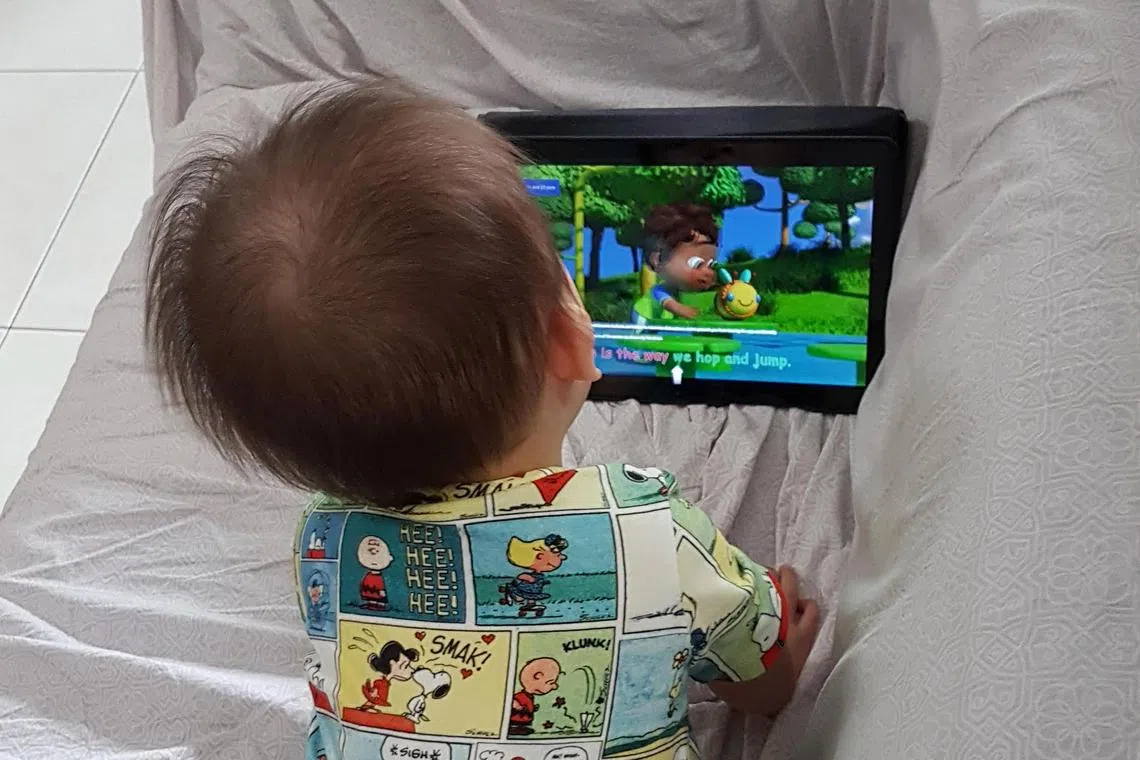
The study found that toddlers in Singapore had one hour and 18 minutes of screen time a day on average, against recommended guidelines.
PHOTO: ST FILE
SINGAPORE – Toddlers who spend a longer time in front of digital screens are more likely to exhibit symptoms of autism, according to new research, which also found that Singaporean families often exceed national screen time guidelines.
Researchers from the National University Hospital (NUH) found that prolonged exposure to screens has the most pronounced effect in how toddlers communicate with others.
Parents here have observed that their children are not pointing at objects to show interest, are not showing their toys to them, or are failing to respond when their name is called.
These behaviours are some indicators of a higher probability of autism and appear in the screening questionnaire for the condition; actual diagnosis, however, has to be determined by a specialist.
The local study, the first of its kind here to study the relationship between screen time exposure and autism symptoms, was published on Oct 8, 2025, in the Journal of Autism and Developmental Disorders.
Conducted between August 2020 and November 2022, the study looked at 5,336 children of all ethnic groups in Singapore, aged 17 to 24 months, who visited one of seven polyclinics in the west of Singapore for a milestone check-up.
Children with known developmental disorders were excluded.