
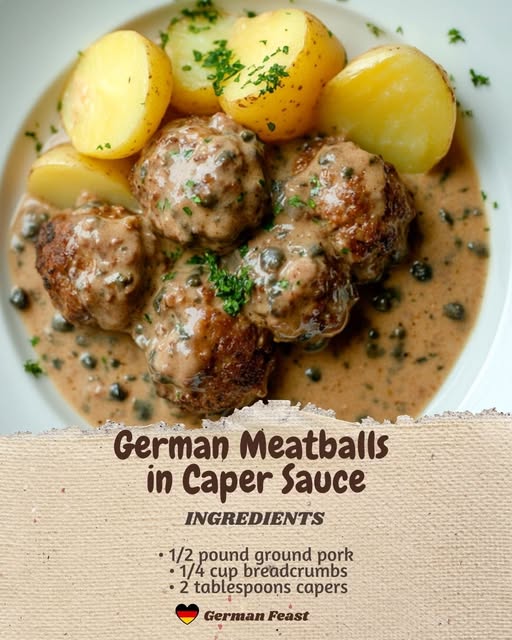
German Meatballs in Caper Sauce (Königsberger Klopse)
Posted on
This Königsberger Klopse recipe is delicious and very easy to make! Juicy German Meatballs in Caper Sauce make a satisfying dinner for any occasion.
Difficulty
Simple
Prep time
20 minutes
Cooking time
40 minutes
Total time
1 hour
Servings
4 servings
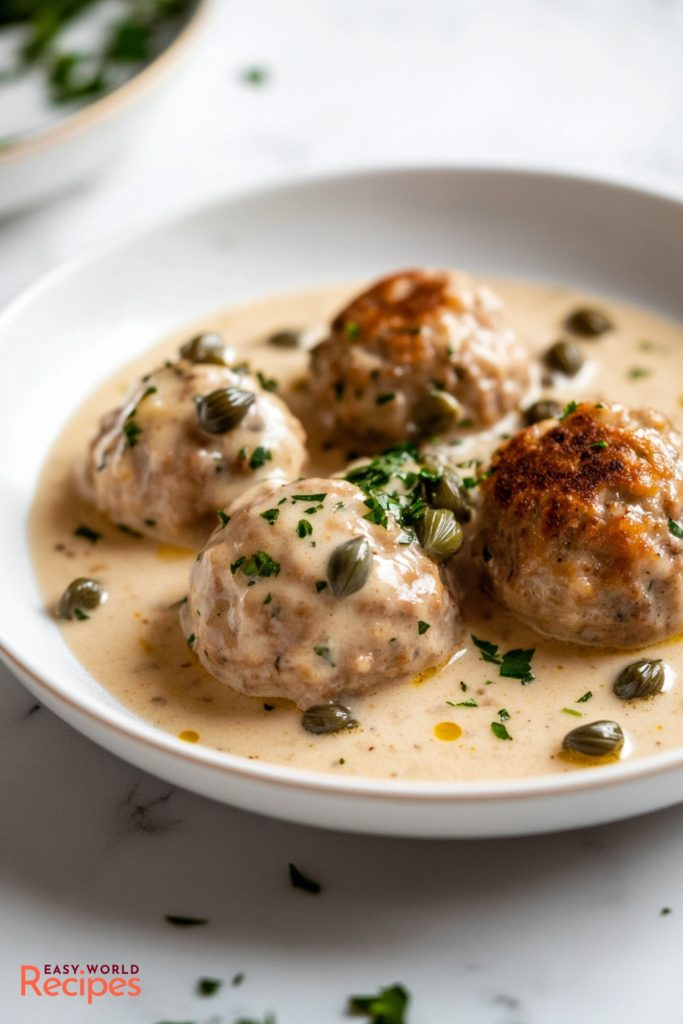
What are Königsberger Klopse (German Meatballs in Caper Sauce)?
German Meatballs in Caper Sauce, or Königsberger Klopse, is a classic German dinner. It’s made with juicy meatballs in a creamy, tangy caper sauce.
These meatballs are gently simmered, making them soft and full of flavor. The capers add saltiness, and a tangy twist, and the creamy sauce ties everything together.
Traditionally they are served with potatoes or spaetzle. This dish is a comforting German favorite that shows the best of German cuisine. Simple and delicious!
Why I Love This Recipe?
I love this recipe because it’s the perfect perfect go to recipe during the weekdays. It’s delcious and very easy to make. The meatballs are juicy, and the creamy caper sauce makes the taste amazing.
It’s comforting, easy to make, and perfect for a cozy family dinner. I even love to serve them for special occasions, because they are so delicious. Plus, it’s a classic German food, that tastes like Oma made it! It’s simple, delicious, and timeless!
Key Ingredients & Substitutions for Königsberger Klopse
Ground meat: A mix of veal, pork, and beef gives the meatballs a rich, balanced flavor. If you want, you can also use just one type of meat—whatever works best for you!
Breadcrumbs: Breadcrumbs help bind the meatballs, keeping them tender and cohesive. No breadcrumbs? No problem—panko or soaked day-old bread will do the trick.
Eggs: Eggs are the glue that holds the meatball mixture together. If you need an egg-free option, try a mix of almond milk and ground flaxseed, but keep in mind the texture will be slightly different.
Capers: Capers are key for adding a tangy, briny kick to the sauce. Not a fan? Chopped green olives make a great substitute without losing that punch of flavor.
White wine: White wine adds acidity and depth to the sauce. For a non-alcoholic option, swap it with a splash of lemon juice or extra broth for a similar effect.
Heavy cream: Cream gives the sauce its luxurious richness. Want a lighter alternative? Use half-and-half—it’s just as creamy but a little less indulgent.
Tools You’ll Need
- Large Pot: For simmering the meatballs in broth.
- Mixing Bowl: To combine the ingredients for the meatballs.
- Whisk: To make the creamy sauce smooth and well-blended.
- Slotted Spoon: For removing meatballs from the broth.
Step-by-Step Instructions for German Meatballs in Caper Sauce
Combine the ingredients: In a large bowl, mix together the ground meat, breadcrumbs, eggs, and your seasonings of choice. Mix until combined.
Form the meatballs: Shape the mixture into golf ball sized meatballs. You can also make them smaller, but remember to keep the time of cooking shorter, if you do. If the mixture feels sticky, wet your hands to make shaping easier.
Prepare the broth: In a large pot, bring salted water or beef broth to a gentle simmer. Carefully add the meatballs to the simmering liquid.
Cook the meatballs: Let the meatballs simmer for 15-20 minutes, or until they’re fully cooked through. Use a spoon to remove them and set aside. From the pot where the meatballs were simmered, carefully reserve 1 cup of the broth/cooking liquid — you’ll use this for the sauce.
Make the caper sauce base: In a medium saucepan, melt butter over medium heat. Stir in flour and whisk to form a smooth roux, cooking for about 1-2 minutes.
Add the liquids: Slowly pour in the reserved cooking liquid, white wine, and heavy cream, whisking continuously to avoid lumps. Simmer the sauce for about 5 minutes, or until it thickens to your liking.
Add the capers: Stir in the capers and taste the sauce. Adjust the seasoning with salt and pepper as needed for a balanced flavor.
Combine the meatballs and sauce: Gently add the meatballs to the sauce, stirring to coat them evenly in the creamy caper mixture.
Serve: Serve the meatballs hot, garnished with extra capers if desired. Pair them with boiled potatoes or spaetzle for a traditional and satisfying meal. This dish is comforting, flavorful, and perfect for any occasion!
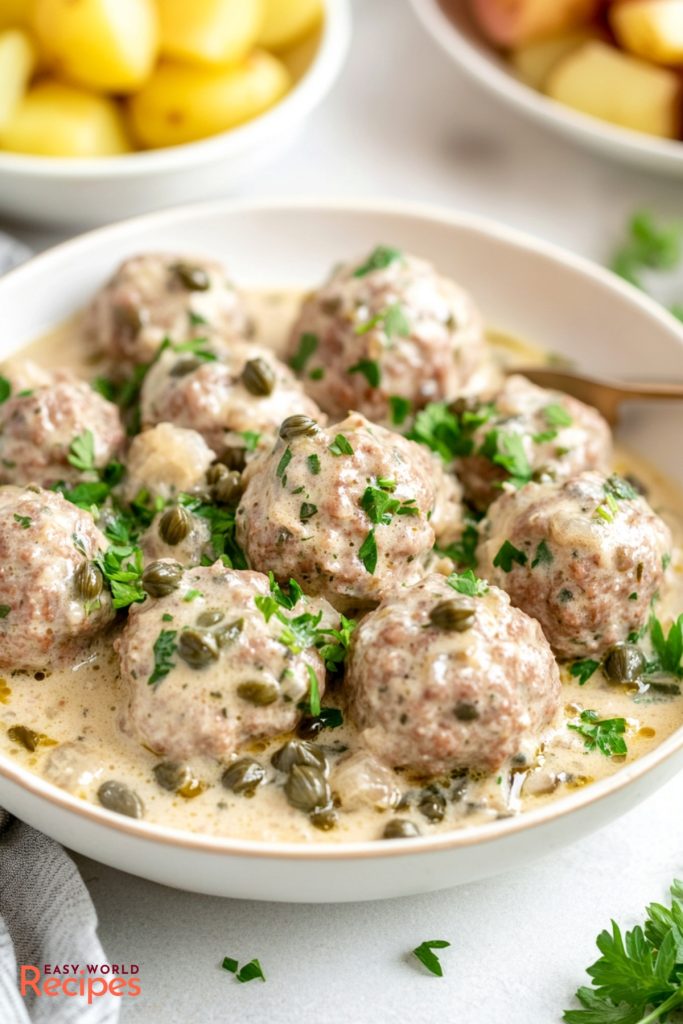
Expert Tips for Perfect German Meatballs in Caper Sauce
Choose the Right Meat Mix: A mix of veal, pork, and beef gives the perfect balance of flavor—rich and hearty!
Avoid Overmixing: Be gentle when mixing the ingredients. Overmixing can make the meatballs dense instead of tender.
Simmer, Don’t Boil: Keep the broth at a gentle simmer. Boiling can toughen the meatballs, and we want them perfectly tender.
Sauce Consistency: Too thick? Add a little more broth or cream. Too thin? Let it simmer uncovered to thicken—it’s easy to tweak!
Serving Suggestions
Serve German Meatballs in Caper Sauce with traditional German sides:
- Boiled Potatoes: Mild potatoes balance the richness of the sauce.
- Spaetzle Noodles: Adds a hearty element to the meal. Make them with the recipe here: German Spaetzle recipe.
- Rotkohl (German Red Cabbage): The slight sweetness of red cabbage contrasts with the creamy sauce.
These sides bring out the best flavors and make a satisfying, complete meal.
Make-Ahead and Storage
Make-Ahead: Prepare the meatball mixture a day ahead and refrigerate. Shape and cook when ready.
Storage: Store leftovers in an airtight container in the refrigerator for up to 3 days.
Freezing: Königsberger Klopse freeze well. Place cooked meatballs on a baking sheet, freeze until solid, then transfer to a freezer-safe bag for up to 2 months.
Reheating: Reheat gently on the stove or in the oven at 350°F (175°C) until warmed through.
Frequently Asked Questions (FAQ)
Can I use just one type of meat?
Yes, you can use all beef, pork, or veal if preferred, but a combination yields the best flavor.
Can I make this without capers?
Capers add the distinctive tang, but green olives can be used as a substitute if you prefer.
Can I freeze German Meatballs in Caper Sauce?
Yes, these meatballs freeze well. Store them in an airtight container for up to 2 months.