
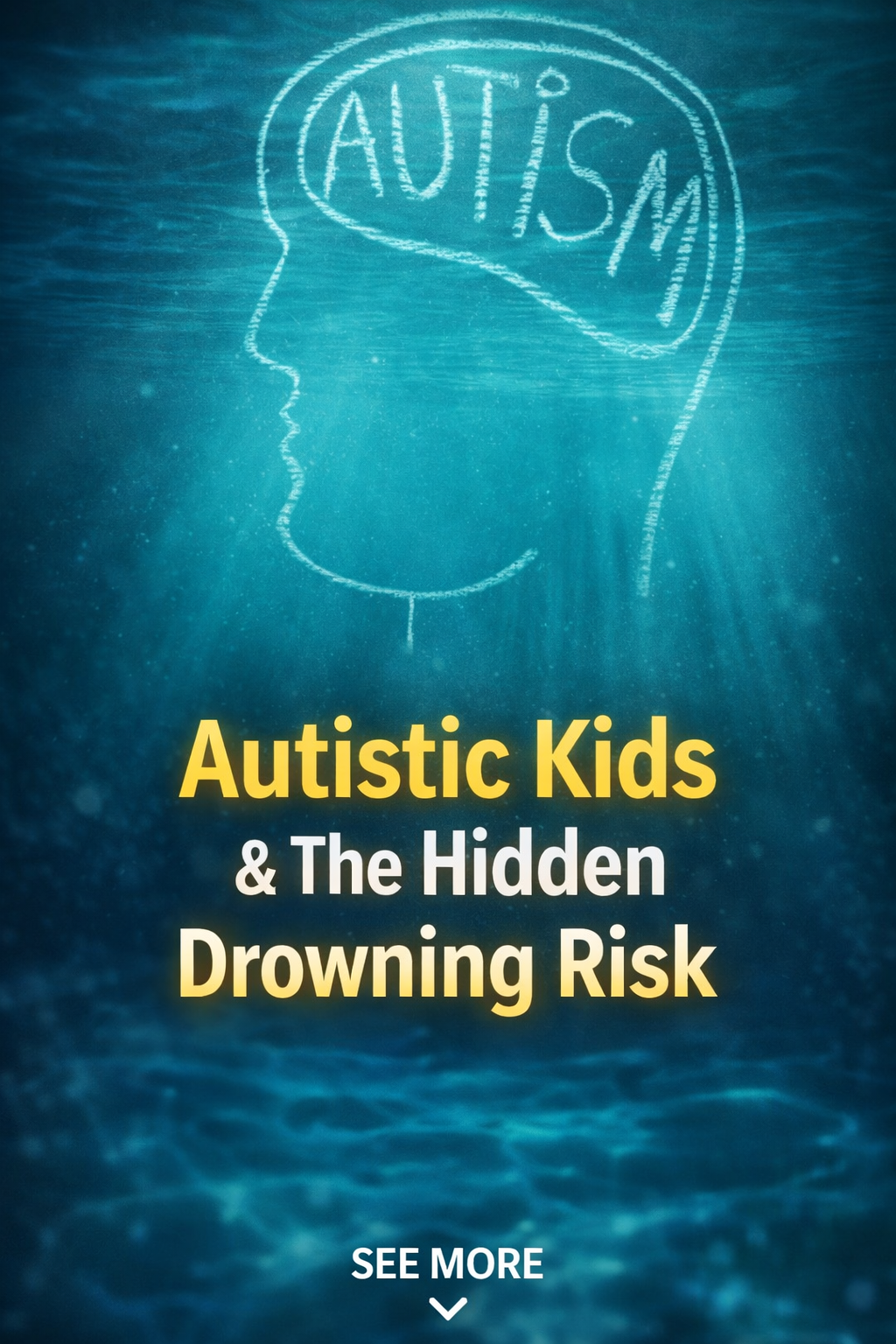

In a state where balmy weather, miles of beaches and endless swimming pools draw millions of vacationing families a year, here’s a fact some Floridians may not know:
Children with autism can be drawn to water.

Our country sees more than 4,000 unintentional drowning deaths a year, and it’s no surprise that Florida consistently ranks high. More children ages 1-4 die from drowning than from any other cause, and it’s the second leading cause of death by unintentional injury for children ages 5-14.
And studies show that people with autism have a dramatically higher risk.
Autism — formally, Autism Spectrum Disorder — appears in the first three years of a child’s life, is categorized as a developmental disability, and can cause communication and behavioral challenges, including sensory sensitivities. One in 31 children is diagnosed with autism, and millions of adults are considered to be on the spectrum.
Why water?
For someone with sensory sensitivities, the visual and tactile aspects of water may be soothing. For a person who can get overwhelmed by the noise, lights and movement that are part of an ordinary day, the feeling of being submerged may muffle all that commotion and help regulate anxiety. Even the smell of water, such as saltiness or chlorine, may attract someone with autism.
For the tourist-friendly Sunshine State, knowing the connection between water and autism is power and, potentially, prevention. And it’s only one of the many reasons for better understanding autism.
The Juvenile Welfare Board of Pinellas County, funded through a special taxing district to direct community investments to support children and families, recently became officially autism-certified under a global standard. That’s some fitting news for April, Autism Awareness Month.
Nearly every member of the organization’s professional staff took hours of training from the International Board of Credentialing and Continuing Education Standards on multiple facets of autism — the importance of early identification, understanding and supporting children with autism, comorbidities, parent perspectives and more. Then they passed the required test, putting the organization on the international map of places that serve children with autism.
This step, another investment in children, makes sense: The organization already funds autism-inclusive programs ranging from children’s mental health to early childhood success to caregiver support.
Education grows understanding. As the word “spectrum” implies, symptoms of autism come in different forms and vary in severity depending on the individual. There’s a saying that those who took the training got to know and believe: When you’ve met one person with autism, you’ve met one person with autism. Everyone is more than a diagnosis.
The Clearwater nonprofit LiFT — which stands for Learning Independence for Tomorrow and includes LiFT Academy for students with learning differences and neurodiversity — has also achieved autism certification. Mesa, Arizona; High Point, North Carolina; Palm Springs, California; and Dubai all saw the value in becoming autism certified.
Here at home, Clearwater is exploring becoming an autism-certified city. The Juvenile Welfare Board and LiFT are working to identify local partners in healthcare, public safety, education, workplace inclusion, hospitality and recreation to help make it happen.
Understanding the connection between autism and water can potentially prevent tragedy, particularly when a child goes missing and seconds count. Even beyond that, a greater understanding of people with autism goes a long way toward creating a place where visitors and residents alike can feel welcome, seen, and safe.
Rebecca J. Albert is director of strategic initiatives for the Juvenile Welfare Board of Pinellas County. She serves as chairperson of the Child Death Review for the State of Florida and the Sixth Judicial Circuit.