
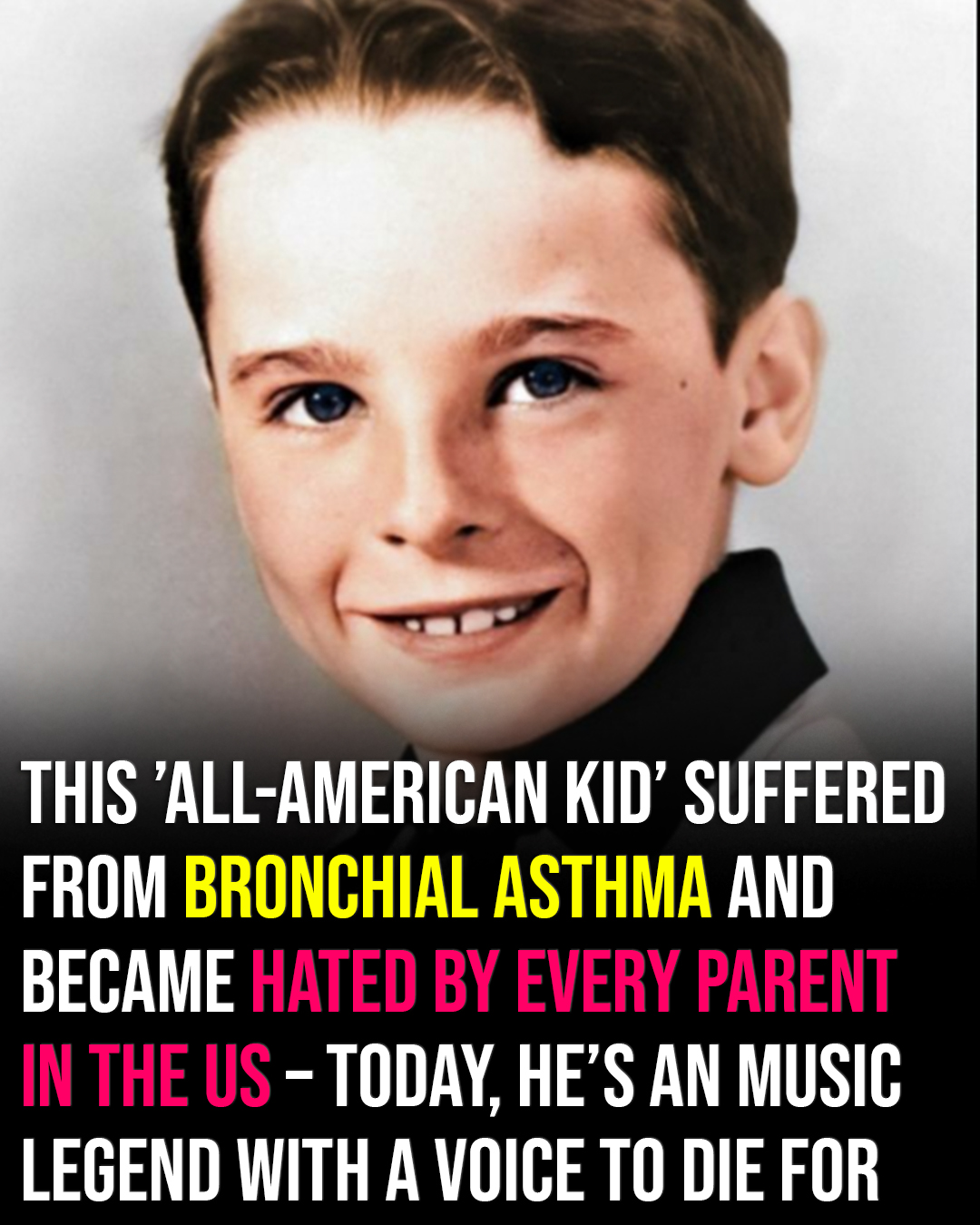
He didn’t look like the kind of kid destined to shock the world.
But he would go on to become just as feared by American parents as he was adored by the kids who loved him.
Born in Detroit in 1948 and raised in a working-class family, this future star and music icon grew up as what he would later describe as an “all-American kid.”
He was born Vincent Furnier but would later become known — and infamous —under a different name.
His father was a Protestant pastor known for his engaging sermons — able to hold a congregation’s attention for hours with humor and storytelling, something his son would later credit as an influence on his own stage presence. The father also had a deep love for music, especially artists like Frank Sinatra and Elvis Presley.
”My relatives were like characters out of 1940s movies. My uncle Lefty was a playboy, who lived in LA and used to go out with Ava Gardner. I don’t think I saw him when he wasn’t in a tuxedo, a Martini in one hand, a cigarette in the other. My uncle Vince owned a pool hall. He was an ex-boxer and every illegal pool game that went on in Detroit was his. My uncles would come over and sit smoking, drinking and watching fights on TV. Aged seven or eight, I would sit in the middle inhaling all this stuff. They were a lot of fun,” the music icon once said.
Doctor’s order
But all of those characters were just splashes of color in his life — the real picture was something deeper. Baseball was his first love, long summer days spent on the field with a glove in hand until the sun went down.
”I lived for baseball,” he said.
Yet his childhood wasn’t without its challenges. Severe asthma attacks eventually led to a doctor’s order for the entire family to relocate to Phoenix, Arizona, where the dry climate offered better relief.
”I have bronchial asthma; I was born with it,” he once shared.
In high school, Vincent thrived. Popular, athletic, and full of energy, he seemed headed for a conventional future — until one night changed everything.
Watching The Beatles perform on television sparked something unexpected. Almost overnight, music became an obsession.
”I came to school the day after they played The Ed Sullivan Show and it was as if a weird revolution had struck the students … The Beatles were the ultimate catalyst for me to … try my own hand at music,” he shared.
What began as a joke — a parody band formed for a school talent show — quickly took on a life of its own.
It started at Cortez High School during the Annual Letterman’s Club Variety Show, when he and a friend decided to spoof The Beatles. As one of the future band members later recalled, they put on wigs, called themselves “the Earwigs,” and performed Beatles songs as a fun imitation act.
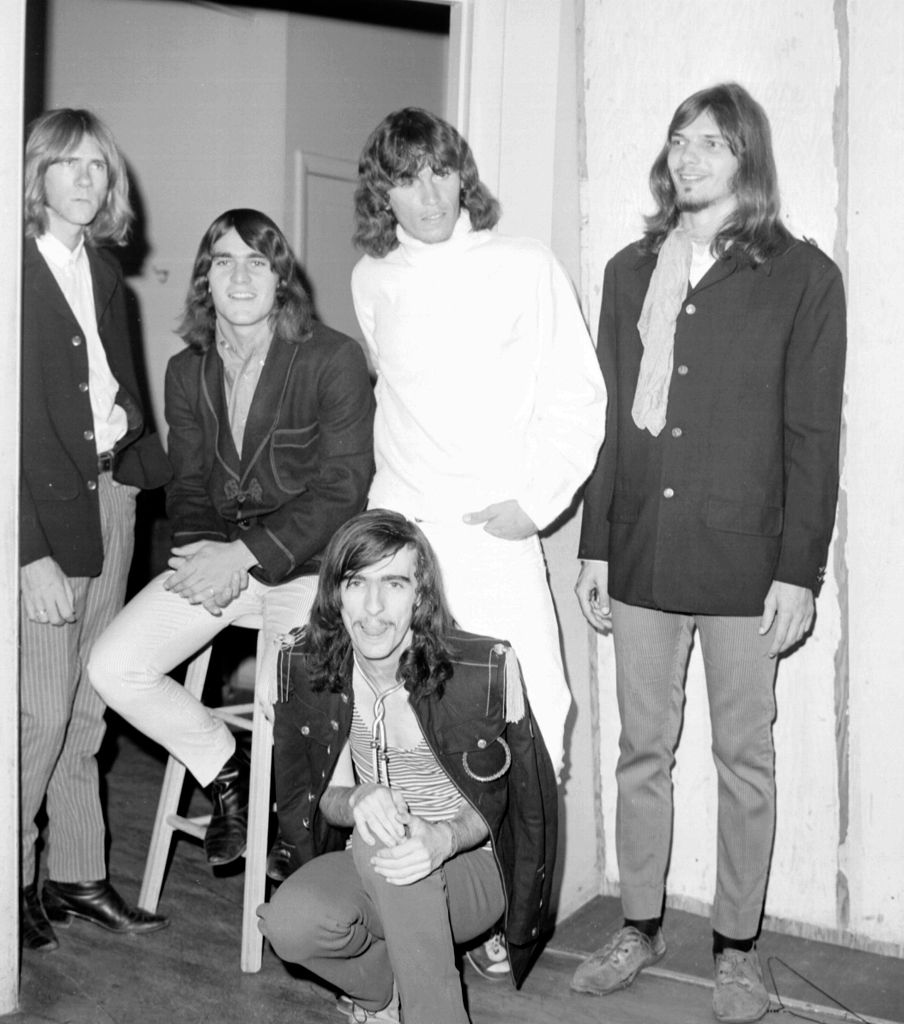
What was meant to be a one-time joke soon started to feel like something more.
To bring the joke to life, they brought in additional musicians, including guitarists Glen Buxton and John Tatum. Performing humorous, slightly altered versions of Beatles songs, the group surprisingly became a hit with their school audience. That early taste of attention and performance sparked something deeper — and what had started as a gag began to feel like something worth pursuing seriously.
With more practice and commitment, the group evolved beyond its parody roots. They changed their name to the Spiders and began playing at school dances, eventually moving on to small clubs. From there, momentum built quickly, and they soon became a well-known act in the Phoenix local music scene.
A risky move
After graduation, the band took a risk and moved to Los Angeles, chasing a dream that seemed just out of reach. The early days were brutal.
They were broke, often sleeping on benches and scraping together food. But slowly, things began to shift. Their sound sharpened, their image grew darker, and their performances became more theatrical, something audiences had never quite seen before.
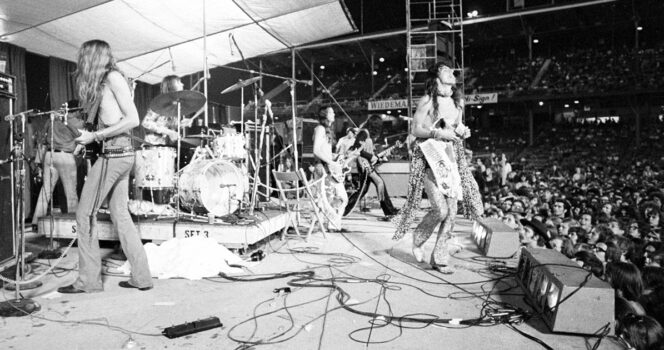
What set them apart wasn’t just the music, but the spectacle. Blood, shock, and horror-inspired visuals turned their shows into something closer to theater than a typical concert. Parents were horrified. Kids couldn’t get enough.
By the early 1970s, they had broken through. Anthems like “I’m Eighteen” and “School’s Out” captured a generation’s frustration and rebellion, launching them into stardom. Fame came fast — and with it, pressure.
Behind the scenes, things were beginning to unravel.
As success grew, so did the drinking. What started as part of the rock ’n’ roll lifestyle quietly turned into something far more dangerous. For years, it didn’t seem like a problem — he wasn’t violent or out of control. But the damage was building.
Hospitalized and malnourished
Rarely seen without a beer in hand throughout the 1970s, he spent much of his career as a functional alcoholic. His wife, Sheryl, later spoke candidly about his struggle in a 1999 VH-1 interview, explaining that there “didn’t seem to be an obvious problem” at the time. “If he were falling down or abusive… I think attention would have been paid much more quickly,” she said.
He himself admitted he denied the severity of it for a long time, describing that he wasn’t a violent or out-of-control drinker — “I was just a drinker.”
But by the late 1970s, it was impossible to ignore.
Alcohol began to take over his life, affecting his health, his work, and his relationships. There were moments he wouldn’t even remember recording entire albums. At his lowest point, he was hospitalized — malnourished and dangerously close to death.
After overcoming alcoholism in 1983, he spent the following years focusing on rebuilding his life — reconnecting with his wife and children, improving his health, and renewing his Christian faith. During this period of recovery, the idea of returning to the stage and stepping back into his darker stage persona was far from his immediate priorities.
But slowly, he rebuilt his life — and his career.
Rock’s first villain
The comeback came in the mid 1980s, proving he wasn’t finished. Not even close.
Today, he’s known as one of rock’s ultimate survivors — a man who turned chaos into art, faced down his darkest demons, and lived to tell the story.
And that man is Alice Cooper.
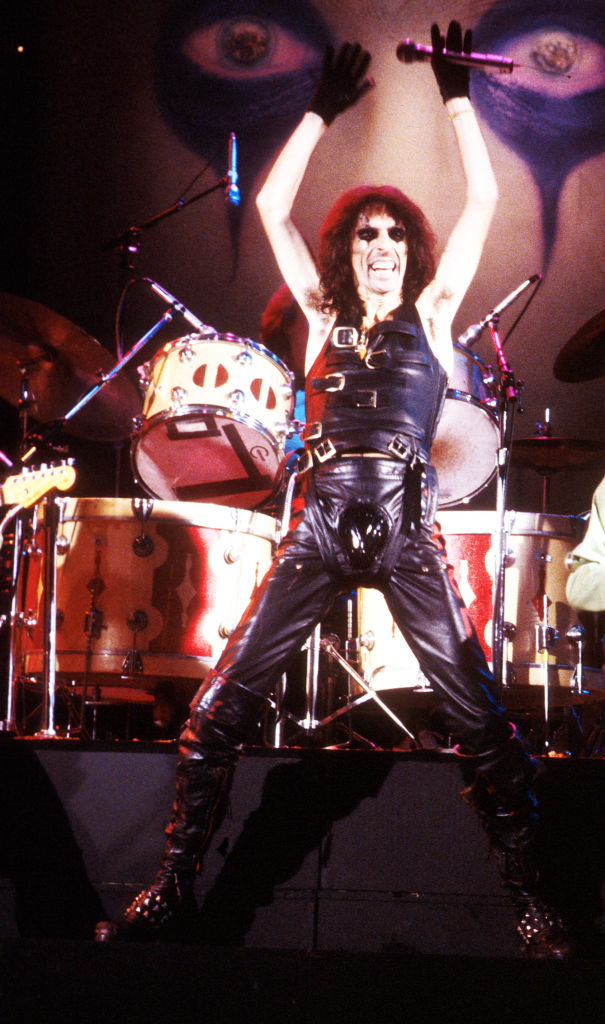
Today, the 78-year-old Alice Cooper is regarded by music journalists and peers as the “Godfather of Shock Rock.”
He built a career by drawing on horror films, vaudeville, and garage rock to create a dark, theatrical style of rock music designed to shock audiences.
The wealth is nothing to complain about either. The former “all-American kid,” once focused entirely on baseball, is now estimated to have a net worth of around $50 million.
He resides in Paradise Valley, Arizona, a suburb of the Phoenix metropolitan area. He has lived in the Phoenix area since he was 12 years old and has owned his current home there for several decades.
He is also known to own a home in Maui, Hawaii.
Beyond his image as rock’s first villain, Cooper is also a golf enthusiast and a devoted family man. He has been open about his personal values, once saying:
“I am one of the good guys. If you marry the person you’re in love with, you would never do anything to hurt her. Honestly, I have seen spectacularly beautiful women and said: ‘I’m not interested.’”
Inside the “death pact” with his wife
In his earlier life, he was linked to several women, including Cindy Lang, with whom he lived for a number of years. After that relationship ended, he was briefly associated with actress Raquel Welch, though guitarist Dick Wagner later claimed he turned down her advances.
The hard rock hit-making phenomenon eventually found lasting love with dancer and choreographer Sheryl Goddard, who also performed in his stage shows. They married in 1976. During the difficult period of his alcoholism in the early 1980s, she filed for divorce in 1983, but the couple reconciled the following year. They went on to have three children: daughters Sonora and Calico, and son Dashiell.
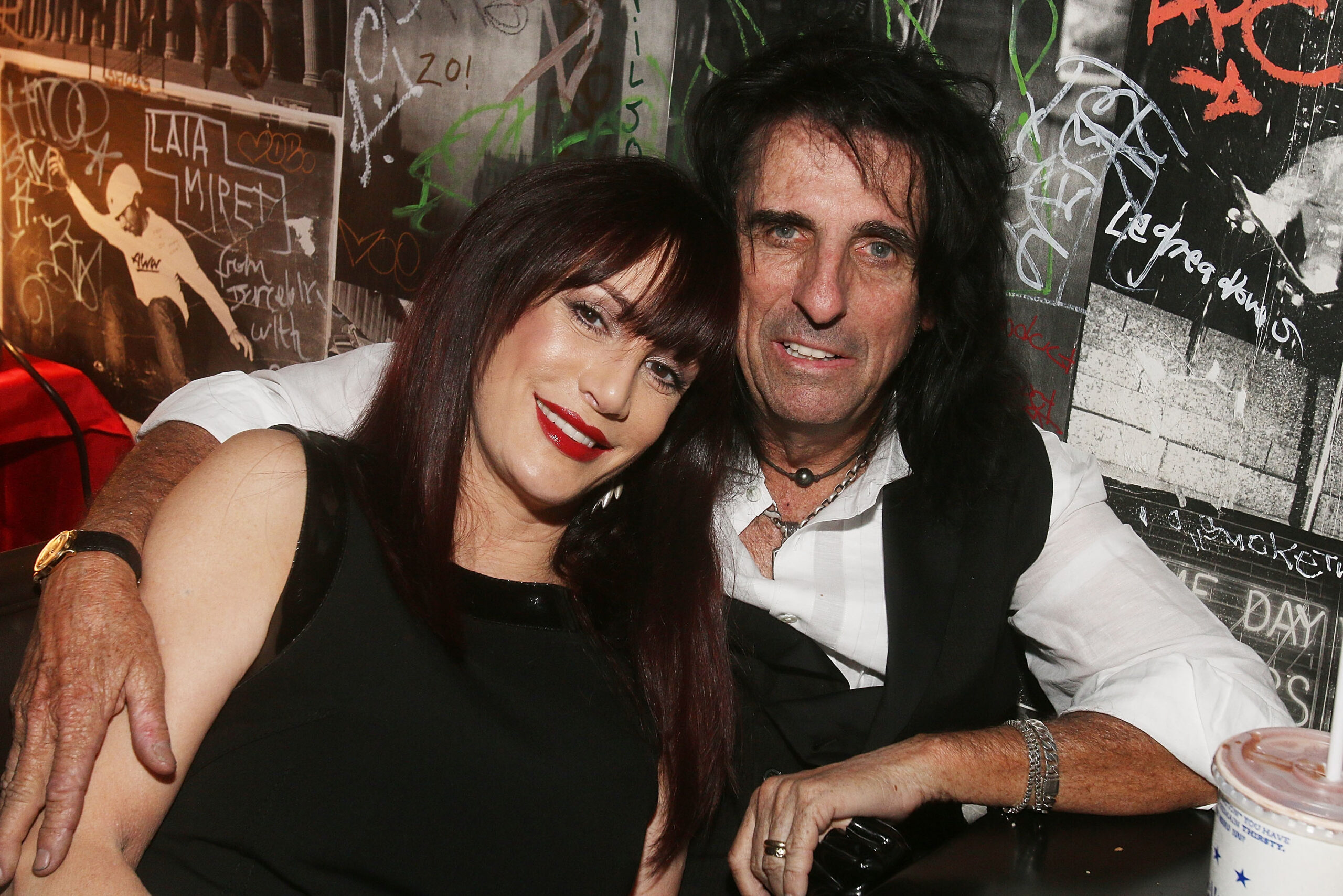
Together, they later founded the Solid Rock Foundation in 1995, which opened teen centers in Arizona focused on arts and vocational training.
Not long ago, Cooper also addressed headlines about a so-called “death pact” with his wife, clarifying: “What I was meaning was that because we’re almost always together, at home and on the road, that if something did happen to either of us, we’d most likely be together at the time. But neither of us has a suicide pact. We have a life pact.”