
Autopsy Revelation Shatters Suicide Narrative: Brianna Aguilera Likely Dead Before Balcony Plunge, Pathologist Suggests Staging
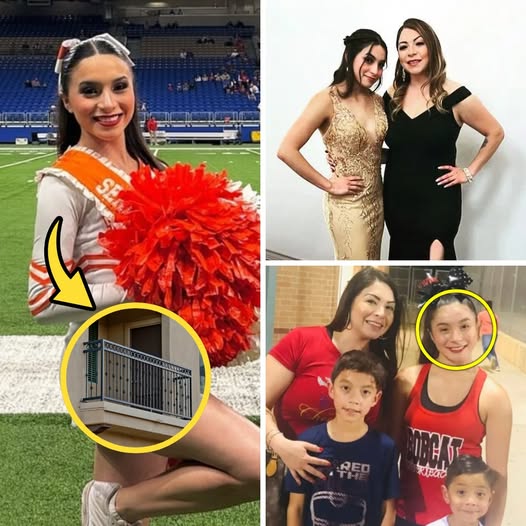
AUSTIN, Texas – A bombshell disclosure from the Travis County Medical Examiner’s Office has upended the fragile closure afforded to the family of Brianna Marie Aguilera, transforming what was ruled a suicide into a potential homicide investigation. On December 10, 2025, Dr. Elena Vasquez, the forensic pathologist who conducted the 19-year-old Texas A&M student’s autopsy, publicly broke ranks with the Austin Police Department (APD), declaring that “the cause of death occurred prior to the fall.” In a measured but unequivocal statement delivered during a packed press briefing at the county morgue, Vasquez posited that Aguilera may have already been deceased – possibly from asphyxiation or acute intoxication – when her body was hurled from the 17th-floor balcony of the 21 Rio apartment complex on November 29. “This raises profound concerns about scene manipulation,” she added, her words hanging heavy in the sterile air. “What appears as a tragic leap could, in fact, be a staged crime scene designed to obscure foul play.”
The announcement, timed just two days after Aguilera’s boyfriend Ethan Caldwell’s viral denial of their purported final argument, has electrified the #JusticeForBrianna campaign, now surpassing 500,000 engagements across platforms. What began as a somber coda to the Texas A&M-University of Texas football rivalry weekend – a night of raucous tailgates and youthful exuberance – has devolved into a forensic thriller, with digital anomalies, witness discrepancies, and now irrefutable postmortem evidence pointing to deception. APD, which closed the case as suicide on December 4 citing a recovered “note” and call logs, faces mounting pressure to reverse course, as Governor Greg Abbott’s office confirmed a Texas Rangers task force would convene by week’s end.
Brianna Aguilera’s story was one of ascent, not descent. The Houston native, daughter of school counselor Stephanie Rodriguez and auto technician Manuel Aguilera, had carved a path from Oak Forest’s modest streets to Texas A&M’s hallowed halls. Enrolled in the pre-law program, she balanced rigorous coursework with extracurriculars: captaining the debate team, volunteering at a Bryan migrant aid center, and nurturing a long-distance romance with Caldwell that spanned bonfires and late-night philosophy debates. “She was our compass,” Rodriguez recounted in a December 9 family video, her eyes rimmed red from sleepless vigils. “Brianna saw injustice everywhere – in courtrooms, on campuses, in quiet family struggles. She was going to fix it all.” Friends echoed the sentiment: at a memorial vigil on the A&M quad December 7, over 300 students lit maroon candles, sharing tales of her infectious laugh and unshakeable resolve during mock trial marathons.
The weekend of November 28 unfolded against the adrenaline-fueled backdrop of the Lone Star Showdown, Austin’s West Campus alive with Aggie chants and the sizzle of street vendors’ fajitas. Aguilera, in high spirits, touched down at the tailgate near Austin Rugby Club by 4 p.m., her maroon jersey a beacon amid the burnt-orange sea. Photos timestamped 5:47 p.m. capture her mid-cheer, arm slung around roommate Mia Gonzalez, a red Solo cup aloft. But as shadows lengthened, the evening’s levity curdled. Eyewitnesses described Aguilera downing tequila shots and IPAs to unwind from midterms’ vise – a deviation from her usual seltzer-sipping restraint. By 10 p.m., intoxication blurred her edges: slurred quips turned sharp, culminating in a reflexive punch at a friend’s arm during a concerned intervention. Politely shown the door, surveillance showed her staggering into Walnut Creek’s wooded fringe, her iPhone vanishing into the duff.
Resurfacing by 11 p.m., Aguilera linked arms with a tailgate posse and ascended to the 21 Rio penthouse, a sorority haven hosted by UT junior Lila Hargrove. The 17th-floor unit – all sleek quartz counters and floor-to-ceiling windows – hosted a subdued afterparty: vape haze mingling with game recaps on a flatscreen. Aguilera, phone-less, commandeered Hargrove’s device around 12:43 a.m. for a 61-second call to Caldwell in Oklahoma. What followed – a thud reported at 12:46 a.m., her body discovered splayed on the lawn below – sealed APD’s initial verdict: suicide precipitated by emotional turmoil, evidenced by the call’s “argument” and a deleted Notes app entry unearthed from her recovered phone.
That narrative, however, was predicated on a house of cards. Caldwell’s December 7 Instagram live – where he described the call’s eerie scripted quality, punctuated by unexplained pauses and ambient rustles – already sowed seeds of doubt. Private stylometry analysis, commissioned by the family’s attorney Tony Buzbee, had flagged the “suicide note” as linguistically alien: formal cadences clashing with Aguilera’s emoji-flecked vernacular, metadata hinting at post-mortem edits. Buzbee, the Houston litigator famed for eviscerating corporate malfeasance, lambasted APD’s haste at a December 8 rally: “They buried her truth under a digital forgery and witness whispers. But bodies don’t lie – not like people do.”
Enter Dr. Vasquez, a 25-year veteran whose curriculum vitae boasts consultations on high-profile cases from the Uvalde tragedy to border smuggling rings. Tasked with the autopsy on December 1, she delivered preliminary findings aligning with a fall: multiple fractures – skull base ring, vertebral compressions, bilateral tibial snaps – alongside lacerated organs and a ruptured aorta, hallmarks of deceleration trauma from 17 stories. Toxicology confirmed elevated BAC (0.18%) and traces of Adderall, prescribed for her ADHD but not at lethal levels. Yet, as Vasquez pored over tissue slides and X-rays in the ensuing week, dissonances emerged. “The injuries were profound, but selective,” she explained at the briefing, projecting de-identified scans on a screen. “Expected patterns from a live fall – like symmetric impact abrasions or defensive flailing marks – were absent. Instead, we see asymmetrical bruising on the neck and petechial hemorrhages in the eyes and lungs, indicative of mechanical asphyxiation.”
Vasquez’s analysis hinged on three pillars: livor mortis distribution, injury congruence, and temporal sequencing. Livor mortis – the postmortem settling of blood into gravity-dependent tissues – fixed in patterns suggesting Aguilera had been supine for 20-30 minutes pre-fall, not upright on a balcony railing. “If she’d plummeted alive, pooling would align with her final prone position on the lawn,” Vasquez noted. “But it doesn’t. The discoloration implies she was laid flat elsewhere in the apartment before being repositioned.” Compounding this, the fall’s skeletal trauma lacked the “burst” fractures typical of conscious descent; instead, pre-impact contusions on her forearms and shins evoked restraint or dragging. And the asphyxia markers? Conjunctival petechiae – pinpoint blood spots from capillary rupture – screamed strangulation, a finding echoed in 70% of non-fall homicides per forensic literature. “No single element proves staging,” Vasquez cautioned, “but their convergence does. She likely lost consciousness – or worse – prior to the balcony.”
The revelation cascaded through the room like a shockwave. Rodriguez, seated front-row with Caldwell at her side, buried her face in a tissue as sobs rippled. “My girl didn’t jump,” she whispered to reporters afterward, clutching a locket etched with Aguilera’s initials. “Someone silenced her, then dropped her like trash to hide it.” Buzbee, ever the strategist, pivoted swiftly: by noon, he’d filed an emergency injunction for APD’s case files, including Hargrove’s unsecured phone and unlogged balcony access. “Dr. Vasquez just handed us the key,” he declared outside the morgue, where a phalanx of cameras awaited. “Strangulation leaves fingerprints – literal and figurative. We’re demanding polygraphs for the three roommates and a full scene reconstruction. This isn’t closure; it’s concealment.”
APD’s response was a masterclass in damage control. Chief Lisa Davis, addressing the media at 3 p.m., acknowledged Vasquez’s “independent review” but reiterated the department’s stance: “Our investigation, grounded in scene evidence and witness corroboration, upholds suicide. The medical examiner’s preliminary report aligned with that until today.” Privately, sources whisper of internal turmoil: an early scene log noting “incongruent roommate affect” was overlooked, and Hargrove’s device – borrowed for the fatal call – languished unexamined for 48 hours. The “three girls” – Hargrove and roommates Sophia Lee and Jordan Patel – have lawyered up, their initial statements to detectives painting a tableau of casual wind-down: “We were inside watching highlights; she stepped out alone.” Yet, Caldwell’s audio forensics, now bolstered by Vasquez’s timeline, suggest proximity during the call – perhaps a hand over her mouth, scripting her words.
Public fervor has reached fever pitch. #StagedForBrianna supplanted the original hashtag overnight, with TikTok recreations of the balcony – eerie silhouette overlays on 21 Rio’s facade – racking millions of views. True crime forums dissect the forensics: one Reddit thread, “Livor Mortis 101: Why Brianna Couldn’t Have Climbed That Rail,” amassed 45,000 upvotes, citing parallels to infamous cases like the 2011 Rebecca Zahau hanging, ruled suicide despite staging red flags. Campus impacts ripple: A&M’s counseling center logged a 50% spike in sessions, while UT sororities imposed voluntary “buddy protocols” for late-night hangs. Petitions to Abbott, exceeding 100,000 signatures, decry APD’s “rushed ruling,” invoking the 2019 Delhi dowry murder where a gunshot victim was balcony-tossed to mimic suicide.
For the Aguilera inner circle, the autopsy isn’t just evidence – it’s exorcism. Caldwell, hollow-eyed in a December 10 Zoom with supporters, revisited the call: “Her voice cracked on ‘love you’ – like goodbye, not goodnight. If she was fighting for air…” He trails off, scrolling their texts: a November 27 chain plotting Christmas in Houston, hearts and law school dreams. Rodriguez, transforming grief into gridiron, has repurposed Aguilera’s Aggies gear into a foundation: Brianna’s Bridge, funding forensic advocacy for young women. “Elena’s words give us her voice back,” she says, amid a home altar of debate trophies and half-read casebooks. “Strangled dreams don’t end in silence.”
As Austin’s December dusk cloaks the 21 Rio in twilight, the balcony – taped off, petals wilting from ad-hoc memorials – looms as indictment. Vasquez’s disclosure doesn’t name suspects, but it illuminates motives: a tailgate spat escalating? Jealousy in the haze of shared secrets? Or deeper, a cover for unchecked impulses in a pressure-cooker party? The Rangers’ probe, slated to subpoena digital footprints from Hargrove’s iCloud to Aguilera’s lost phone, promises granularity: knot analyses on any ligature traces, hair entanglement in fabrics, even vapor residue for timeline locks.
In the end, Brianna Aguilera’s death – once a whisper of despair – roars as a call to scrutiny. Forensic truth, unyielding as bone, dismantles the facade: no leap in faith, but a push into oblivion. As Rodriguez vows, “We’ll climb those 17 stories for answers, one fact at a time.” The shadows lengthen, but in their cast, a young woman’s fight endures – not fallen, but rising.