

Can Long-Term Insomnia Trigger Relapse? Understanding the Hidden Risk
Long-term insomnia is more than just difficulty falling or staying asleep. For people in addiction recovery, chronic sleep deprivation can quietly erode emotional balance, weaken decision-making, and significantly increase the risk of relapse. While cravings are often associated with stress or triggers during the day, the effects of poor sleep can be just as powerful—if not more dangerous.
So, can long-term insomnia actually trigger relapse? The short answer is yes—and understanding why is critical for protecting long-term recovery.
Why Sleep Is Essential for Recovery


Image Caption:
Sleep is when the brain restores balance, regulates emotions, and strengthens self-control.
Sleep plays a vital role in healing the brain after substance use. During deep sleep and REM sleep, the brain:
-
Repairs stress-damaged neural pathways
-
Regulates dopamine and serotonin levels
-
Strengthens impulse control
-
Processes emotions and memories
When insomnia becomes chronic, these recovery processes are disrupted—leaving the brain stuck in a fragile, reactive state.
How Long-Term Insomnia Increases Relapse Risk



Image Caption:
Sleep deprivation amplifies stress, anxiety, and emotional instability.
1. Lowered Emotional Regulation
Chronic insomnia weakens the brain’s ability to regulate emotions. Small frustrations feel overwhelming, negative thoughts intensify, and emotional resilience declines—conditions that often precede relapse.
2. Increased Cravings
Sleep deprivation disrupts dopamine signaling. When dopamine levels drop, the brain seeks fast relief—often remembering substances as a shortcut to comfort or calm.
3. Reduced Self-Control
The prefrontal cortex, responsible for decision-making and impulse control, becomes less active with poor sleep. This makes it harder to resist urges, especially late at night.
4. Heightened Stress Hormones
Insomnia keeps cortisol levels elevated. High cortisol increases anxiety, restlessness, and the urge to escape discomfort—common relapse pathways.
Why Relapse Often Happens at Night



Image Caption:
Late-night wakefulness removes distractions and weakens defenses.
Nighttime is especially dangerous for people with long-term insomnia because:
-
Support systems are unavailable
-
Fatigue lowers mental defenses
-
Rumination and intrusive thoughts intensify
-
Loneliness feels heavier
Without sleep, the brain struggles to differentiate temporary discomfort from urgent “needs,” making relapse feel falsely justified.
The Vicious Cycle: Insomnia → Stress → Cravings → Relapse


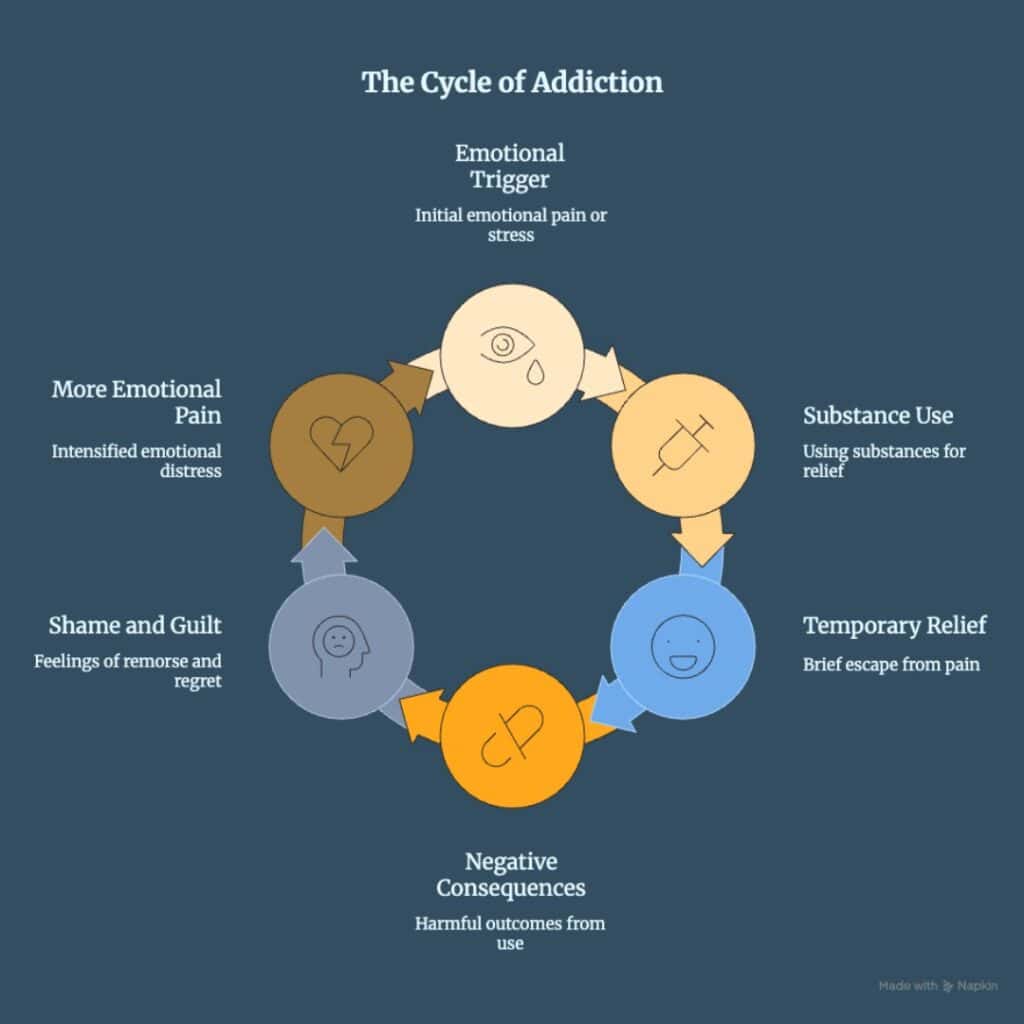
Image Caption:
Insomnia doesn’t just result from recovery stress—it can fuel it.
Long-term insomnia often creates a feedback loop:
-
Poor sleep increases stress and anxiety
-
Stress heightens cravings
-
Cravings increase emotional tension
-
Emotional tension makes sleep even harder
Without intervention, this cycle can quietly pull someone back toward substance use.
Breaking the Link Between Insomnia and Relapse


Image Caption:
Protecting sleep is protecting recovery.
Effective relapse prevention includes prioritizing sleep health:
-
Establishing a consistent bedtime routine
-
Reducing screen exposure before sleep
-
Practicing relaxation or breathing techniques
-
Addressing trauma-related sleep disturbances
-
Seeking professional support for chronic insomnia
Treating insomnia is not a luxury in recovery—it is a protective strategy.
Final Thoughts
Long-term insomnia doesn’t just make recovery harder—it makes relapse more likely. Sleep deprivation reshapes the brain’s stress response, weakens self-control, and amplifies cravings, especially during vulnerable nighttime hours.
If recovery is about rebuilding stability, then sleep is one of its strongest foundations. Protecting sleep means protecting progress—and giving the brain the rest it needs to stay resilient, clear, and strong.
Better sleep isn’t just rest. It’s relapse prevention.