
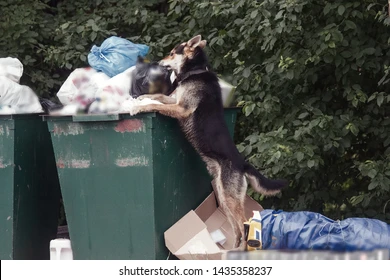
If your dog keeps raiding the trash, pulling out leftovers, wrappers, or bones, you’re dealing with a very natural canine behavior—not defiance. Trash smells like a buffet of irresistible scents, and dogs are expert scavengers. The fix is a mix of management, training, and meeting your dog’s needs.

Why Dogs Go After the Trash
1. Instinctual Scavenging (Most Common)
Dogs evolved to seek food wherever it’s found. Trash smells layered with:
-
Meat fats
-
Food scraps
-
Packaging scents
To a dog, it’s treasure.
2. Boredom or Under-Stimulation
When mental and physical needs aren’t met, dogs create their own fun—trash diving included.
3. Learned Payoff
If your dog ever found something tasty in the trash, the behavior was rewarded. One jackpot is enough to keep them trying.
4. Anxiety or Stress
Changes in routine, guests, or being left alone can trigger displacement behaviors like trash digging.
5. Hunger or Diet Mismatch (Less Common)
Occasionally, underfeeding or certain medical issues increase food-seeking. If appetite is suddenly extreme, check with your vet.
Why Trash Diving Is Dangerous
🚨 Risks include:
-
Cooked bones (splintering)
-
Toxic foods (onions, chocolate, xylitol)
-
Plastic or foil ingestion
-
Food poisoning
Prevention protects your dog’s health—not just your kitchen.
What NOT to Do
❌ Don’t scold after the fact (they won’t connect it)
❌ Don’t chase (turns it into a game)
❌ Don’t rely on flimsy lids
❌ Don’t assume “he knows better”
How to Stop Trash Digging (Proven Steps)

1. Dog-Proof the Environment (Most Important)
-
Use locking or heavy-lid trash cans
-
Keep trash behind cabinet doors or in pantries
-
Use baby locks or place bins in a closed room
Management prevents rehearsal while training happens.
2. Remove the Payoff
-
Take trash out daily
-
Double-bag food scraps
-
Rinse containers before tossing
No reward = behavior fades.
3. Teach “Leave It” (Short Sessions)
-
Start with low-value items
-
Reward disengagement generously
-
Gradually increase difficulty
This builds impulse control beyond the trash.
4. Increase Enrichment
A tired brain scavenges less:
-
Sniff walks
-
Puzzle feeders
-
Frozen food toys
-
Short training games
Aim for daily mental work, not just exercise.
5. Supervise & Interrupt Early
If you catch the approach:
-
Calm “uh-uh”
-
Redirect to a toy or mat
-
Reward choosing the alternative
Timing matters—interrupt before success.
6. Address Anxiety If Present
If trash digging happens only when you’re gone:
-
Practice calm departures
-
Use safe chews during alone time
-
Consider a trainer if panic signs appear
How Long Until It Stops?
With consistent management:
-
Immediate reduction (no access)
-
Lasting improvement in 1–2 weeks
-
Strong habits form when trash never pays off
Final Takeaway
Trash digging isn’t misbehavior—it’s biology plus opportunity. Remove access, remove reward, and meet your dog’s needs, and the habit disappears.
🐾 If it smells like food and pays once, dogs will try again. Make the trash boring—and your dog will move on.