
If your dog gets along with most dogs—but constantly fights with one specific dog, this is known as selective aggression. It’s surprisingly common and doesn’t mean your dog is “bad” or aggressive overall. The conflict usually comes down to personality clashes, communication issues, or past experiences.
Understanding the cause is key to preventing fights and keeping everyone safe.
🦴 Common Reasons Dogs Fight With Only One Dog
1. Personality Clash
Just like people, dogs don’t like everyone.
Two dogs may:
-
Have conflicting energy levels
-
Be equally dominant
-
Irritate each other’s boundaries
This can create ongoing tension even if both dogs are friendly with others.
2. Past Negative Experience
If one dog:
-
Snapped, growled, or frightened the other in the past
-
Was involved in a fight or traumatic interaction
Your dog may remember and react defensively—even months later.
3. Poor Communication or Mixed Signals
Dogs rely heavily on body language.
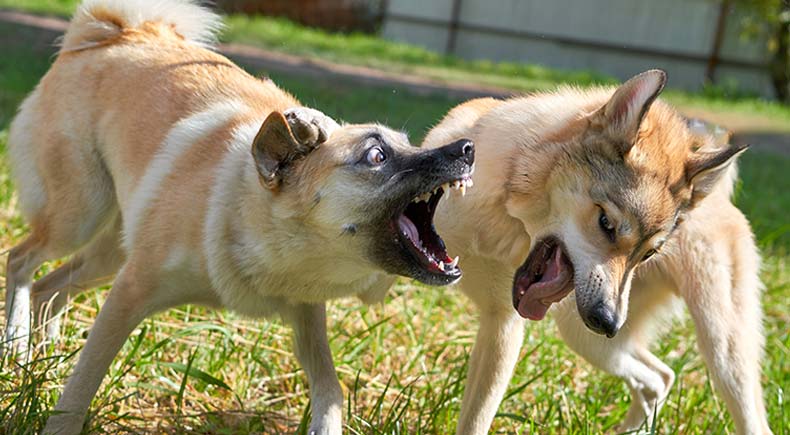
Misreading signals like:
-
Stiff posture
-
Hard staring
-
Raised hackles
can quickly escalate into a fight, especially between incompatible dogs.
4. Resource Guarding
The conflict may be about:
-
Food or treats
-
Toys
-
Sleeping spots
-
You (owner attention)
Some dogs only guard resources against certain individuals they see as rivals.
5. Same-Sex or Similar-Age Aggression
Dogs of:
-
The same sex
-
Similar age
-
Similar size
may be more likely to challenge each other, especially during maturity (1–3 years old).
🐕 Warning Signs Before a Fight
-
Staring or freezing
-
Growling or lip lifting
-
Blocking movement
-
Mounting or posturing
-
Sudden silence followed by an explosion
⚠️ Interrupting early is crucial—once dogs fight, future encounters become harder.
🏠 What You Can Do to Reduce Conflict
✅ Manage Interactions
-
Avoid forcing the dogs together
-
Use leashes or barriers during high-tension moments
-
Separate resources (food bowls, toys, beds)
🧠 Desensitization & Controlled Exposure
With distance and calm settings:
-
Reward calm behavior around the other dog
-
Gradually reduce distance over time
-
Keep sessions short and positive
This helps rebuild neutral or positive associations.
🐾 Strengthen Obedience & Focus
Teach strong commands like:
-
“Leave it”
-
“Place”
-
“Look at me”
Dogs that focus on their handler are less likely to escalate conflicts.
❌ Avoid Punishment
Punishing growling or warning signs can:
-
Suppress communication
-
Lead to sudden, more dangerous attacks
Always address the cause—not the warning.
🚑 When to Get Professional Help
Seek a certified trainer or behaviorist if:
-
Fights are frequent or severe
-
Blood has been drawn
-
Tension escalates quickly
-
The dogs live in the same household
Professional guidance is especially important for household dog conflicts.
🐾 Final Thoughts
A dog fighting with only one specific dog doesn’t mean your dog is aggressive—it means something about that relationship isn’t working. With careful management, training, and patience, many selective aggression cases can be improved or safely managed.