
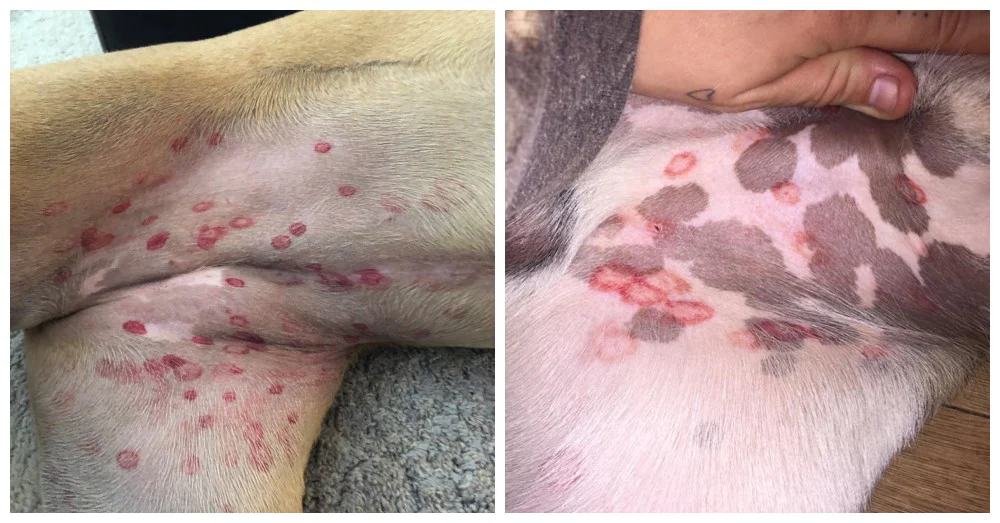
Dog Has Red Patches on the Belly — Any Idea What This Could Be?
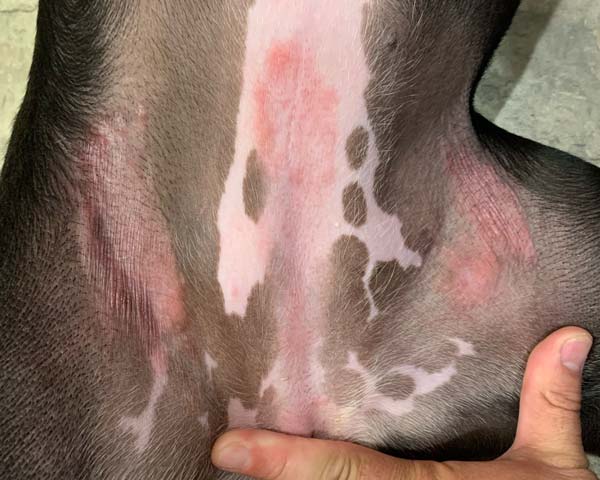
If you’ve recently noticed red patches on your dog’s belly, it’s completely normal to feel concerned.
Redness in the stomach area is a common skin issue, but the cause can range from mild irritation to more serious underlying conditions.
Here’s a clear, helpful breakdown of the most common reasons behind belly redness—plus what you can do to help your dog feel better.
1️⃣ Allergies (Environmental, Seasonal, or Food)
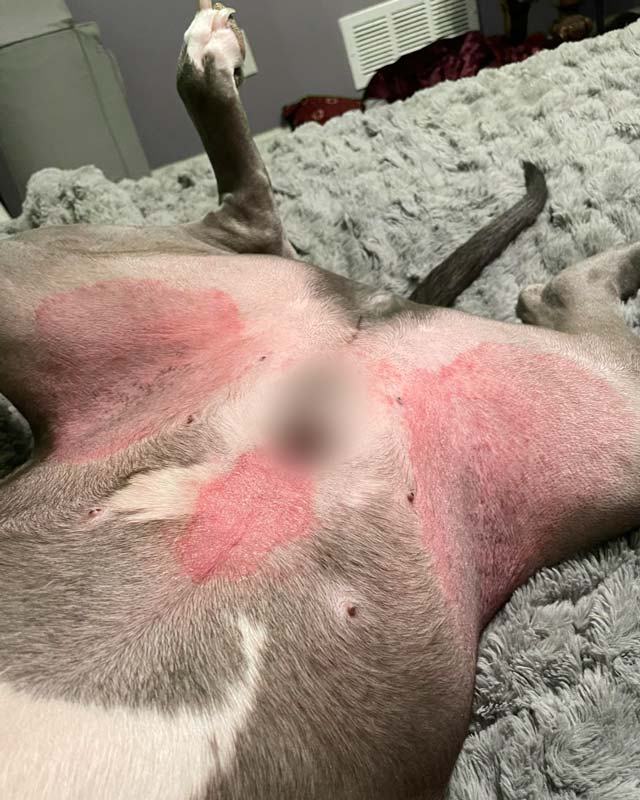
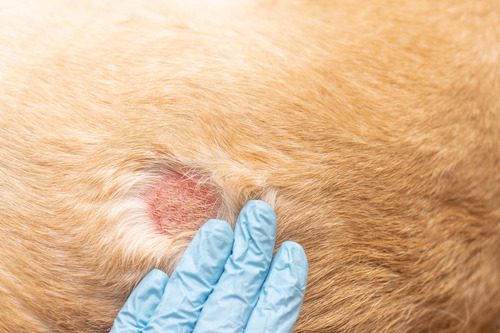
Allergies are one of the top causes of red patches on a dog’s belly.
Dogs can react to pollen, grass, dust mites, cleaning products, or certain foods.
Common signs:
• Red patches or hives
• Itchy belly and paws
• Ear redness or head shaking
• Licking or chewing the skin
What you can do:
• Rinse or wipe your dog after outdoor walks
• Switch to a hypoallergenic or limited-ingredient diet (if food allergy suspected)
• Consult your vet about allergy medication or testing
2️⃣ Flea Bites or Flea Allergy Dermatitis
Some dogs are extremely sensitive to flea bites.
Even one flea bite can cause intense redness, itching, and swelling.
What you can do:
• Use vet-approved flea prevention
• Clean bedding and vacuum regularly
• Check for flea dirt (tiny black specks)
3️⃣ Contact Dermatitis (Reaction to Something They Touched)
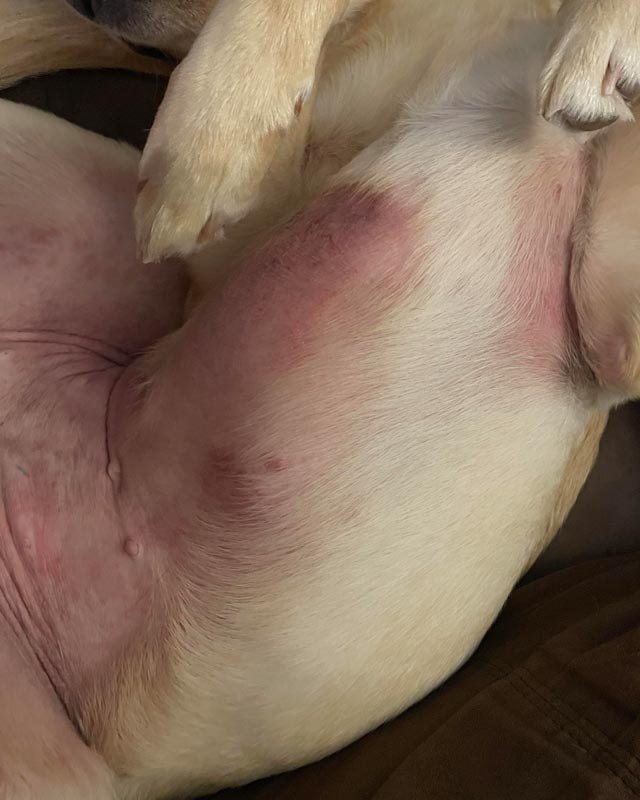
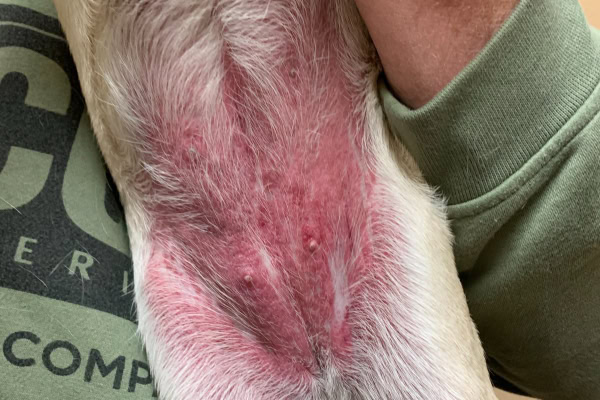
Just like humans, dogs can react to chemicals or materials.
The belly is especially sensitive because it has thinner skin and less fur.
Possible triggers:
• Grass or weeds
• Carpet cleaners
• Laundry detergent residue
• Plastic surfaces
• New dog beds
What you can do:
• Identify what changed recently (new detergent, cleaner, etc.)
• Rinse your dog’s belly with cool water
• Avoid the triggering surface temporarily
4️⃣ Bacterial or Yeast Infections

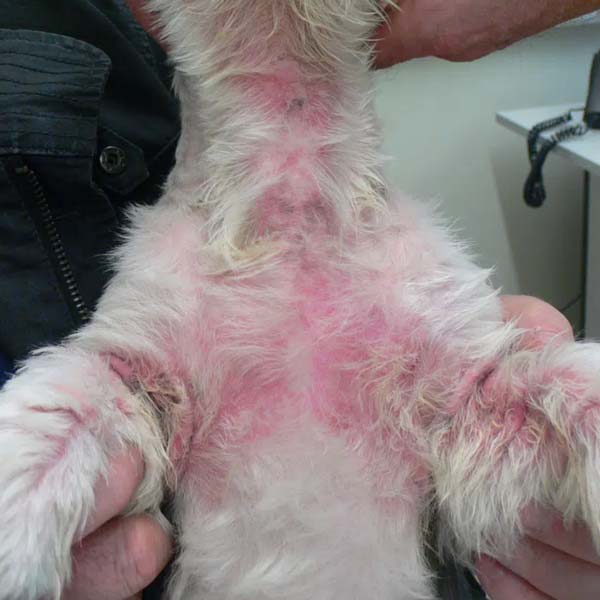
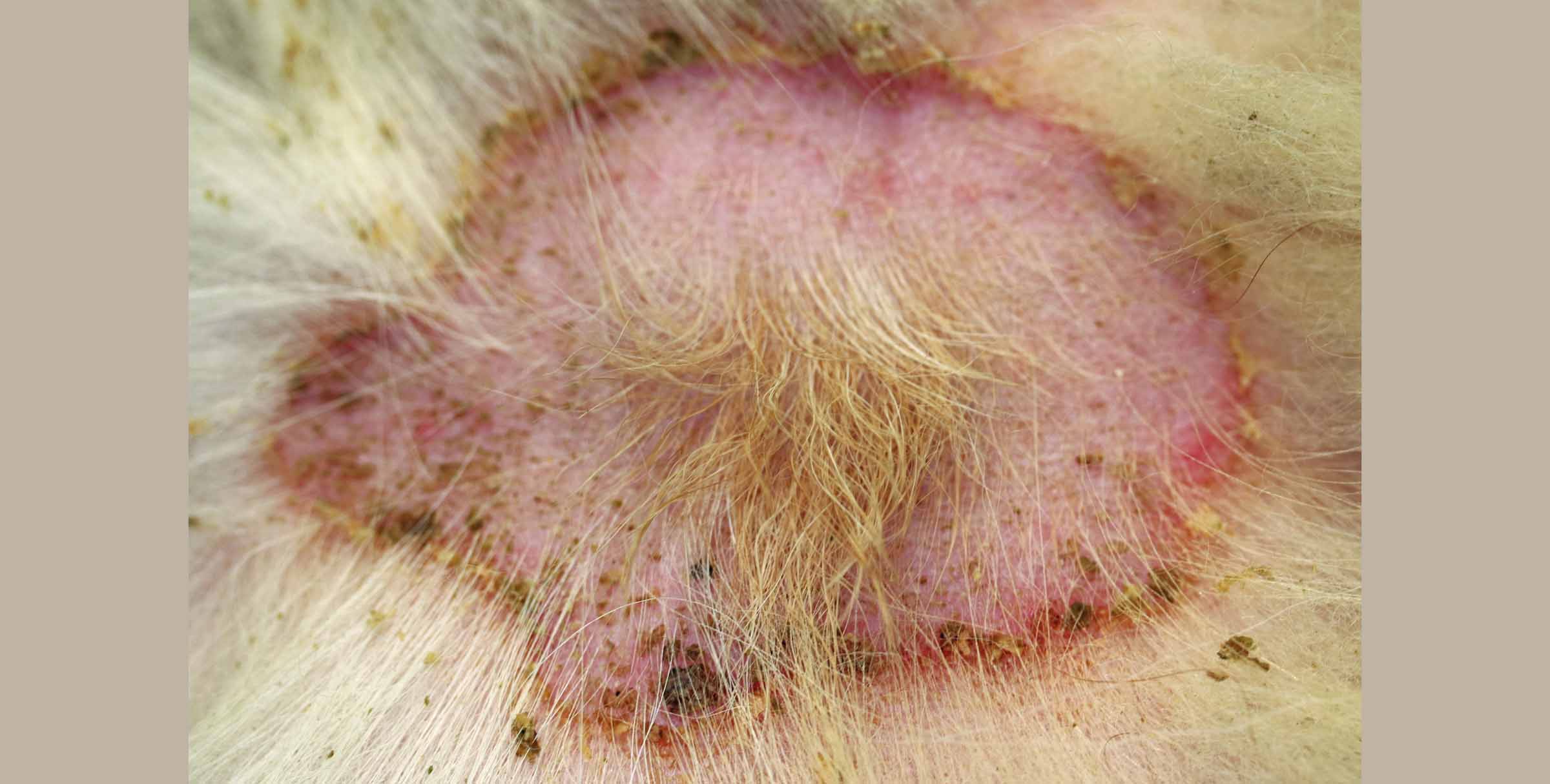
Infections often develop after irritation or scratching breaks the skin barrier.
Symptoms include:
• Red, moist, or crusty patches
• Strong odor (yeasty or sour)
• Hair loss in affected area
• Oily or flaky skin
What you can do:
• Visit your vet for proper diagnosis
• Medicated shampoo or antibiotics may be needed
• Keep the area clean and dry
5️⃣ Heat Rash (Common in Hot, Humid Weather)
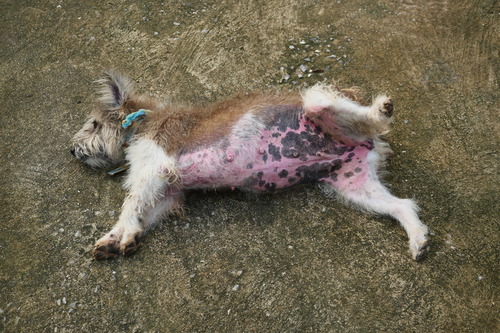
Dogs can develop heat rash in warm climates—especially breeds with thick fur.
Signs:
• Small red bumps
• Inflamed skin
• Itching when touched
What you can do:
• Move your dog to a cooler environment
• Use cool compresses
• Avoid heavy exercise in hot weather
📌 When Should You See a Veterinarian?

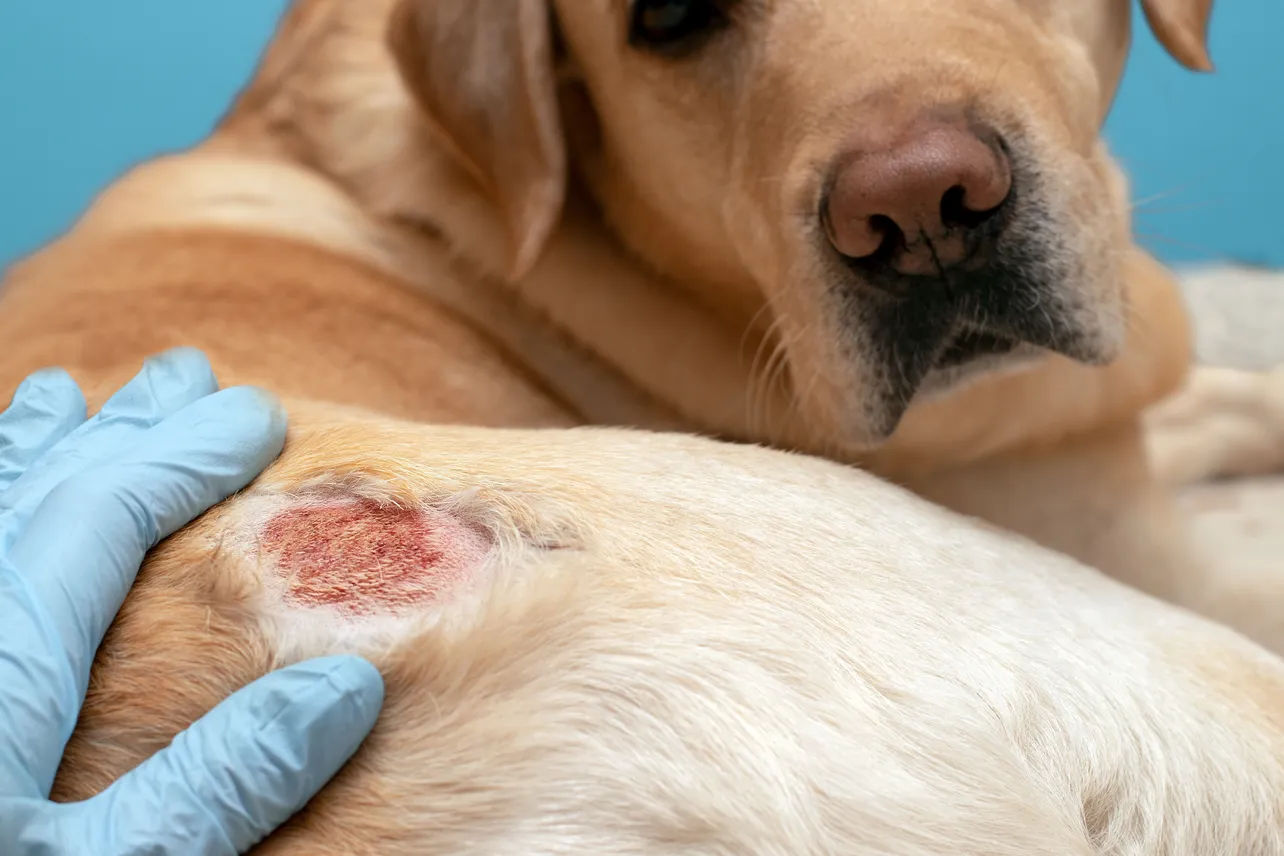
You should call your vet if:
✔ The redness spreads quickly
✔ There is bleeding, swelling, or a bad smell
✔ Your dog is in pain or very itchy
✔ The patches do not improve in 48–72 hours
✔ Your dog licks or chews the area nonstop
Early treatment prevents infections and makes healing faster.
💡 Final Thoughts
Red patches on a dog’s belly are common, but they should never be ignored.
With careful observation and the right treatment, most cases can be resolved quickly and comfortably.