
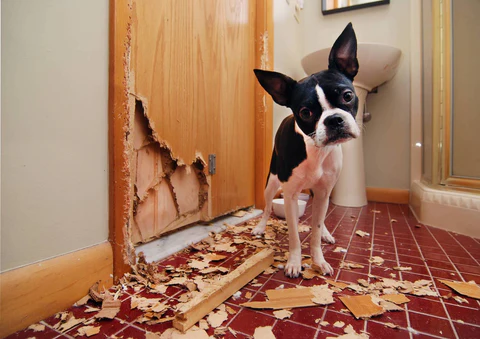
If your dog scratches, paws, or damages the door when left alone, this isn’t mischief or revenge. In most cases, it’s a sign of separation-related anxiety or panic, where your dog feels distressed by being separated from you and is trying to escape to reunite.
This article explains why dogs scratch doors when alone, how to tell anxiety from boredom, and what you can do to help your dog feel safe.
What This Behavior Usually Looks Like
You may notice your dog:
-
Scratching or clawing at doors or frames
-
Whining, barking, or howling near exits
-
Chewing door edges or handles
-
Pacing between the door and windows
-
Having accidents only when left alone
👉 The key clue: the behavior happens only (or mostly) when you’re gone.
Why Dogs Scratch Doors When Home Alone
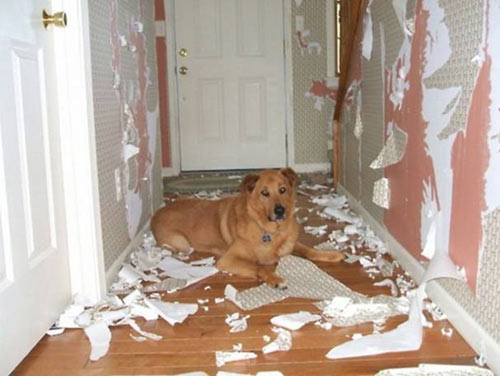
1. Separation Anxiety (Most Common)
Your dog isn’t trying to be naughty—he’s panicking.
-
Your departure triggers fear
-
The door becomes the focus (where you left)
Scratching is an escape attempt, not destruction for fun.
2. Hyper-Attachment
Dogs that follow you everywhere may:
-
Struggle to self-soothe
-
Feel unsafe without you present
Scratching is a sign of emotional dependence, not disobedience.
3. Learned Behavior
If scratching ever led to:
-
You returning
-
A door opening
Your dog learned that scratching might work.
4. Fear Triggers While Alone
Sounds or sights can worsen anxiety:
-
Outside noises
-
Construction
-
Other animals
The door becomes the perceived exit from danger.
5. Boredom (Less Common)
True boredom usually causes:
-
General destruction
-
Chewing random objects
Door-focused scratching points more toward anxiety.
How to Tell Anxiety From Boredom
🚨 Likely Anxiety
-
Door-focused damage
-
Vocalization
-
Pacing or drooling
-
Accidents despite being house-trained
😐 Likely Boredom
-
Chewing toys, shoes, furniture
-
No distress signs
-
Happens even when people are home
When This Is a Serious Problem
🚨 Get help urgently if your dog:
-
Bleeds or breaks nails while scratching
-
Destroys doors or walls
-
Panics every time you leave
-
Cannot eat or settle when alone
-
Is getting worse over time
Repeated panic reinforces fear and can lead to injury.
What You Should Do Right Now
1. Prevent Rehearsal of Panic
If possible:
-
Use a dog sitter, daycare, or neighbor
-
Avoid long absences while training
Each panic episode makes anxiety stronger.
2. Reduce Exit Triggers
Desensitize cues:
-
Pick up keys → don’t leave
-
Put on shoes → sit down
Repeat until cues lose emotional impact.
3. Practice Very Short Absences
Start tiny:
-
Step out for 3–10 seconds
-
Return before scratching starts
Increase time only when your dog stays calm.
4. Create a Calm “Safe Zone”
-
Comfortable bed
-
White noise or calming music
-
Door closed or open—whichever reduces stress
Avoid crates unless your dog already loves them.
5. Provide Enrichment (Not a Cure, but Helpful)
-
Food puzzles
-
Long-lasting chews (vet-approved)
These help only if anxiety is mild.
What Usually Makes It Worse
❌ Scolding after the fact
❌ Punishment
❌ Letting the dog “cry it out”
❌ Crating an anxious dog suddenly
These increase fear and intensity.
Professional Help Makes a Big Difference
A vet or behaviorist may:
-
Diagnose separation anxiety formally
-
Prescribe anti-anxiety medication
-
Create a step-by-step desensitization plan
Medication doesn’t sedate—it lowers panic so learning can happen.
Can Dogs Stop Scratching Doors?
Yes—many dogs improve dramatically with:
-
Consistent training
-
Reduced panic exposure
-
Professional guidance
The goal isn’t to stop scratching—it’s to remove the fear causing it.
Final Takeaway
When a dog scratches the door while home alone, he isn’t acting out—he’s asking for help. Door-focused destruction is one of the clearest signs of separation-related distress.