
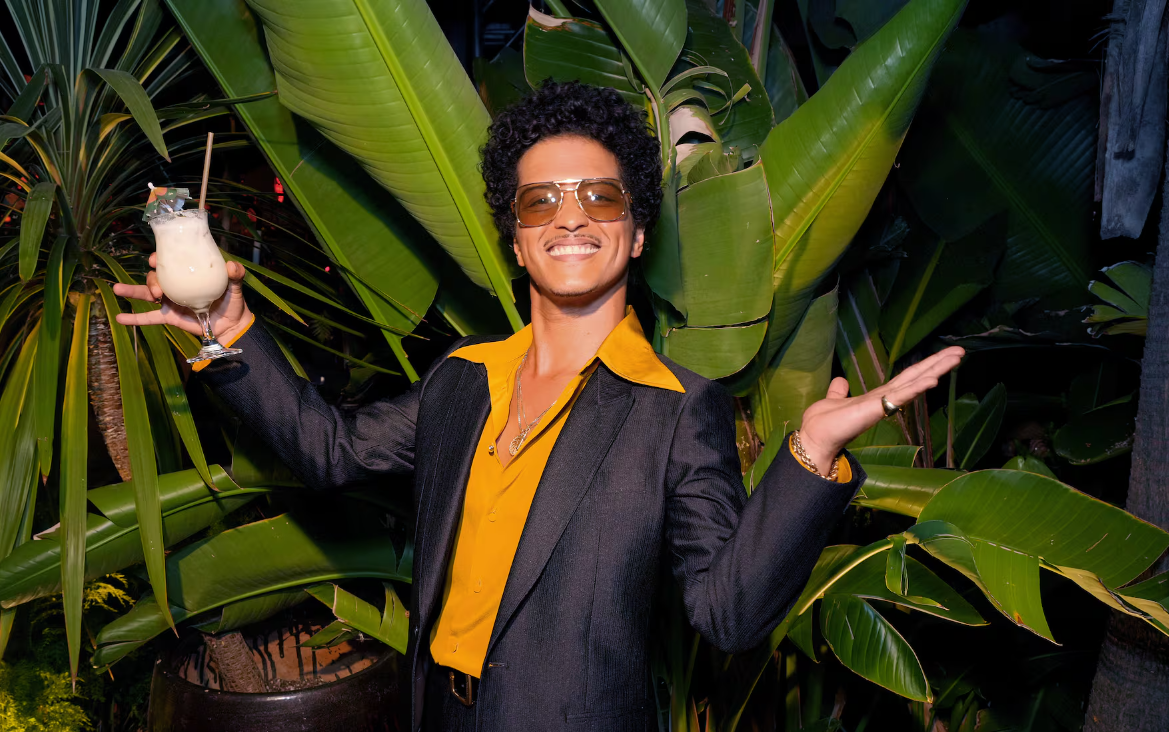
The Hawaiian musician is finishing what will be his first album in a decade. He has won 16 Grammy Awards and has had nine number-one hits to his name
He is the first artist to surpass 150 million monthly listeners on Spotify and, at a time when fewer records are being bought than ever, he ranks among the 30 best-selling artists of all time, surpassing, for example, Bruce Springsteen and U2 with an estimated 236 million records sold. He has won 16 Grammy Awards and has had nine number-one hits in the U.S. He hasn’t released an album under his own name in 10 years, but in 2025, he had the most-streamed song in the world on Spotify (Die With A Smile, a duet with Lady Gaga) and the third most-streamed (APT, with Rosé).
With these credentials, it’s safe to say that Bruno Mars, 40, is one of the most successful artists in contemporary pop, and that his upcoming fourth album, The Romantic — scheduled for February 27 — is one of the most anticipated releases of the year. So too is his corresponding tour, which will bring him to Madrid’s Metropolitano Stadium on July 10 and 11, nine years after his previous visit to the same venue, but this time for two shows.
In a way, Mars (born Peter Gene Hernandez) has music in his DNA. His father was a percussionist of Puerto Rican and Eastern European Jewish descent, while his mother, a hula dancer, was a Filipina immigrant in Hawaii. His uncle was also an Elvis impersonator, and at the age of four, he himself became famous performing the same act. This background explains his subsequent musical trajectory quite well, especially when combined with the typical tropes of the American dream. But the reason for the enormous global popular impact he has achieved since his solo debut in 2010 with the ballad Just The Way You Are — and which has continued unabated ever since — is somewhat of a mystery.
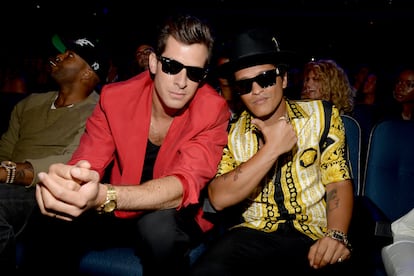
Or perhaps it’s not. He has an impeccably winning formula, says Jordi Bardají, a music journalist on the website Jenesaispop. “He has a remarkable ability to write classics in very different styles that appeal to all audiences and work in various contexts, from Uptown Funk, his 2014 mega-hit with producer Mark Ronson, to the typical wedding ballad, because I’m sure many of his viral hits are played at weddings every day,” says Bardají. “He’s also the quintessential showman who does it all: he sings, dances, composes, and has charisma. Above all, I think his artistic vision fulfills a public demand for nostalgic products that don’t transgress or offend, but rather seek to reproduce familiar aesthetics, yet are meticulously crafted and well-made. He’s the kind of 360-degree retro pop singer who shines in different facets and fits into a niche market where he has few rivals. In fact, at the Super Bowl halftime show with Beyoncé, he was almost on par with her.”
Erik Oz, a specialist in music marketing and co-author of the book Rock & arte y estética (Rock & Art and Aesthetics), agrees. “His masterstroke is that, musically, it’s pure retromania, but visually he uses all the codes of current urban music,” says Oz. “He takes the sound of James Brown but with the storytelling and image of a 2026 rapper: the gold, the opulence, the gangsta style, look and moves, which are designed to go viral, and that objectification of women typical of hip-hop videos.”
“It’s a perfect hybrid,” continues Oz. “He gives an older audience the music they yearn for, and Generation Z the bad-boy and luxury visual aesthetic they consume on Instagram. But take note, he doesn’t mix the channels. The aesthetic closest to mainstream trends appears when his music is seen: in music videos, on social media, and in public appearances. However, those who consume his songs as a musical product, without seeing them — on the radio, in the car, in the traditional way — don’t grasp that contemporary image, which is closer to Bad Bunny than to… James Brown. Wha they hear are influences like The Police, the funk sound of the 1970s, and classic musical structures.”
According to Oz, this leads to intergenerational consensus, or what he calls zero friction: “Musically, he doesn’t bring anything disruptive to the table. He takes classics we’ve been listening to for 50 years and adds more contemporary production techniques, like the use of autotune or 15-second hooks designed for social media. Because there’s no musical barrier to entry, since everything sounds familiar, he dominates the most underserved niche, which also happens to be the one with the greatest purchasing power: the 35-45 age group. These are listeners who lived through the end of the physical album era.”
Oz continues: “In this way, he appeals to a collective musical memory and, in fact, is one of the few remaining intergenerational artists: you can play him in the car and dad will like him because he thinks of Earth, Wind & Fire, and his son will like him because he saw him on TikTok and sees gold chains and flow. He’s so precise in recreating that classic sound that he’s faced copyright lawsuits. Precisely because he adheres so closely to the original source. However, the public forgives it because he does so with technical excellence, not as a parody.”
It’s true that Bruno Mars’s aesthetic has always been meticulously crafted. On his debut album, Doo-Wops and Hooligans (2010), he wore suits inspired by the 1960s, while during the recording of his third, 24K Magic (2016), he imposed a dress code in the studio, favoring jewelry and fancy clothing over sweatpants to create, in his words, “wonderful, smooth, and moving songs.” In 2021, he created the Silk Sonic project with rapper Anderson .Paak, where he opted for wide collars and baggy suits that recreated the funky aesthetic of the 1970s. Further proof of his aesthetic control is that he has directed his own music videos, often in collaboration with his friend Cameron Duddy.
Imitation or innovation
If there is one reason why Mars has not been as warmly received by critics as he has by the general public, it is that he has yet to take the risk of breaking out of a formula he masters very well, but in which he still needs to show a stronger personal voice. The fact that he was shaped early on as an Elvis impersonator is as telling as his obsession with learning by replicating what others have done. He is a compulsive student of music from other eras, and he has said that he repeatedly watches videos of James Brown, Michael Jackson, Prince, and Jimi Hendrix for inspiration for his live performances. In that sense, his spirit is closer to that of a talent-show artist who knows how to write catchy, standardized lyrics than to that of a truly innovative musician.
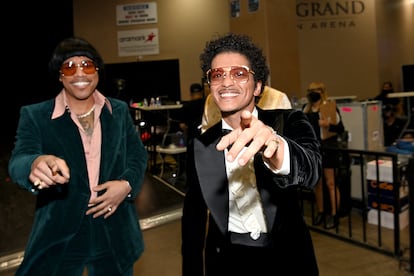
“He’s compared to Michael Jackson, James Brown, and Prince because he imitates them very well, not because his creative or artistic range is equally high,” concedes Jordi Bardají. “I don’t think he has a groundbreaking approach, but it’s also not that common to see songs in his style — R&B, soul, and funk — on general charts, appreciated in the mainstream, and he manages to be a vehicle for songs with that sound to achieve massive success because he writes formally classic songs based on formulas proven over decades. And it turns out that he’s also an ideal vocalist to perform them. In that sense, Bruno Mars succeeds because, in a record market saturated with viral but ephemeral offerings, songs like Die With A Smile stand out because they are masterfully written by professionals and craftsmen of the trade, and I think the public finds it comforting to know that these kinds of timeless songs are still being made.”
The boy in the shadows
This ties in with another crucial factor: how Mars slowly but surely built his career, which has not been not without its ups and downs. After spending his childhood performing with his family, at 17 he moved to Los Angeles to pursue his professional path. But it was not all smooth sailing: there was a failed contract with the legendary Motown label and attempts to steer him towards the Latin market, where he didn’t quite fit in.
Despite this, his first big break in the industry came when producer Brandon Creed bought one of his songs (Lost) for the Puerto Rican boy band Menudo (which launched Ricky Martin to fame) to record when they decided to revive the group in 2008. From there, Mars began to gain growing prestige as a songwriter and producer, the latter role as part of the collective The Smeezingtons.
Over the next two years he penned hit singles for artists such as Adam Levine, Brandy, Flo Rida, and Sugababes, although his biggest successes came with Fuck You by CeeLo Green and Nothin’ On You by B.o.B, on which he appeared singing alongside the rapper. That song reached number one in the United States and made his face and voice widely known, ultimately paving the way for what was to come.
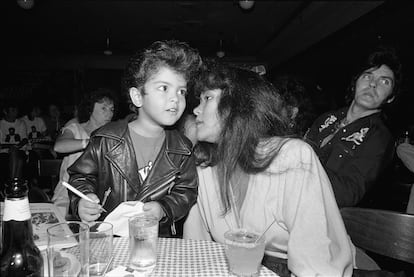
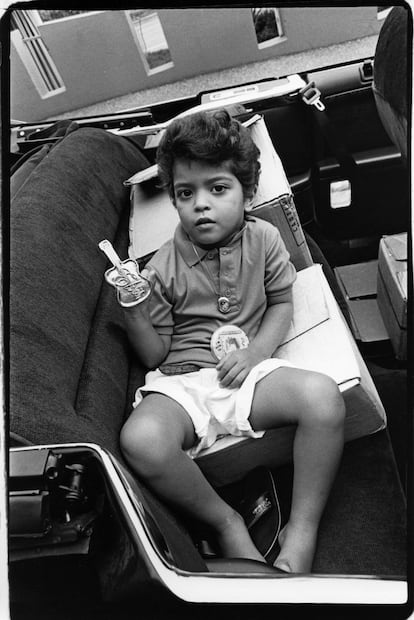
His early work as a songwriter for others explains why his collaborations have been as successful as his solo albums. Or even more so, as demonstrated by Uptown Funk or his duet with Lady Gaga.
“I think Die With A Smile is his best song, and I don’t think it would have worked as well if he had sung it alone, because it’s the typical romantic love ballad that begs to be a duet,” says Bardají. “Deep down, it’s a very cheesy song, but he disguises it very well, and that balance is what makes it connect with everyone. I don’t think we should underestimate the level of talent and professionalism required to be able to compose a song of its caliber.”
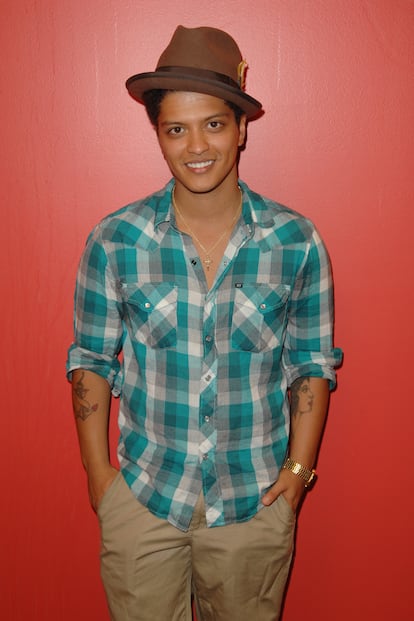
For Bardají, Mars “has an elite, and unusual, vocal talent. Not many men possess such a high vocal range and are capable of singing such high notes, as you can see if you watch the live performance of Versace On The Floor at the Apollo Theater in Los Angeles.”
In comparison, the journalist confesses to being disappointed by I Just Might, the first single from the singer’s new album. “Although Bruno Mars has always delivered his material in a straightforward way, and that’s what the public demands of him, I think this time he’s come up with a very uninspiring song that sounds childish. So I expect better tracks than this one on the album,” says Bardají.
It won’t be long before we know for sure whether the Hawaiian idol remains at the top of his game.
Sign up for our weekly newsletter to get more English-language news coverage from EL PAÍS USA Edition