
The psychology and human development alum credits campus research, disability services and community engagement for his success.
At Binghamton University, Kayden Stockwell ‘18 found unique opportunities to study autism through the Institute for Child Development (ICD) and the Services for Students with Disabilities (SSD) office.
“I figured out through volunteering with different programs in high school that I wanted to work with other autistic people,” Stockwell said. “I was looking for universities that offered psychology degrees with a focus on autism. Binghamton was one of the few that offered hands-on experience through the ICD, and SSD was communicative and supportive from the very start. I knew I wouldn’t have to fight for access.”
The experiences he had working with individuals at the ICD and SSD laid a foundation for a lifelong mission to support autistic individuals through research, mentorship and advocacy. He graduated from Binghamton with a double major in psychology and human development and a minor in education, and he is currently pursuing a PhD in developmental psychology at the University of Virginia.
The ICD was founded on Binghamton’s campus in 1975 and offers an array of programs serving individuals diagnosed with autism and their families, including special education programs for children aged 3 to 11 years old, preschool special education evaluations and a Child and Adolescent Diagnostic & Consultation Clinic that provides diagnostic evaluations and consultation services designed to support local school districts.
SSD supports Binghamton University students by authorizing accommodations to ensure an accessible and equitable academic experience. More broadly, the office furthers the University’s efforts to provide an environment where students with disabilities of all types can fully participate, engage and thrive.
SSD quickly became a central part of Stockwell’s academic and social life when he arrived on campus. Diane Gray, the director of SSD at the time, helped him establish formal accommodations and encouraged him to get involved beyond support services.
“As I started doing well, Diane asked if I’d be interested in talking with other students and organizing social activities,” Stockwell said. “SSD became a place where I felt comfortable spending time and building relationships.”
From his second year onward, Stockwell began working with the ICD, assisting school-aged children with autism and other developmental, learning or behavioral challenges. That involvement led to a position in a research lab led by Jennifer Gillis Mattson, professor of psychology, where he completed an honors thesis exploring the stigmatization of autistic college students — work that laid the foundation for his master’s and doctoral research.
Stockwell’s involvement deepened when he completed his human development internship through SSD, mentoring other autistic students pursuing internships. He also collaborated with SSD staff like Anne Lewis, who supported his development of self-advocacy and time management skills, and Jeremy Pelletier, who introduced him to assistive technologies, some of which Stockwell later used in graduate school and now recommends to his own students.
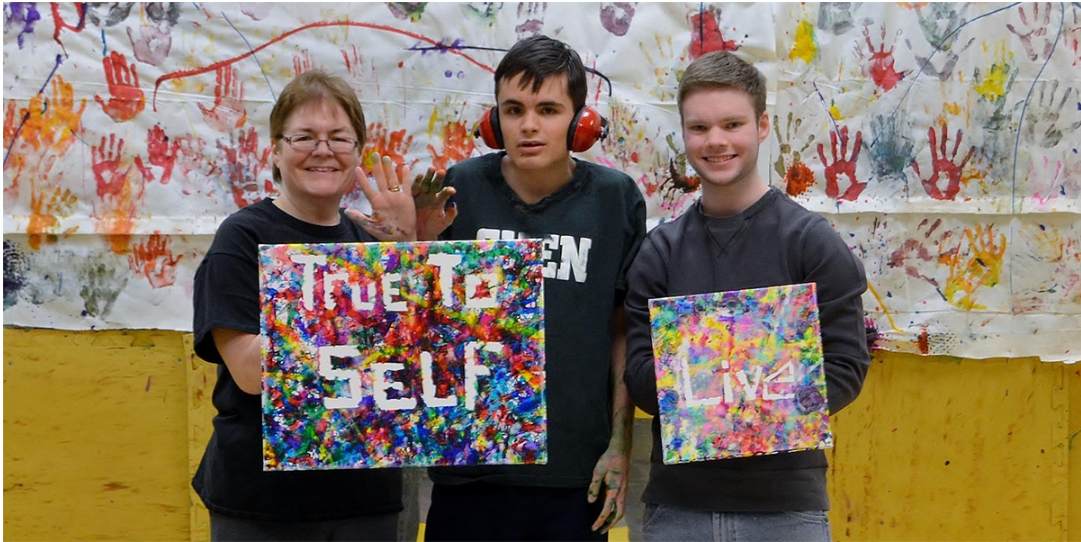
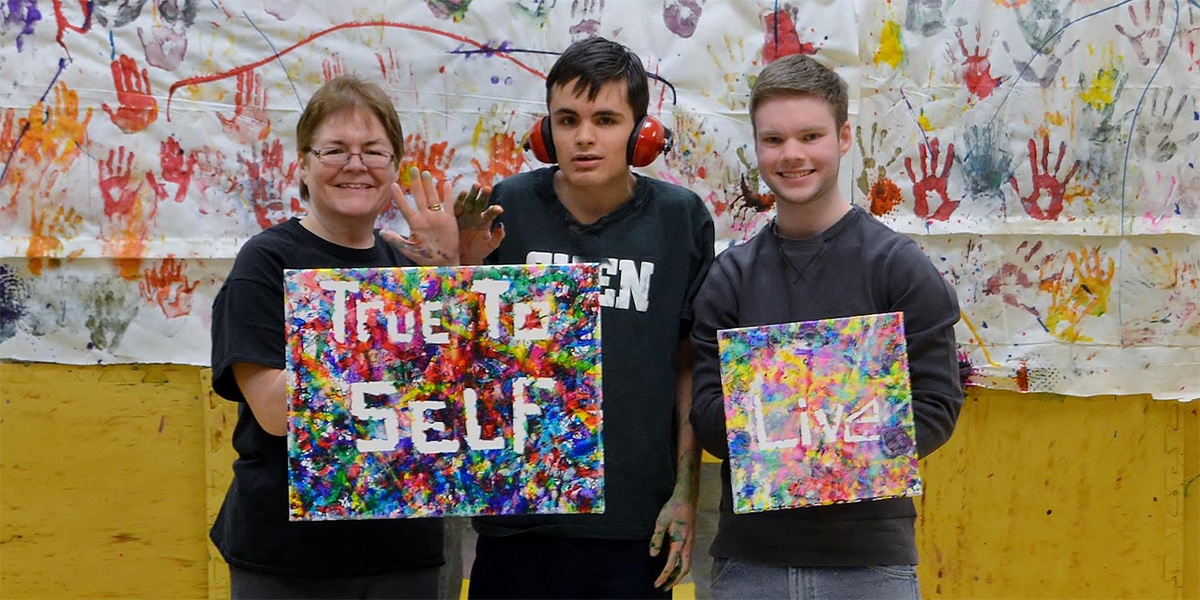
Beyond campus, Stockwell found a second home in the local community through the Magic Paintbrush Project, a former nonprofit organization that used art to create positive experiences for people with disabilities and their caregivers.
“I discovered the Magic Paintbrush Project at the Center for Civic Engagement’s Community Opportunities Fair my first year,” Stockwell said. “I volunteered with them until I moved to Virginia in 2019.”
That experience exposed him to a wide range of support needs and perspectives, and led to long-term relationships with local families and children, some lasting five years or more. The organization eventually expanded into adaptive sports, opening doors for Stockwell to explore federal funding opportunities and deepen his understanding of disability advocacy.
“That volunteer position led to a lot of opportunities and relationships,” he said. “I’m still very close with [the founding director of the Magic Paintbrush Project] Jen O’Brien, 10 years later. The relationships I built from that program are probably what I’m most proud of.”
Stockwell believes that today’s students should seek out their own path in order to have the best possible college experience.
“There are a lot of opportunities out there, but you have to go looking for them,” he said. “Be proactive, build relationships and be open to trying things that might not seem like the perfect fit; you might discover a new interest or a new way to contribute.”
Today, Stockwell’s doctoral research focuses on how universities can better support autistic college students and how social relationships benefit non-speaking autistic individuals. Looking ahead, Stockwell plans to pursue a post-doctoral position and continue researching how relationships support autistic individuals. He said his journey — from SSD and ICD to community engagement and doctoral research — demonstrates how inclusive support and meaningful mentorship can shape not just a college experience, but a career dedicated to making a difference.