
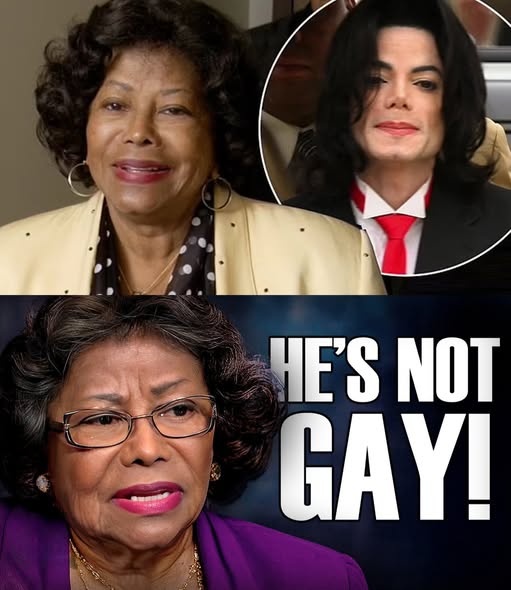
Katherine Jackson Breaks Silence on Michael’s Surgery, Sexuality, and Allegations
In a world saturated by headlines and scorching soundbites, the life of Michael Jackson was perhaps the most consumed, debated, and dissected of all. He was a global icon, a musical demigod, and, in the eyes of many, a profound enigma. His every move was scrutinized, his changing appearance a source of public fascination and cruel mockery, and his personal life the subject of the darkest allegations imaginable. Through it all, one woman stood in the eye of the storm, a matriarch watching as the world tried to define, and then destroy, her son.
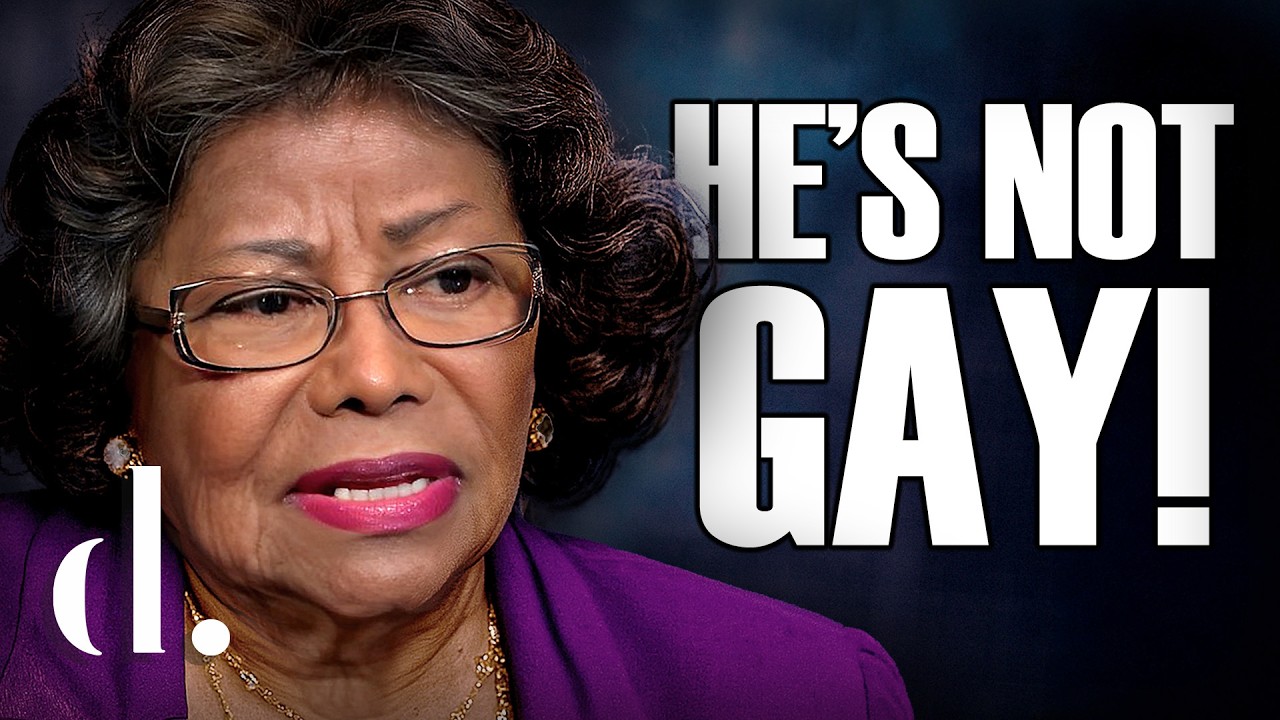
Now, Katherine Jackson, the mother of the King of Pop, is breaking her silence. In a raw and deeply emotional testimony, she offers not a press-release-polished defense, but the fierce, unshakeable, and painful account of a mother who insists she knew the man behind the myth. She confronts the most toxic narratives head-on—from his sexuality and surgery to the allegations that would ultimately define his final years—painting a picture of a man targeted, misunderstood, and, in her words, profoundly wronged.
The Man Behind the ‘Wacko Jacko’ Mask
Before the trials and the tabloids, there was the chatter about his appearance. As Michael Jackson’s features transformed and his skin lightened, the world rushed to judgment. His mother, however, pushes back with a simplicity that is almost stunning.
“Mike was not gay,” she states unequivocally, addressing one of the longest-running rumors. She believes the speculation stemmed purely from his appearance. “You can tell when a person is gay sometimes,” she muses, before firmly stating, “Michael is not gay.”
As for the plastic surgery, she doesn’t deny it, but she reframes it. “He had his nose done,” she concedes, acknowledging that as the center of the face, it changed his looks. But she bristles at the idea that he “overindulged.” “So what?” she challenges. “A lot of people have had plastic surgery. If you don’t like your nose, you get it done.”
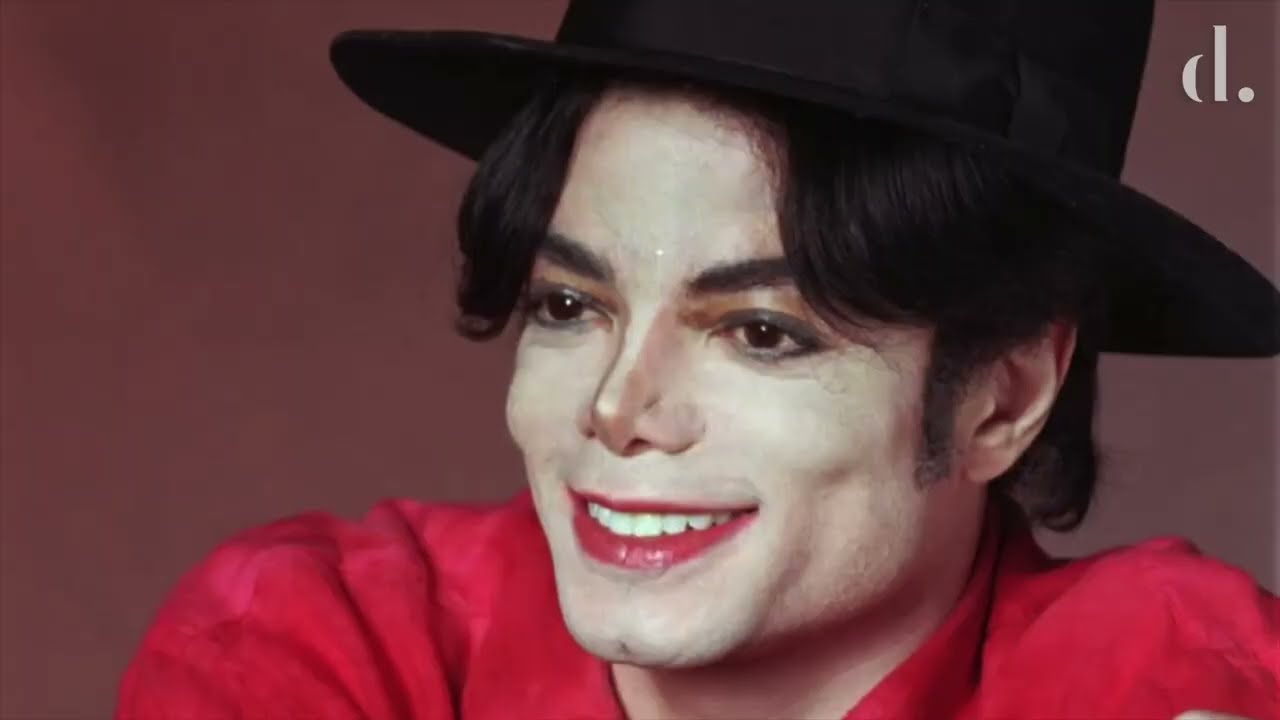
But the most dramatic change—his skin—was not a choice, she insists, but a disease. “Michael had a disease,” she explains, “Vitiligo.” She recalls another family member on his father’s side who also had the condition, a detail that grounds her claim in family history. The condition, which creates patches of depigmented skin, was a source of torment for the hyper-visible star.
“He always says, ‘I don’t want to be spotted like a cow,’” she recounts. Faced with an “ugly disease” that was altering his appearance, Michael, with the resources at his disposal, made a decision. “He found a way to… just take the brown spots out,” she says. “He just decided to do the whole thing because he could afford to do it.” To him, she explains, a uniform, whitened complexion “was better than just be spotted all over.”
This, she argues, is the man the media branded “Wacko Jacko,” a label she believes began in the English tabloids and which still makes her “upset.” “He’s not weird,” she defends. “He didn’t get as far as he did by being stupid or crazy.” Her conclusion is simple and scathing: “It’s just what they wanted to say to sell papers.”
A War with ‘Wicked’ Media
To Katherine Jackson, the media wasn’t just a nuisance; it was a predatory force. She describes a machine that didn’t just report stories but actively manufactured them, a machine that “feed[s] off of garbage.”
She recounts a chilling story told to her by Janet Jackson’s ex-husband, James DeBarge. According to her, DeBarge was approached by a tabloid to be interviewed about the family. “He said was telling them things and everything was good,” she recalls. But good wasn’t good enough. The tabloid allegedly pressed him: “Well don’t you know some dirt on them?” When DeBarge said no, their response was shocking: “Make up something.”
This, she believes, was the media’s tactic. By paying someone else to “make up something,” the publications could print the lie, attribute it, and, in her opinion, shield themselves from a lawsuit. It was a strategy of “divide and conquer,” she claims, the same strategy that fueled decades of “family feuding” rumors she flatly denies.
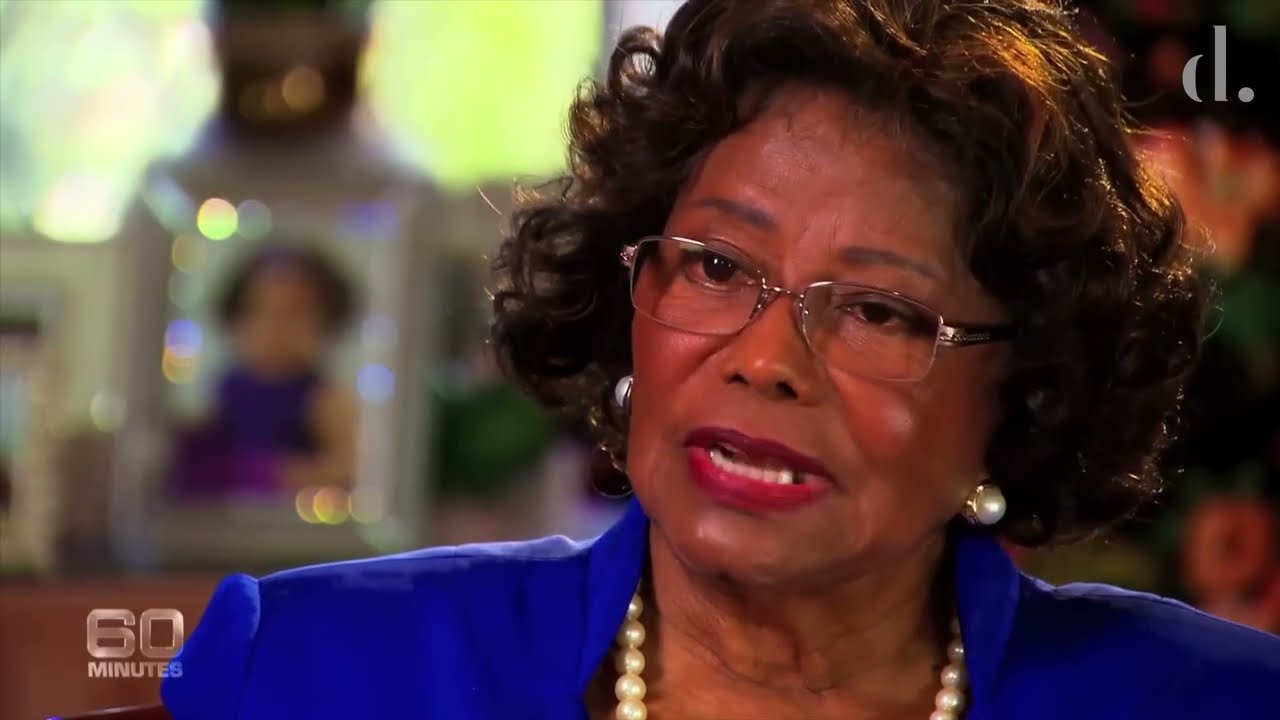
This perceived media malice is the lens through which she views the darkest chapter of her son’s life. When the 1993 allegations of child molestation first surfaced, her reaction was immediate: “outrage.” She was furious not only at the accusation but at its timing. “Michael left and went on tour,” she says, “and the very next day… this is when these allegations came out. I don’t understand why they didn’t come up while he was here so he could defend himself.”
Michael’s response, she says, was to reassure her. “Mother, it’s not true,” he told her, “so don’t worry about it. It’ll go away.”
It didn’t go away. Instead, she watched, horrified, as the media made a “circus” out of the situation. “I’m sure they know Michael’s not guilty,” she insists, “but they’ve been paying people also to say anything.”
The Settlement That Made Him ‘Look Guilty’
Of all the decisions made during that time, one infuriates her to this day: the settlement.
“I wish he had [not paid],” she says, her anger still palpable. “I called him and I said, ‘Why did you do that? That makes you look guilty.’”
According to his mother, Michael never wanted to settle. “He said, ‘I didn’t want to do it either, Mother. I wanted to fight it because I knew it wasn’t the truth.’” The decision, she claims, came from his legal team. “The lawyers told me to do it,” she says Michael told her. “They said that would be best for me to do because here I’m out here on tour.” It was a business decision, she implies, to make the problem disappear and protect the tour, but it came at an unbearable personal cost. “That was the wrong thing to do, to pay them off,” she states.
For her, the very nature of the accusation was suspect. “If someone came and molested your son, would you ask him for money?” she demands. “No, you wouldn’t… The first thing you would do was beat their behind… and then you would call the cops on them.” The fact that this was, in her view, about a $20 million payout was all the proof she needed.
When new allegations surfaced years later, her feeling was one of weary, agonizing defeat. “I just sat down and say, ‘Not again.’”
A Mother’s 100% Certainty
Through all the pain, the sleepless nights, and the anxiety, Katherine Jackson’s faith in her son never wavered. When asked how sure she is that he was not a child molester, her answer is absolute: “100% sure. No doubt in my mind.”
Her certainty, she says, is not a blind faith. It is based on a lifetime of knowledge. “I know his character. I raised my son, and I raised him well.”
She argues that the public, influenced by “wicked grown-ups” and their own “dirty” minds, fundamentally misunderstood her son’s character. His love for children, she says, was pure and stemmed from a deep, early-onset empathy.
“We used to sit up and watch television,” she remembers, “and they show all the poor children around the world… these children were so sick… and he’d sit there and tears would come in his eyes.” As a young teenager, he would tell her, “One day I’m going to do something about this… I know I can’t heal the world, but I can help.”
Neverland Ranch, she insists, was the fulfillment of that promise. It was “not built to lure little children… as the prosecutors tried to say.” It was built to give, to share. His generosity, she argues, was twisted and used as the “only thing they could get him on.”
“You don’t molest anything that you love or hurt anything that you love,” she says simply. She recalls a conversation where Michael, tormented by the accusations, told her, “I would rather slit his own wrist than to hurt a child.”
Ultimately, Katherine Jackson makes one final, stunning claim. She alleges that after Michael’s death, his first accuser, Jordan Chandler, confessed. “He came and he confessed that Michael never touched him,” she states. “It was a big lie, and his father… just wanted to be rich.” The accuser, she says, “wished that he could have told Michael before he passed.”
It is the final, tragic vindication in a story defined by public scorn and private anguish. Katherine Jackson’s testimony is that of a mother—a mother who believes her son was not a monster, but a victim of his own fame, his own generosity, and a world that, as she says, “feeds off of garbage.”