
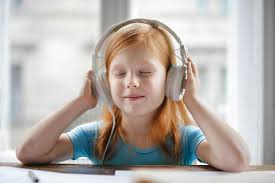
PHOENIX — On a quiet afternoon inside Higher Octave Healing, a Tempe-based nonprofit, 12-year-old Siena settles onto a bright blue yoga ball as music therapist Carly Jacobs kneels across from her. They begin with their opening song, a melody Siena knows well. Her posture straightens, her breathing evens. Soon she bounces following the beat.
They move through a cycle of emotions – happy, sad, frustrated – each sung rather than spoken. When a word feels too abstract, Jacobs shifts the phrasing, lowers the tempo or elongates a syllable until Siena grasps it. Later, at the piano, Jacobs plays a simple pattern and leaves small pockets of silence for Siena to fill. Each note Siena selects is intentional, a meaningful act of expression for a child who uses speech sparingly.
Down the hall, the three-man Higher Octave’s rock band rehearses, alongside two therapists. One practices steady chord transitions, another follows color-coded notation on a keyboard. The room feels informal yet every element is designed with purpose: motor skills, communication, social connection and confidence.

Although music therapy for autistic children and adults is on the rise, and more research has suggested its benefits, Higher Octave CEO Shelbe White, a board-certified music therapist, said families often misunderstand what music therapy is.
“We’ll often take in new referrals that say, ‘Oh, she loves music, or he wants to learn how to play the piano.’ That’s all great. We might be able to help, but that’s not the point,” White said.
The point, according to White, is to use music’s transformative effects on the brain to design therapeutic activities that improve cognition and motor skills while increasing social and life skills for clients with developmental disabilities. Access is “a major issue,” White added.
Health insurance coverage of any medical service, including music therapy, is governed by strict requirements for necessity, cost and outcomes for clients. While many studies suggest that music can help patients, the scientific proof of how well it works is not yet strong or certain because of inconsistent research, small study sizes and poor reporting. Music therapy is considered lower in priority compared to conventional, standard-of-care treatments.
Arizona’s Medicaid program, the Arizona Health Care Cost Containment System, does not generally list music therapy as a standalone reimbursable service yet. In certain instances, music therapy can be reimbursed through the Division of Developmental Disabilities (DDD) and billed under habilitation codes, according to AHCCCS.
As a division of the Arizona Department of Economic Security, the DDD manages care and distribution of AHCCCS funds.
“When authorized, these services (music therapy) may be provided as a form of habilitation,” AHCCCS wrote in an email to Cronkite News. “The services may be authorized when medically necessary and included in the member’s individualized habilitation plan.”
Reimbursement is paid to the music therapist for services authorized in the member’s planning document, which, in most cases, is reviewed and updated every three months.
“Music therapy and other forms of habilitation can make an incredible impact on a member’s life, so long as the services fit the member’s individual needs and goals,” DDD wrote in an email to Cronkite News.
In addition, to retain the eligibility, qualified music therapists “are required to submit quarterly progress reports to the Division … to evaluate service effectiveness.”
Some Arizonans also use the Empowerment Scholarship Account funds to cover music therapy.
At Arizona State University, associate professor Eugenia Hernandez Ruiz researches music therapy and trains future clinicians. Her path into the field began while working with women and children in domestic-violence shelters, where she first saw how music could strengthen emotional expression and belonging.
“I realized how much that helped … it was like, yeah, this music could be so powerful,” she said.
Her current work focuses on children who have autism and their families.
She works on language, social-emotional skills and sensory integration. For parents, she teaches musical strategies to use at home. Children who have autism often process sensory information in fragments, she said, which are strong on details. However, the children can be overwhelmed by trying to integrate the information. Music helps bridge that gap.
“I’ve had children who say their first word within a session,” Hernandez Ruiz said. “Music helps them understand the world and understand sensory input, and so they can relate to language.”
Hernandez Ruiz has also worked with older adults with dementia and with hospice patients, for whom music becomes a conduit for reflection and connection. But while the effects are measurable, access is uneven.
DDD may pay “to an extent,” but “tends to pay very little so not a lot of professionals can afford to do that.”
The science continues advancing, Hernandez Ruiz said, but the infrastructure has not kept pace. “We’re weird … in this limbo place of being both an art and a science.”
Researchers in related fields help explain why music resonates strongly with autistic children and non-speaking individuals.
In educational materials prepared for families of nonspeaking individuals, Suzanne Oliver, executive director of Neurologic Music Therapy Services of Arizona, explains that “connection and communication begins with co-regulation,” and many struggle not with intelligence or desire to communicate, but with motor planning, or the brain’s ability to organize and execute movement.
Music’s rhythmic predictability can support that gap. Patterned auditory input can help individuals “sequence motor movements” and maintain focus. Music gives the brain a scaffold, Oliver said in her presentation, a sequence, a rhythm, a predictable beginning and end that allows motor planning to lock into place.
Sequence and predictability can be crucial for Sarra Erb’s clients. Erb is a board-certified music therapist at Banner Health, working across the pediatric intensive care unit, general pediatrics, oncology, clinic and NICU. Her days are unpredictable.
“Every day is different … everything we do is curated for the patient in that moment,” Erb said. She uses music to help children cope during procedures, to distract from pain and to restore control in an environment where control is scarce.
Some interventions are complex, such as live guitar during a painful procedure, or regulating a premature infant’s heart rate with tempo and volume. Some are small: creating a playlist with a teenager who feels isolated.